
Zurich's drinking water comes from Lake Zurich, groundwater and springs. Its fountains add another detail to the story: some use the ordinary drinking-water network, while others have a separate spring-water supply. The network feeding a fountain determines where its water comes from.
How the city describes its water mix
The utility's drinking-water overview gives an approximate mix of 70% treated lake water, 15% groundwater and 15% spring water. The page is undated. These are general proportions, not measurements of the water at a particular address on a particular day.
Lake Zurich is the largest drinking-water reservoir in the city's account and also serves surrounding communities. The city's lake article explains its role. Lake water then passes through a managed system of collection, treatment and distribution. The overview describes treated lake water; it is not advice to drink directly from the lake.

Why fountains can have a different supply
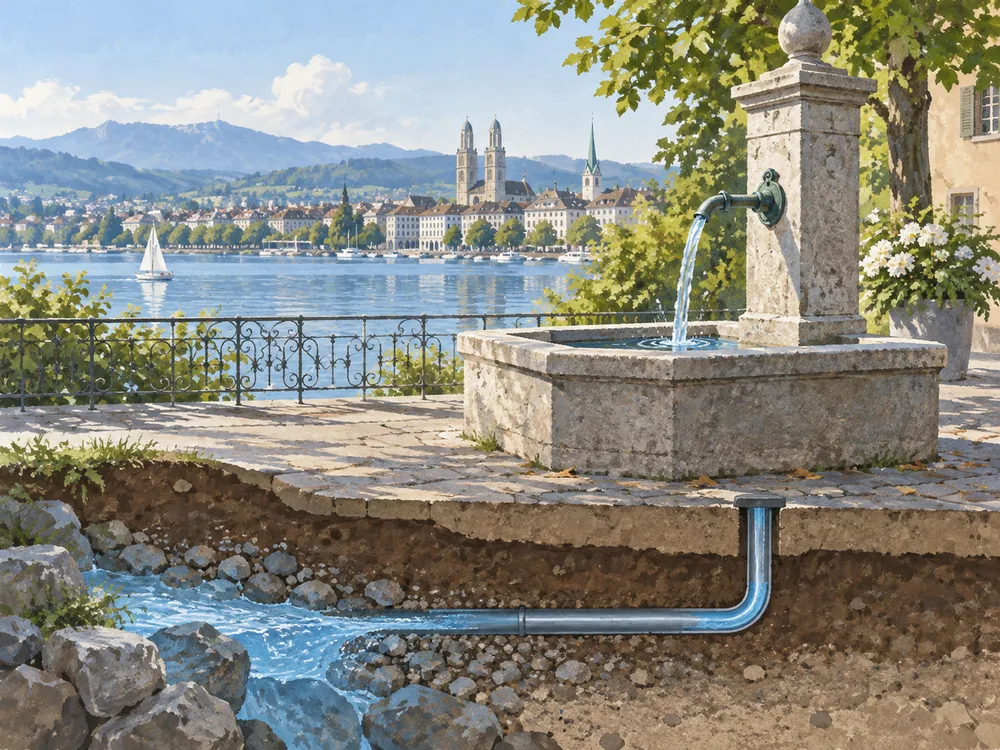
The official fountain guide distinguishes fountains on the regular network from those on a separate spring-water network. The latter supplies many historic fountains and emergency fountains. Water flows downhill by gravity from spring intakes in the surrounding hills, allowing that emergency supply to work independently of electricity.
A fountain's age or appearance cannot tell you which network feeds it. Check the official information before applying the city's general source percentages to a particular refill.
For a walking route, use the guide's map option, labelled Karte Brunnenstandorte. Save a stop near an activity you already have planned and keep an alternative. Individual fountains have not been checked for current operation for this article. Read the signs when you arrive and follow any restriction on access or use.
Refill with other users in mind
Zurich says fountains are primarily for drinking. Its fountain guidance directs bathers to public bathing facilities and asks owners to keep dogs out of fountains for hygiene reasons.
Keep your bottle opening away from the spout and equipment out of the basin. Leave space for the next person to reach the outlet. These are ways to use the fountain considerately; they do not test its water quality.
Where to find quality information
The utility describes laboratory sampling from the waterworks into the distribution network, while independent laboratories run by the canton, the regional authority, also test the water and check the supplier. Automatic checks measure cloudiness (turbidity), how acidic or alkaline the water is (pH), and how easily it carries an electric current (conductivity). The USGS water glossary explains these measurement terms. Alarms trigger when preset limits are crossed. See its quality-and-control page for the monitoring programme.
That page describes how monitoring works. A particular test result needs its own sampling details; the source mix cannot answer that question. Our Zurich tap-water guide covers traveller use and the limits of citywide information for accommodation.
A bottle for city refill stops
If you need a bottle, compare its size, opening and care instructions for your walking routine. A product listing does not verify an individual fountain.
🛒 Browse reusable water bottles on Amazon →Amazon paid link