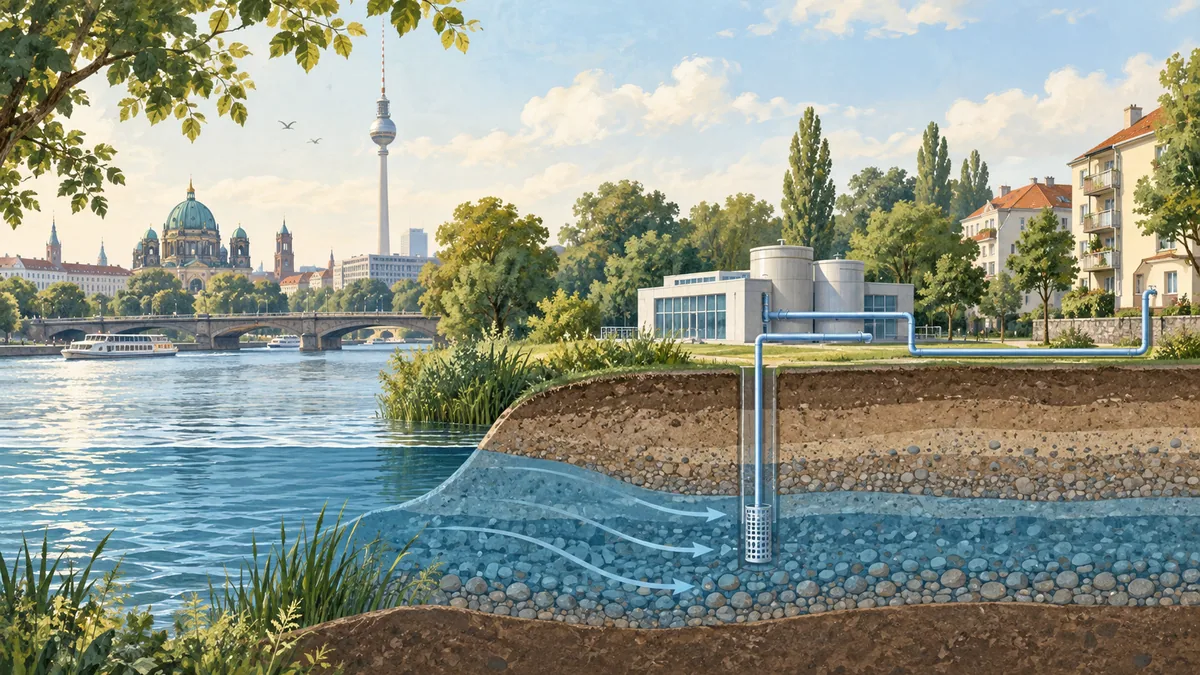
Madrid's regional water supply begins in several catchments, areas where water drains into a shared river or reservoir. Reservoirs collect and store that water before treatment. Canal de Isabel II manages that route through to the distribution network. Following the stages explains why a reservoir's size tells only one part of the supply story.
Where the water is collected
Canal lists surface-water sources in the Lozoya, Jarama-Sorbe, Guadalix, Manzanares, Guadarrama-Aulencia and Alberche catchments. Its system collects water through 13 reservoirs and six diversion weirs, low barriers that redirect river water. Groundwater also contributes, including when drought reduces surface-reservoir storage. The utility's water-capture page describes these regional resources.
El Atazar, which entered service in 1972, is the largest reservoir in Canal's system. Valmayor lies on the Aulencia and receives water from the Guadarrama and Alberche as well. These connections help explain the network, but the catchment list does not give a current source percentage for an individual Madrid tap.

Preparing stored water for supply
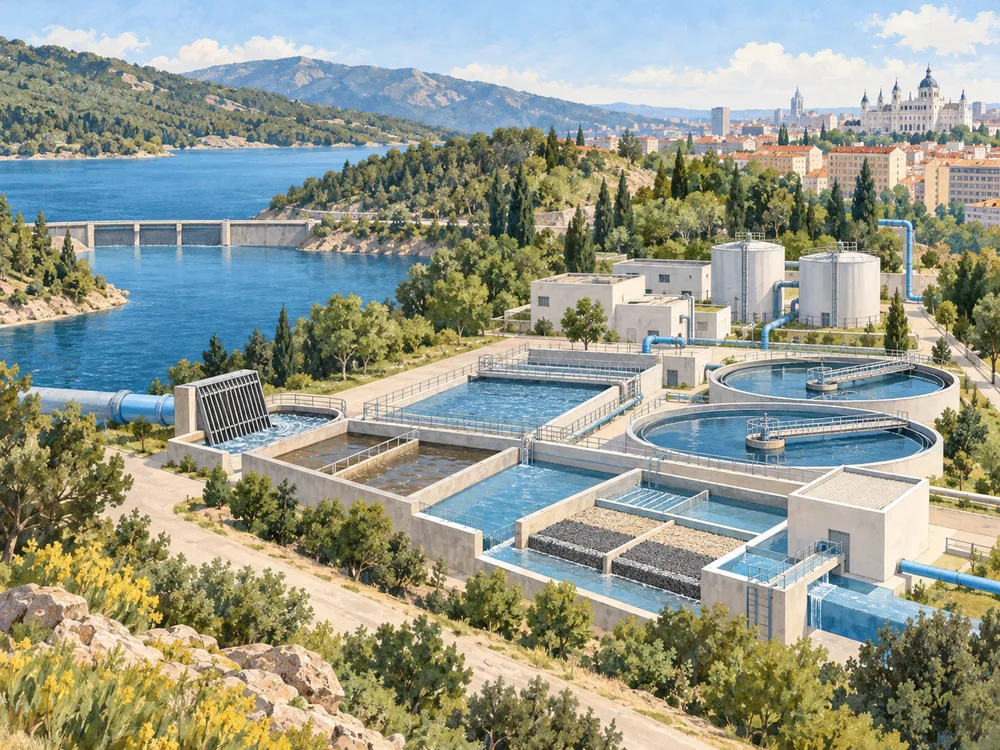
Reservoir storage is followed by treatment. Canal's drinking-water treatment plants are known as ETAP. Its treatment overview describes their role in making water from reservoirs and other intakes suitable for human consumption.
The utility's ETAP explainer starts with adding an oxidising chemical, a step called preoxidation. Other chemicals then help tiny particles stick together and grow into clumps, the stages called coagulation and flocculation. The clumps settle, and filtration catches particles still in the water. Acidity adjustment and final disinfection follow. Acidity adjustment helps protect pipes. Final disinfection targets surviving microorganisms and helps maintain quality during distribution.
Canal says the process depends on the incoming water's characteristics. This is a general explanation of the sequence, rather than a description of every plant's operation. Both the source and the treatment matter when understanding the supplied water.
Monitoring along the route
Checks begin at reservoirs, rivers and wells and continue through treatment and the distribution network to delivery to the consumer. Canal combines manual sampling with automatic monitoring stations that send measurements to a control centre. Its water-cycle guide describes the surveillance programme.
If you need a specific test result, look for the sample location, collection date and parameter. For an immediate service issue, use a current utility notice. The network description explains how the system works but cannot supply those address-specific details.
Reading a reservoir update
A reservoir figure may describe maximum capacity, the volume currently stored, or a share of water supplied over a stated period. Keep that distinction in mind when comparing figures. A large reservoir's capacity does not establish the proportion reaching a particular property; a percentage needs its total, place and period.
For a question about an address, ask for the relevant supply area and dates. Our Madrid tap-water guidance covers the broader traveller question. Follow local notices and consider building concerns for the place where you will use the water.