Berlin draws its tap water from underground, but rivers and lakes are part of the journey too. Water seeps through the ground before it is collected from wells, prepared in waterworks and sent into the city's network. Berliner Wasserbetriebe's water-cycle overview follows that route.
Understanding this connection helps explain why a city surrounded by surface water describes its supply as groundwater.
From the riverbank into the ground
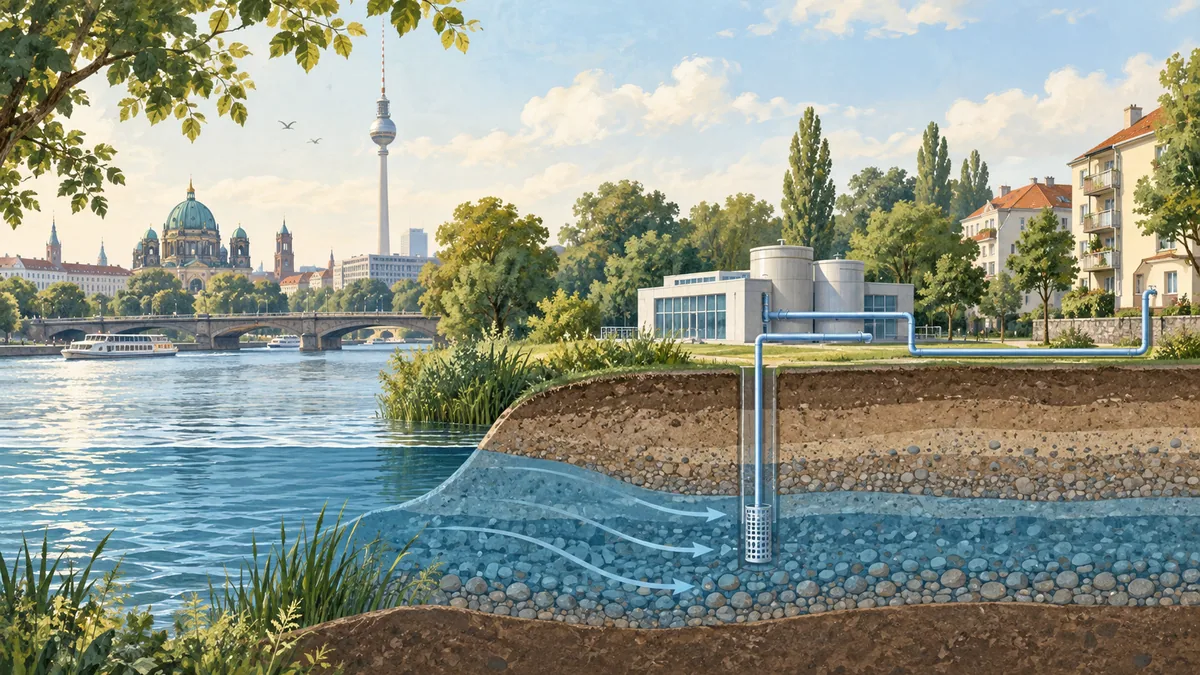
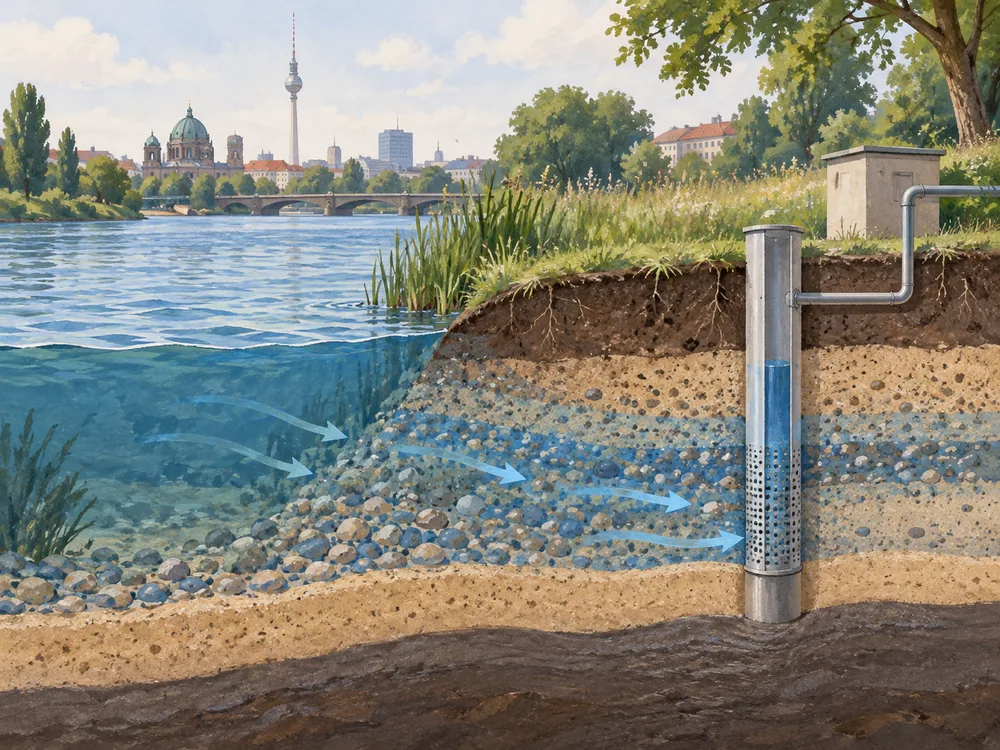
Berlin's environment portal says that bank filtrate makes up the main portion of the groundwater collected for drinking water. Bank filtration happens when water from a river or lake enters the ground nearby and passes through the material between the bank and the collection point. The city's abstraction and treatment guide describes this part of the supply.
Groundwater therefore describes where the water is collected. It can include water that began in a lake or river, as well as rain that entered the ground on land. Passing underground is one stage of the journey; it does not establish that every possible contaminant has been removed. What happens at the waterworks still matters.
In some places, the utility also helps replenish groundwater by holding pre-cleaned river or lake water in shallow earth basins, ponds or ditches. This is a deliberate addition to the groundwater resource, separate from water entering through a riverbank. The utility's recharge description explains the practice.
Collecting and preparing the water
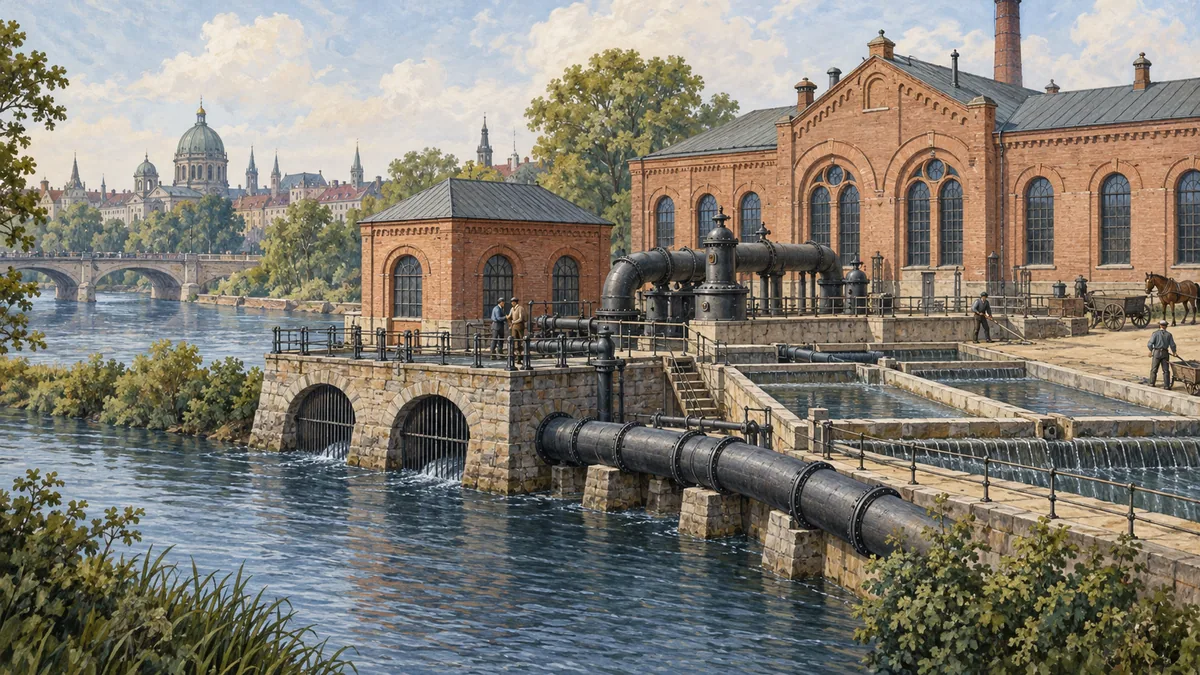
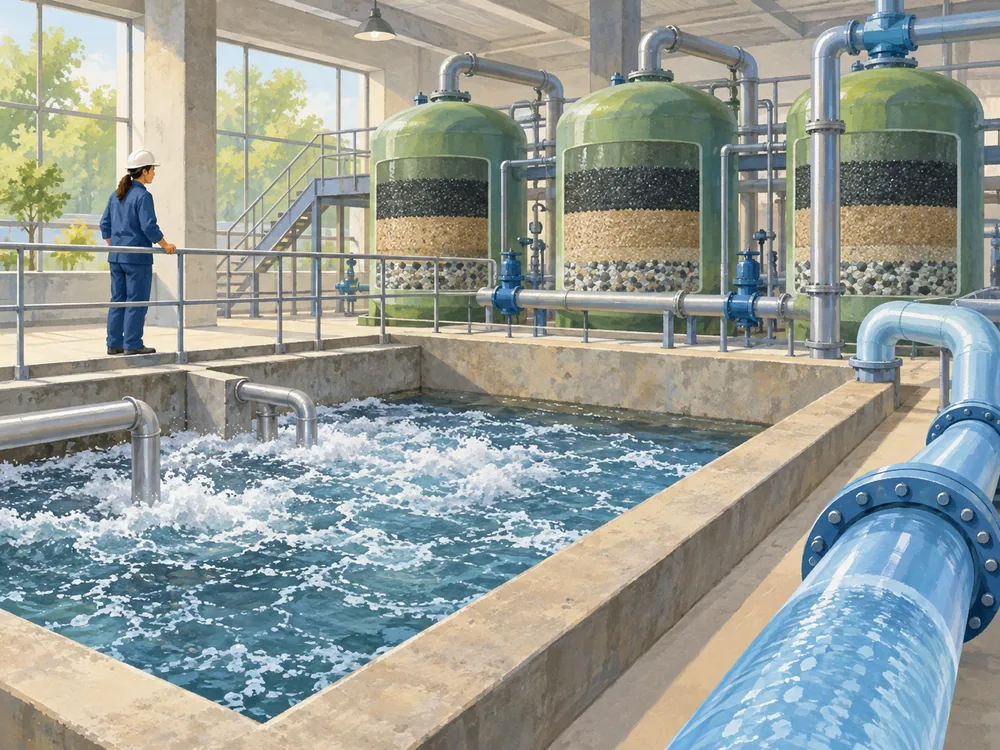
Friedrichshagen waterworks provides a concrete example. Its plant description lists vertical wells 30 to 60 metres deep, an aeration structure, where water is exposed to air, and a hall with multilayer filters, which contain layers of filtering material. Clean-water pumps serve the lower city and the intermediate pumping stations at Lichtenberg and Lindenberg.
Berlin's treatment guide describes removing iron and manganese by aeration and filtration. The utility's aerator explanation describes the mechanism: oxygen makes dissolved iron and manganese form particles that filters can catch. Wells collect the water, treatment prepares it, and pumps move it towards customers. The equipment details above describe Friedrichshagen, not every Berlin waterworks.
Across the city, nine waterworks are coordinated through control centres at Friedrichshagen, Tegel and Beelitzhof. Berliner Wasserbetriebe's network account places the individual works within that larger system.
Protecting the source and checking the building
The places water travels through need protection as well. Berlin designates water-protection zones around drinking-water collection areas, as described by the Senate's groundwater authority. Land protection and operation of the waterworks are both parts of managing the supply.
Once water enters a building, private installations can release contaminants into it. Berlin's environment portal identifies that separate concern. A description of groundwater or treatment equipment cannot establish the condition of a particular hotel tap. For practical visitor guidance, see our Berlin tap-water guide.