Berlin's first public waterworks opened outside the Stralauer Tor in 1856. The network grew through more waterworks, reservoirs and changes of ownership. The surviving buildings tell different parts of that history.
The history is easier to follow through the jobs those buildings did: collecting and preparing water, storing it, and moving it to customers.
A company builds the first waterworks
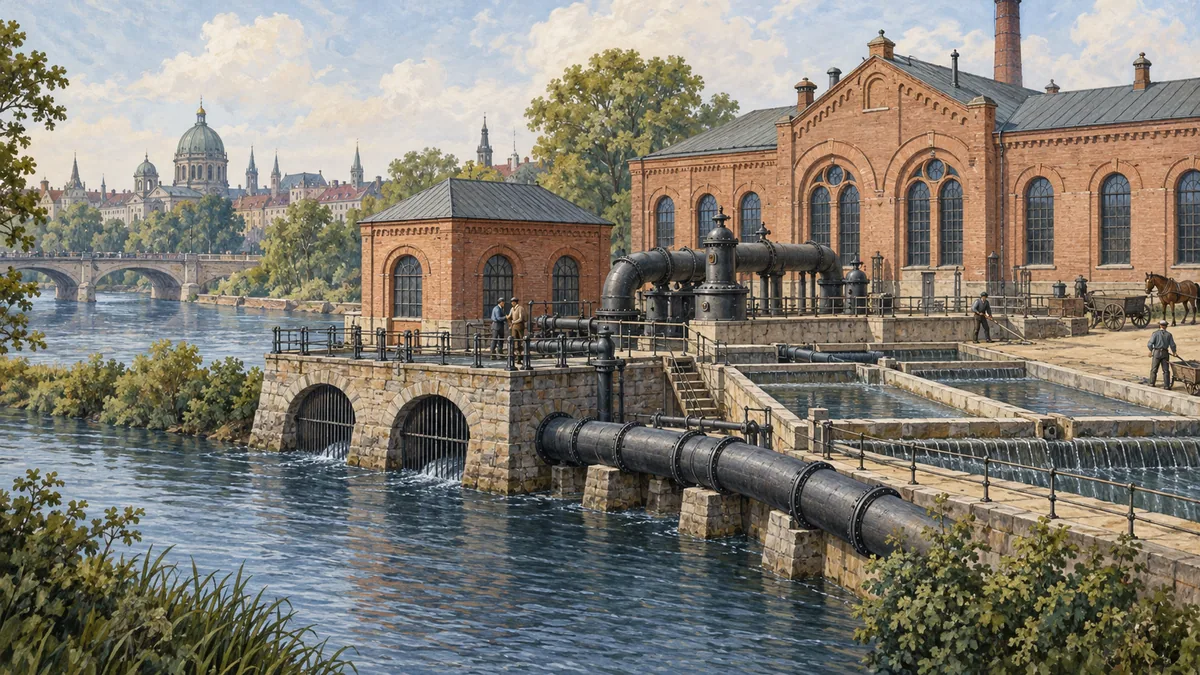
The story begins with an agreement in 1852. English entrepreneurs Fox and Crampton signed the founding contract for what became the Berlin Waterworks Company. Its first waterworks began operating in 1856, outside the Stralauer Tor. In 1873, the city bought the company. Berliner Wasserbetriebe's timeline records these steps from a privately run works to municipal ownership.
Water supply was one part of the city's infrastructure. In the same year as the purchase, a sewer-construction commission was formed under James Hobrecht. Its task concerned the removal of used water, while the waterworks supplied drinking water. The utility's timeline records both developments.
Storing water above the inner city
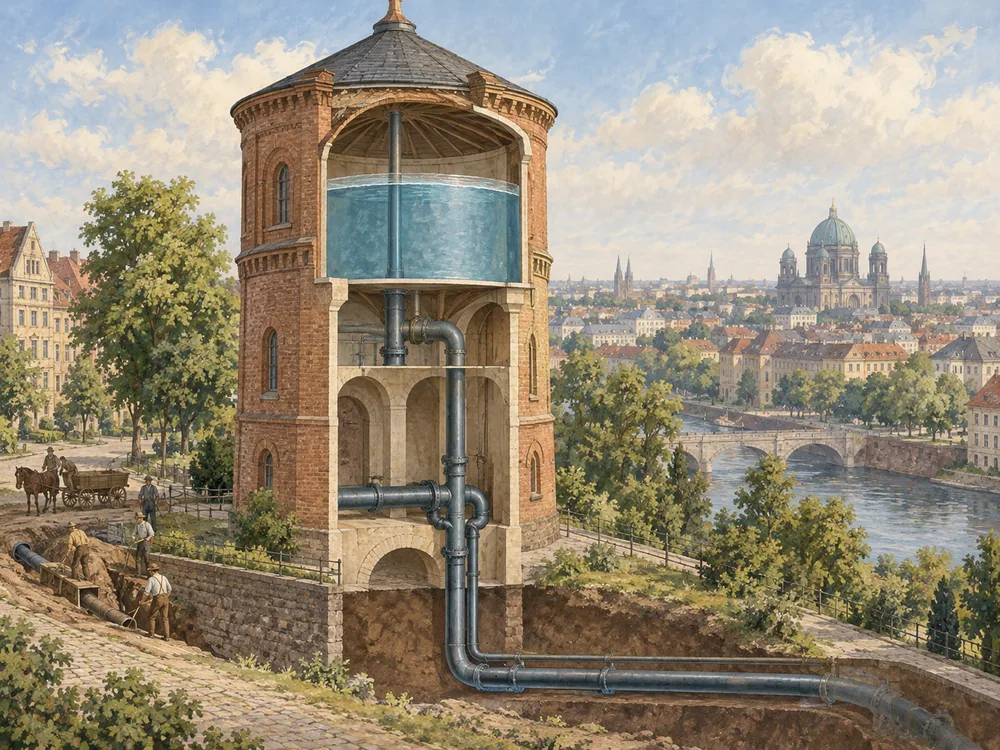
The Prenzlauer Berg water-tower site brings another part of the system into the story: storage. Between 1852 and 1877, the Waterworks Company built an ensemble with a raised reservoir, two underground reservoirs and a standpipe tower. The works at Stralauer Tor and the reservoir on the former Windmühlenberg supplied the inner city of that period, according to Pankow's account of the site.
Those structures did not all stay in the same job. The machinery and underground reservoirs were taken out of service in 1914. The raised reservoir was later used as a pressure indicator. A tower can survive as a familiar building after its original water-supply role has ended.
Bringing a larger city's networks together
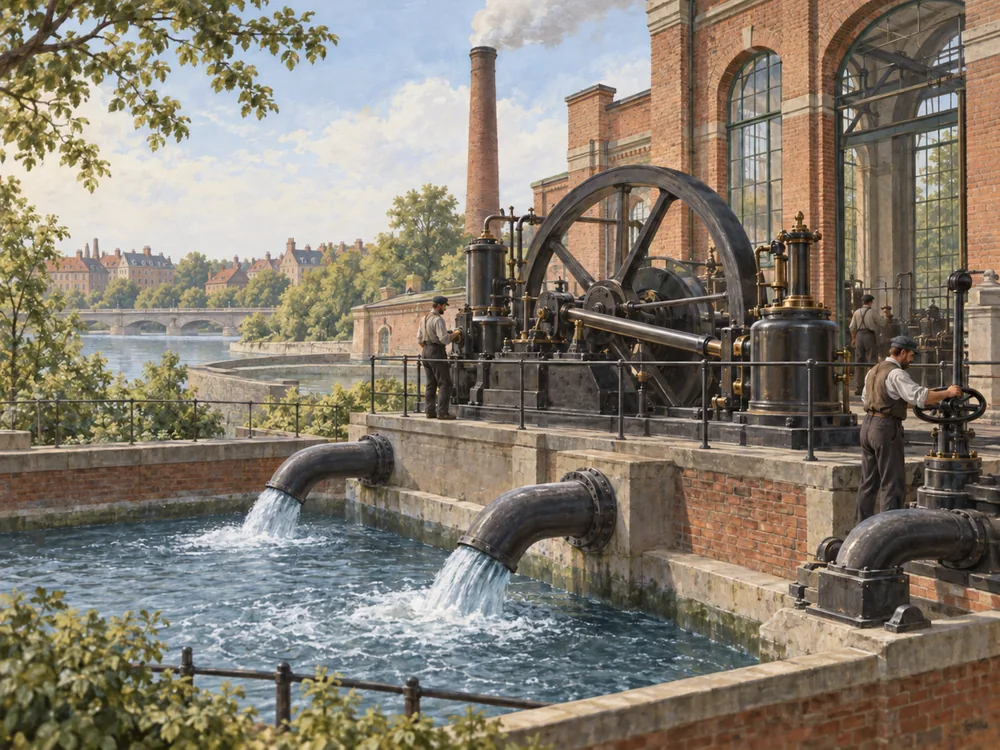
Friedrichshagen waterworks opened in 1893. Its historic buildings and those of the Lichtenberg pumping station became part of the industrial ensemble described in a utility retrospective. The museum at Friedrichshagen was established in 1987.
Between those dates came a much larger reorganisation. Greater Berlin was created on 1 October 1920, bringing 21 waterworks into a city whose networks and responsibilities still needed to be coordinated. Changing the city boundary did not instantly join up its water systems.
A decision in 1923 led to Berliner Städtische Wasserwerke AG taking over management on 1 January 1924. It was wholly owned by the city. A separate Charlottenburg company continued to supply western and southern areas, so integration continued alongside that arrangement. The utility's Greater Berlin history traces this process.
The switch to groundwater
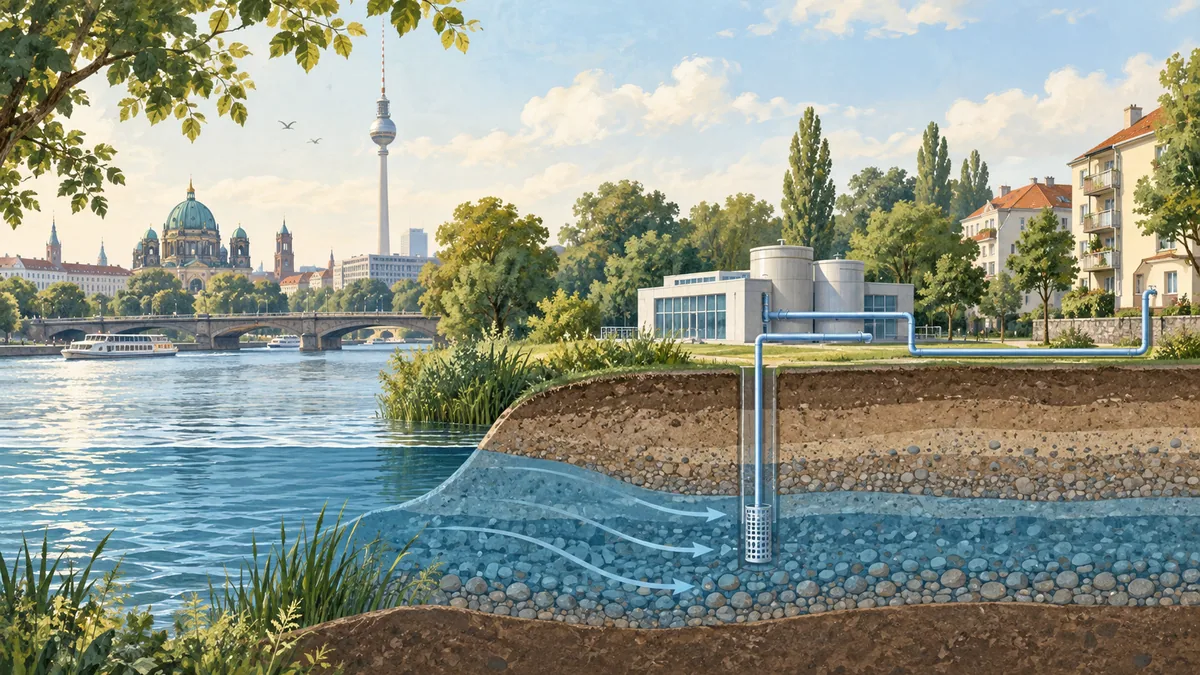
The utility dates the end of lake-water treatment at Friedrichshagen to 1991. After that change, Berlin was supplied from groundwater. For present-day visitor guidance, see our Berlin tap-water guide.
About the historical dates
The opening and ownership dates refer to particular works and organisations, rather than the date every household gained a tap or every part of the network was built. The Friedrichshagen retrospective was published on 5 September 2012. It supports the historical dates and description above, but gives no current museum-access information. The historical supply milestones also leave the condition of today's individual taps unassessed.