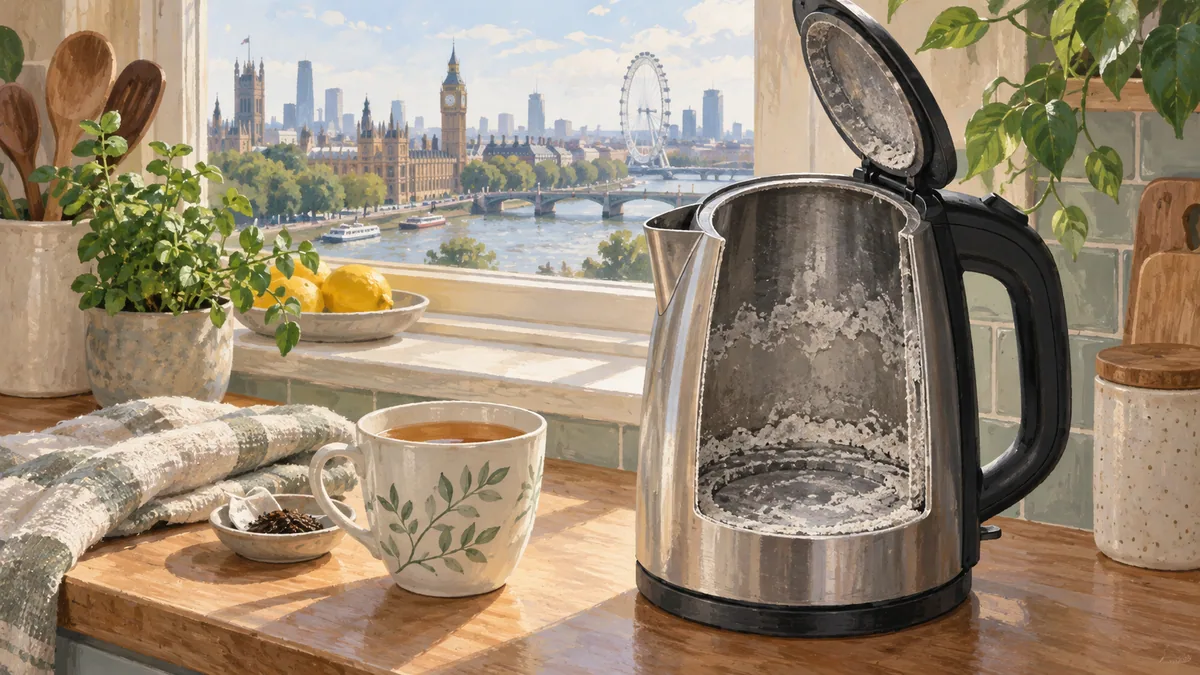
Berliner Wasserbetriebe describes Berlin's drinking water as hard. The minerals behind that description also help explain deposits in kettles and around taps. Hardness, appliance care and contamination are separate questions, so a white deposit alone cannot settle them all.
Germany's Environment Agency explains hardness in terms of calcium and magnesium and describes how calcium-rich water can form deposits. Its 2016 drinking-water guide provides the mineral background.
What Berlin's figures describe
The utility's mineral overview labelled 2025 lists calcium at 116 mg/l and magnesium at 11 mg/l. These are figures from the published overview, rather than a new sample from your kitchen.
Its 2025 waterworks table reports annual medians, middle values calculated from the ordered measurements for that year. Total hardness ranges from 15.1 °dH at Spandau to 23.3 °dH at Wuhlheide, and all nine listed works are classified as hard. The unit °dH means German degrees of hardness; it is the hardness unit used in this table.
The table separates total hardness, carbonate hardness, calcium and magnesium, alongside other chemical measurements and tests for microbes. Read each measurement with its unit. A number for calcium, for example, is not automatically the hardness setting an appliance requests.
Find the information for your address
Mineral composition can vary between supply areas. Use Berliner Wasserbetriebe's postcode lookup for the accommodation's address, then compare the local information with the appliance manual. A result from another neighbourhood may not be the one you need.
Before changing a dishwasher or washing-machine setting, record the address, reporting year, parameter and unit. Follow the manual's requested unit and the detergent packaging for the relevant hardness range, as the utility advises. Downloading the table today does not turn its annual medians into today's measurements.
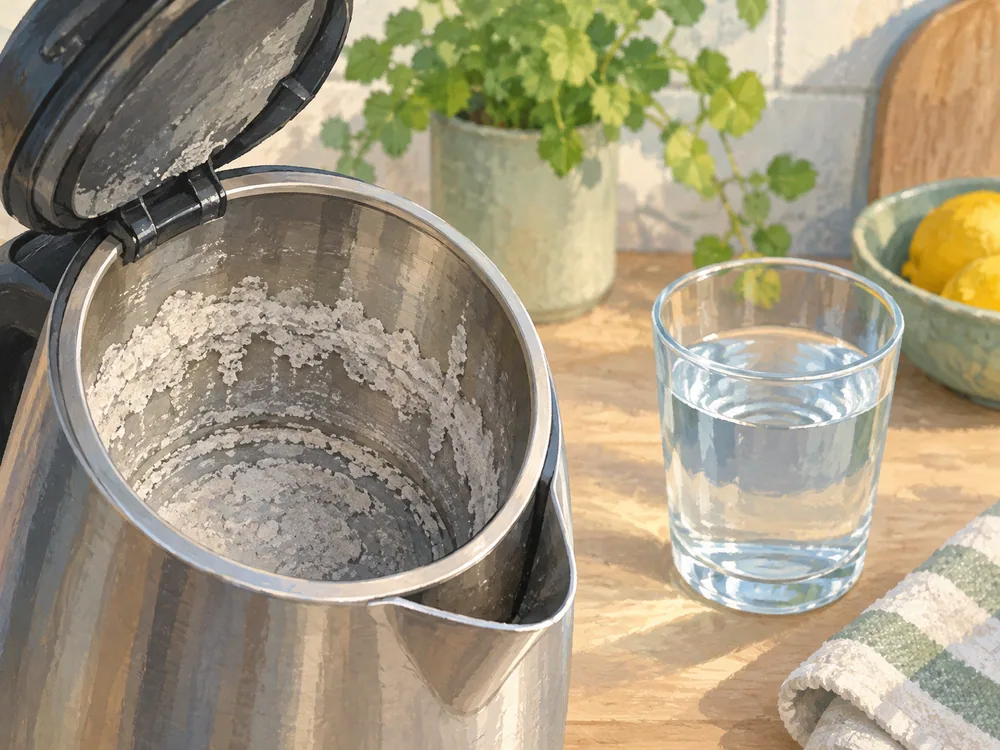
For a kettle during a short stay, begin with the model's care instructions. If you are considering equipment, decide whether you want a different taste in tea or coffee or help with deposits. That makes the product question more specific, without turning a taste preference into a safety finding.

When the question is water quality
The table's separate quality parameters also show the limit of judging water from a kettle. Our inference is that a deposit cannot establish either that a contamination test has failed or that contaminants are absent from a household tap. A specific concern needs evidence addressing that concern.
For lead concerns in plumbing, Berliner Wasserbetriebe offers laboratory analysis through its lead-information section. Taste and appliance settings cannot answer a lead question.
Our Berlin tap-water guide covers practical visitor use. Keep the local analysis and the appliance instructions together when dealing with hardness, and use an appropriate investigation for a separate quality concern.
Optional hardness indicators
For comparing appliance settings, check the exact kit’s parameter, units, range and instructions. A hardness indicator is not a drinking-water safety test.
🛒 Browse water hardness test strips on Amazon →Amazon paid link