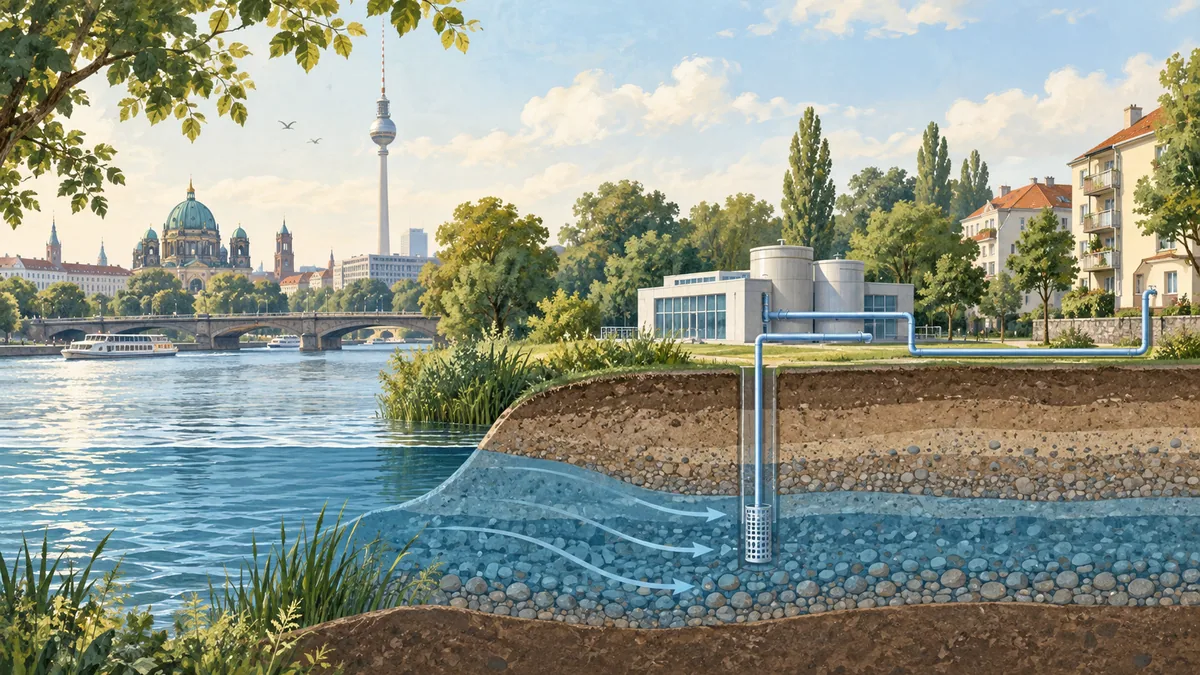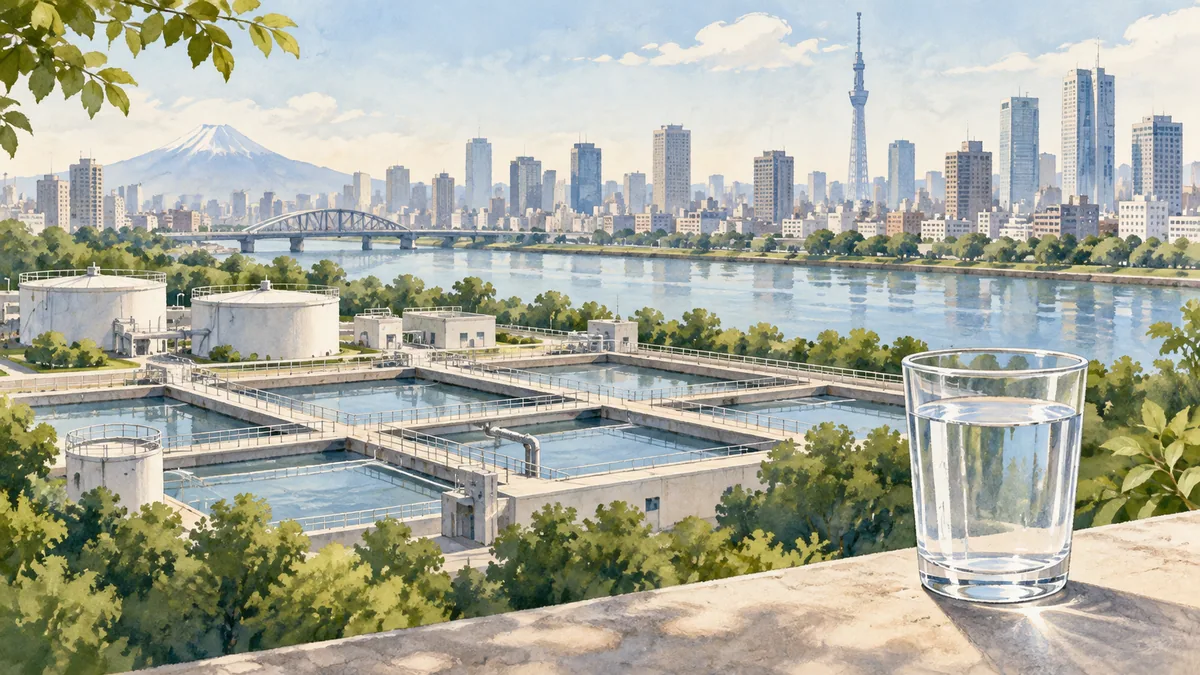
Tokyo Waterworks uses filters to separate material from the water and disinfectants to control microorganisms. Advanced treatment adds ozone, which breaks down organic compounds, and biological activated carbon, which helps remove the breakdown products. Chlorine continues to disinfect the water as it travels through the supply network. Following those stages explains what each part does.
This account covers the Tokyo Metropolitan Government Waterworks Bureau's network. Its 2026 business outline, describing FY2025 operations, covers the ward area and 26 Tama municipalities. It also supplies bulk water to separately managed Musashino, Akishima and Hamura. Check the supplier for your address against the bureau's service-area account.
Matching treatment to the source
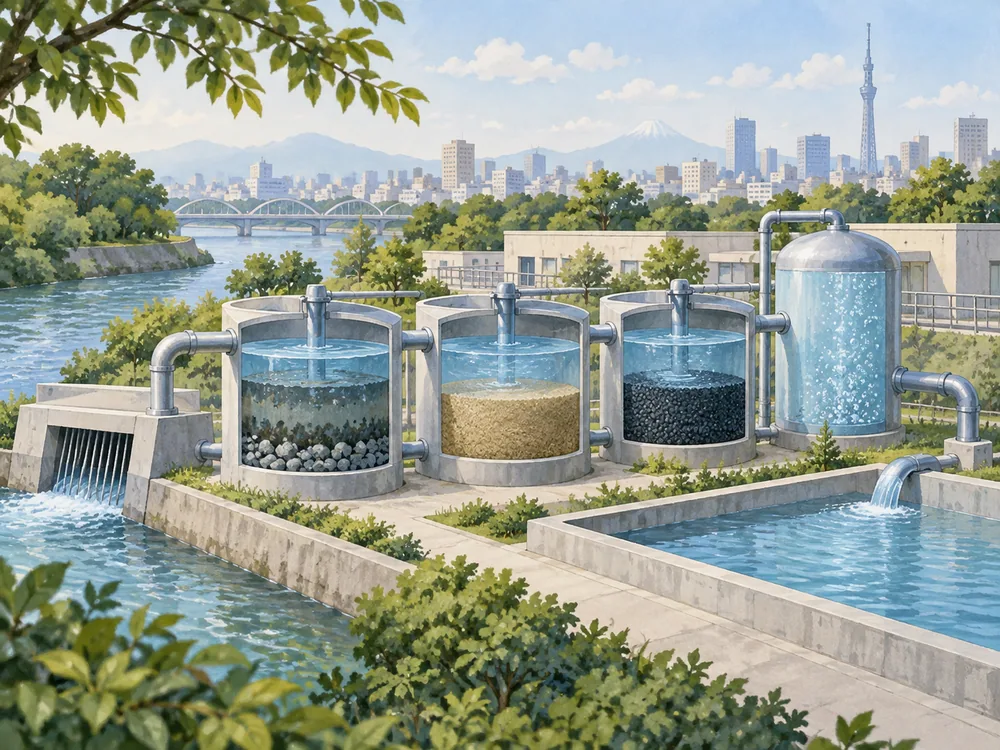
The bureau's English Business Outline 2023 lists rapid sand, slow sand and membrane filtration among its methods. It describes matching treatment to the quality of the incoming source water. The English overview introduces those methods; its operating tables are historical information, not measurements from 2026.
Different facilities and sources provide the context for a filtration label. A description of one plant cannot establish which equipment supplies every Tokyo tap.
For advanced treatment, Tokyo Waterworks describes ozone breaking down organic compounds, followed by biological activated carbon removing breakdown products. Remaining ozone decomposes or reacts in the next stage and is not left in water leaving the plant. The bureau's ozone explanation presents these stages together.
A process description explains what the equipment does. To answer a question about a particular substance, use a test result and its sampling location; the word ozone alone cannot prove that every contaminant was removed.
Disinfection in the supply network
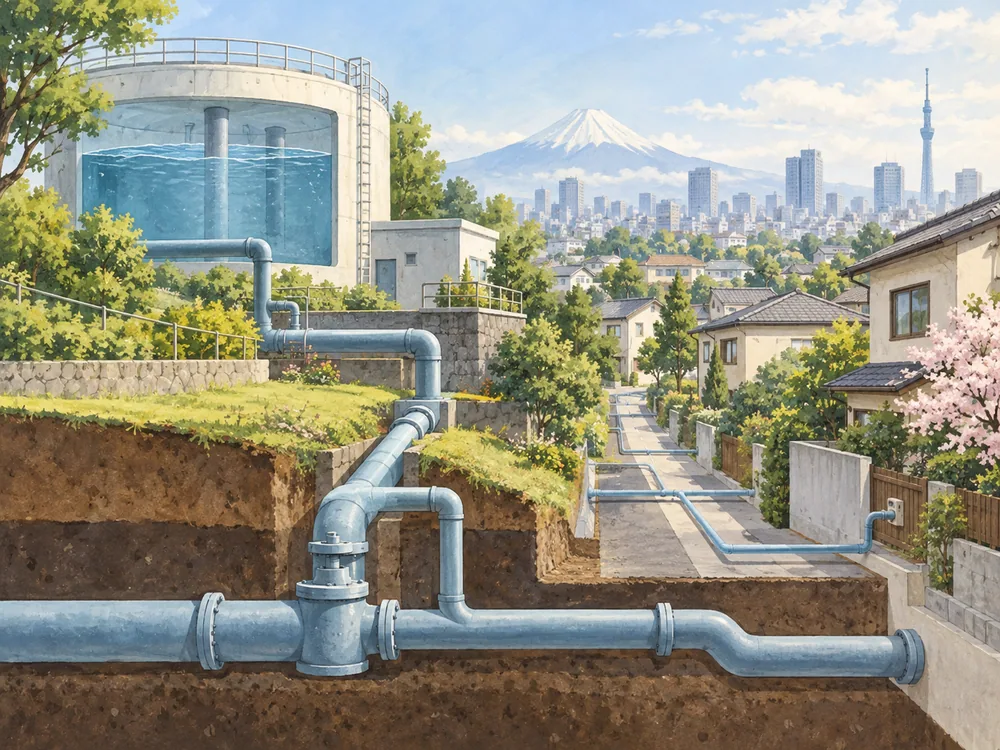
The bureau identifies chlorine as the disinfectant in tap water. It monitors residual chlorine, the chlorine remaining in the water after disinfection, and uses the results to adjust dosing at treatment plants and supply stations. Its chlorine guide describes how that is managed.
Disinfection therefore remains part of the journey through the network, alongside the earlier treatment stages. Looking only at advanced treatment would miss this part of the system.
Finding information for your area
The bureau's address tool identifies nearby sampled taps and the principal purification facilities for an area. Where several facilities supply water, it shows the one providing the most. Boundaries can change during drought or works. Record the searched address and the monitoring point shown: a nearby sampled tap is not a sample from your own kitchen or hotel.
The water-quality data page separates daily residual-chlorine, cloudiness (turbidity) and colour readings from quarterly inspection results and annual reports. Quarterly results are provisional and can be revised. Read each result with its location, date, parameter and unit; this article does not independently assess every dataset result.
Our Tokyo water guide provides broader visitor context. For a property concern, consult the responsible supplier and building manager alongside the system information.