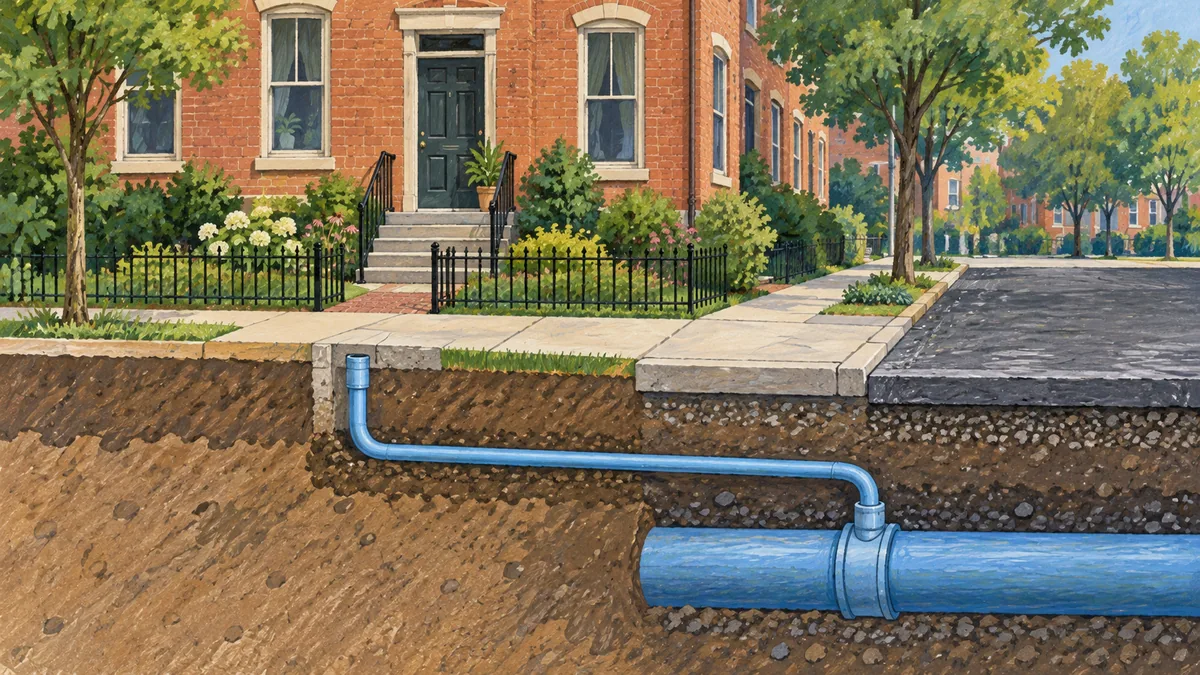
A Montréal service-line record can help you ask about the pipe supplying a building. Read the evidence behind its status, then ask separately about the public and private portions. A possible-lead label, a screening result and paperwork for a replacement establish different things.
Read the status and its history
The map help page, updated 19 June 2023, describes labels for possible lead, lead and no lead. For unscreened buildings, the indication draws on construction before 1970 and eight or fewer dwellings. Read that as an estimate based on the building, not a screening result. The history separates identification, screening date and results, and repair year; the address field follows the property assessment roll.
The same map help page says its update includes 2022 screenings and excludes service-line replacements. This is the scope of that published description. We did not retrieve a live address record, so it does not establish how recently today's map data were refreshed.
Save the record for the actual property if you use the map. Keep its operation dates with the status and note any missing information. If an owner says a pipe has since been replaced, ask for the replacement record instead of assuming the map already contains it. A nearby property's entry cannot answer the question for your building.
Ask about both portions of the line
The city's replacement guidance, updated 12 March 2026, defines the public portion from the water main to the property line. The private portion runs from that boundary to the indoor shut-off valve. Its replacement guidance also identifies plumbing and soldering as other potential sources of lead after a service line is replaced.
The older identification article says the two service-line sections can have different materials. An indoor section without lead does not establish the buried section's material. It also distinguishes the city's rapid water screening from a regulatory analysis carried out by a certified laboratory. Read the identification and screening explanation, updated 5 October 2021, with those limits intact.
When asking a host or owner, specify which portion the answer concerns and whether it rests on inspection, screening or replacement documents. If the buried portion is unknown, retain "unknown" in your notes. You do not need to fill that gap with an assumption about the age or appearance of the visible pipe.
Keep replacement evidence with the address
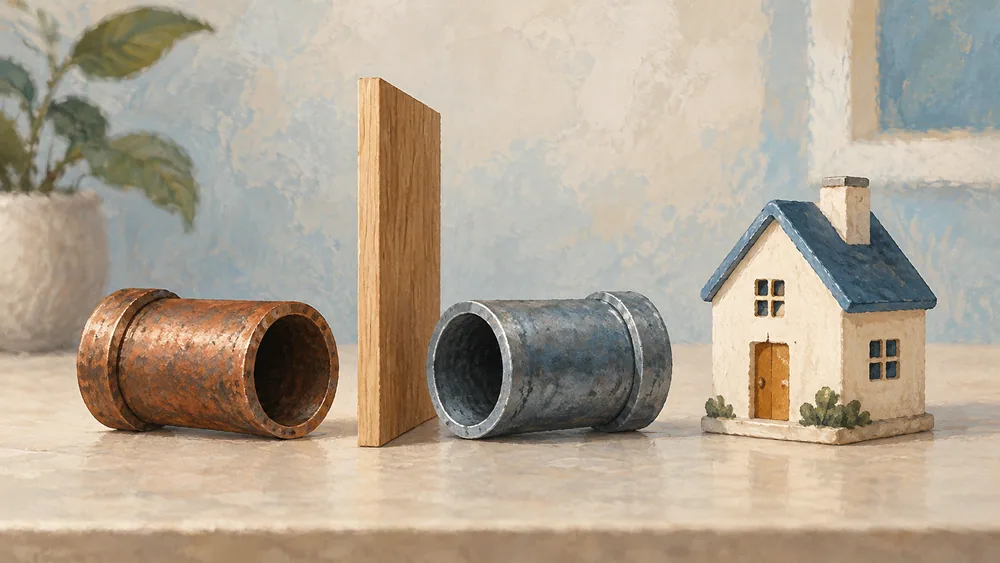
The private-section declaration instructions, updated 8 May 2026, request two indoor service-line photos and proof covering the entire private section, including the buried portion. Suggested proof includes an invoice identifying replacement material and length, photographs taken during excavation, or other documentation of the material. The declaration instructions explain what an owner must provide.
That paperwork answers a material-and-work question. Its existence alone does not establish a current lead concentration at a kitchen tap. We also have no evidence here that submitting a declaration immediately changes the interactive map. Ask the city which records it holds and whether the property information needs updating.

Take a property question to the property
For a rental stay, ask the owner what is known about both portions, when any screening occurred and whether replacement documents identify the address and extent of work. Keep the original reply or document so you can distinguish a confirmed change from a recollection. The city's health recommendations display an update of 20 July 2023. Consult the city for instructions relevant to your property; this article has not assessed a household sample.
Our Montréal guide covers the broader visitor question. If a separate filter choice arises, the certification-label article explains how to check an exact product's documented claim. A service-line lookup itself is not a product recommendation or a guarantee about every tap in the building.