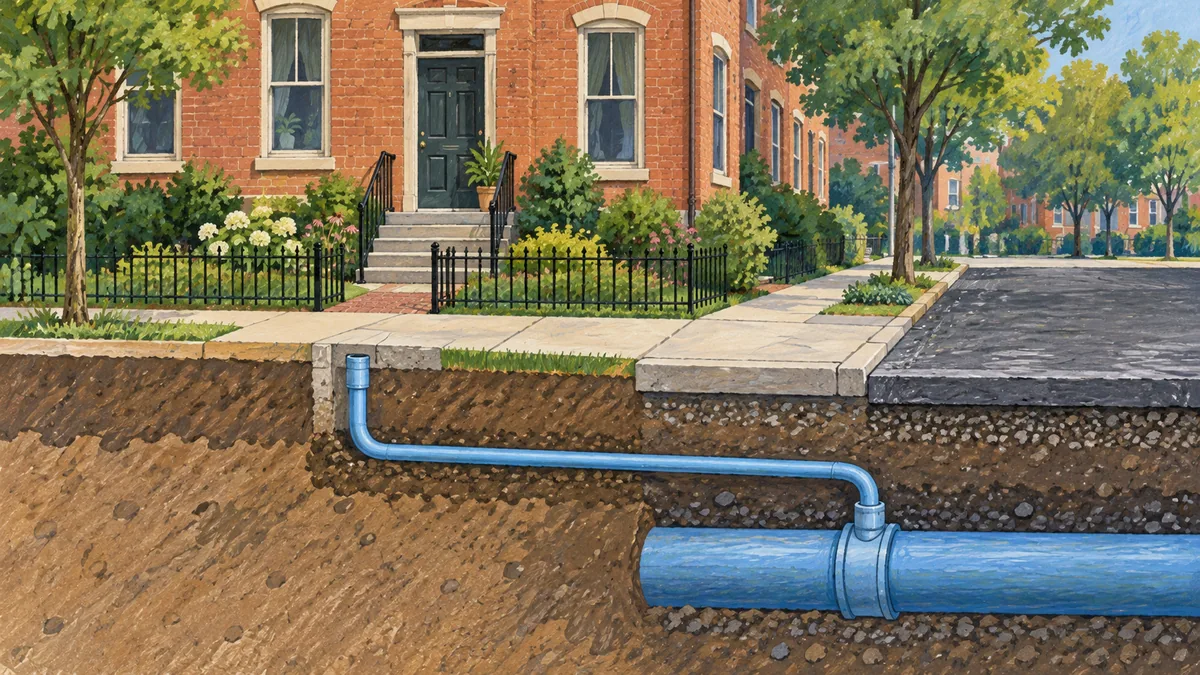
DC Water divides a service line into the section in public space and the section on private property. Its diagram places the property line between them: the public portion runs from the public water main to that boundary, and the private portion continues toward the building. Indoor plumbing is shown separately. When you read a material record, check which portion it describes before treating it as an answer for the whole connection. DC Water's service-line notice and diagram.
Where the line divides
The notice's drawing shows much of the service pipe underground, with only its entry into the home available to inspect. It is a general illustration, not a survey of your property's boundary or the route of its buried pipe. If you are arranging work, ask DC Water and the property owner to identify the relevant boundary and records rather than estimating it from the pavement.
An exposed pipe at the building answers a limited question about that visible end. DC Water's identification guide shows where to look near the pipe's entry through the floor or wall, and asks for photographs to help identify the material. Treat this as information to submit to the utility; avoid assuming it describes the entire underground connection. The pipe-identification guide.
Reading the material labels
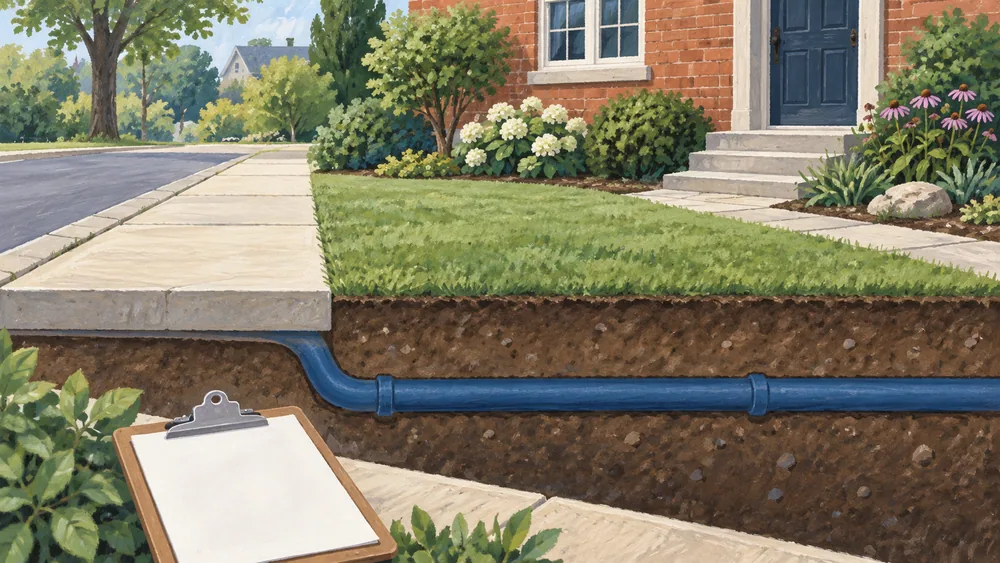
DC Water's inventory guide distinguishes Verified Non-Lead, Suspected Non-Lead, No Information, Suspected Lead and Verified Lead. A verified category uses a record from a reliable source; a suspected category has an unverified record. No Information means the utility has no pipe-material record for that section. It is an unresolved entry, not a finding that the material is lead or non-lead. The inventory legend.
Check both the public and private portions. The guide explains that repairs or renovations can change part of an originally continuous service line. A replacement record for one part therefore leaves a question about the other part. For a rental or short stay, ask the host for the property's own record and any recent replacement documentation, rather than applying the label from a nearby address.
DC Water invites customers to send pipe photographs and replacement records so it can update the inventory. Keep the document's address and the work it actually describes together. An invoice for an indoor fixture would answer a different question from a record of a service-line replacement. Ask the utility to resolve an unclear record; the building's appearance leaves the buried material unanswered. How to submit material information.

A map entry and a tap sample answer different questions
The material record describes the pipe; the sample describes water collected under particular conditions. DC Water's monitoring explanation says lead levels vary between homes, including homes on the same block. Its system monitoring uses first-draw and second-draw samples, and reports the regulatory 90th percentile for first draws across the sampled homes. Those results cannot be applied to an untested neighboring tap. The monitoring explanation.
DC Water offers an annual free lead test to residential and commercial customers. Its testing page describes the result as a snapshot at collection, to be considered alongside service-line material and indoor plumbing information. Follow the kit's sampling instructions and keep the date with the result. Ask the utility which next step applies if the pipe material is unknown or records disagree. The customer testing service.
Our Washington DC guide covers the broader travel question. If the property operator recommends a filter, our certification-label guide explains how to check the exact model and its documented claim. Neither a map label nor a product's familiar brand name supplies a measurement for your tap.