Birmingham's Elan supply began as a plan to bring water from Welsh valleys to the city by gravity. The valleys offered rainfall, land that could be dammed and height above Birmingham's storage. The route would connect reservoirs in Wales with Frankley, followed by treatment and distribution.
The project's history runs from parliamentary approval and construction to the later changes in how the water is treated and supplemented.
Choosing the Elan valleys
Welsh Water's history dates parliamentary authorisation to 1892, work starting to 1893 and the first-phase opening to July 1904. Its explanation links the scheme with Birmingham's growing demand for clean water.
The Library of Birmingham's archival account, published on 20 January 2014, explains how rainfall, terrain and elevation suited the project. It discusses a photographic album in the Severn Trent collection, MS 944, and connects an introductory caption with the Birmingham Corporation Water Act of 1892.
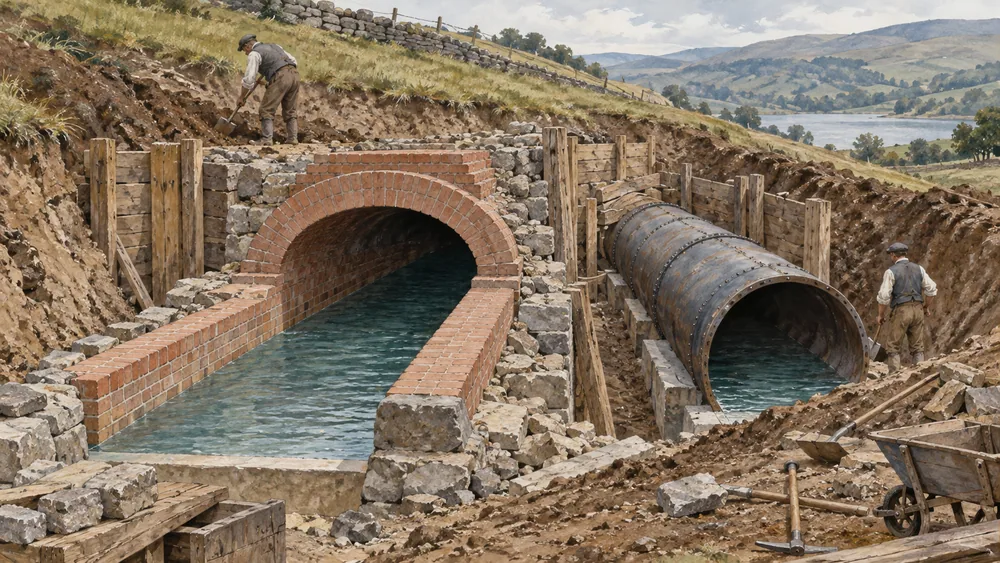
Building and opening the route
The Royal Commission's heritage account, published on 21 July 2024, dates construction from 1893 to 1906, with substantial completion by the 1904 royal opening. Work could therefore continue after the ceremony.
Elan Valley Trust's construction history dates aqueduct construction to 1896. Its aqueduct section distinguishes the royal opening on 21 July 1904 from first continuous flow on 28 July 1904. An earlier paragraph associates flow with 21 July, so the account is not fully consistent about that milestone. Neither date establishes when every Birmingham customer began receiving Elan water.
From Foel Tower to Frankley
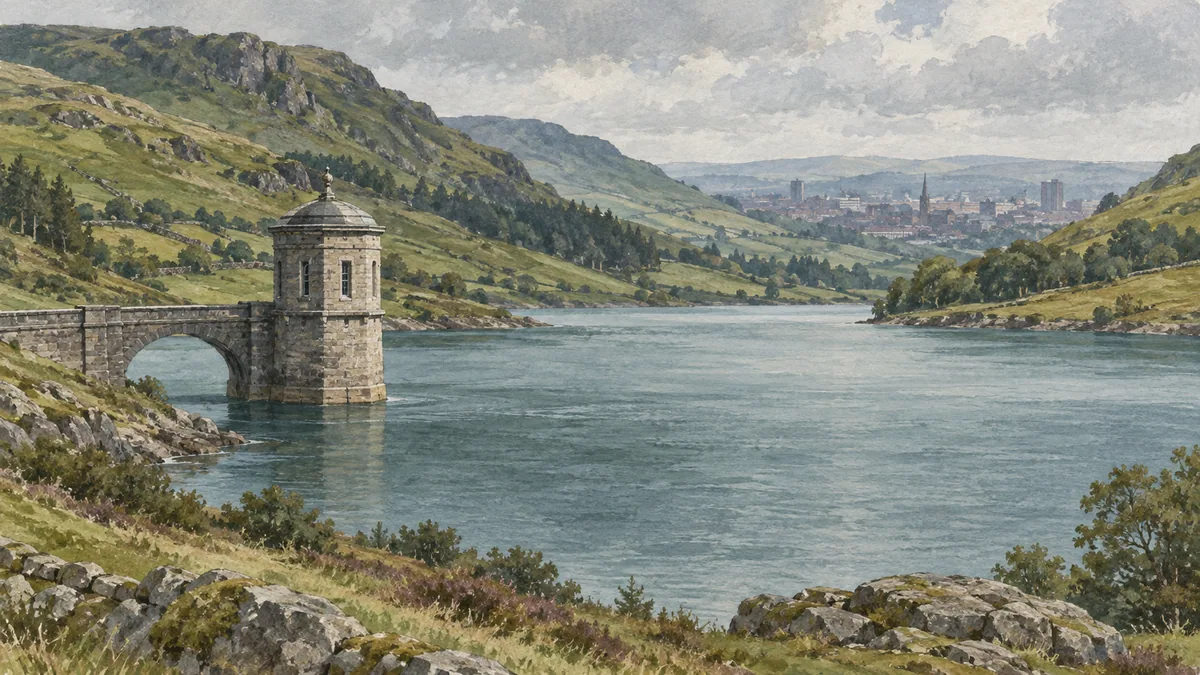
The Royal Commission describes a gravity connection from Foel Tower at Garreg Ddu Reservoir to Frankley Reservoir. The Trust describes tunnels, cut-and-cover sections and pipes along the route. These historical descriptions do not assess current condition or establish which original structures remain unchanged.
The Trust and a utility-authored technical account published on 1 October 2016 give a length of 118 km. The Royal Commission gives 73 miles in one passage and 126 km elsewhere. The discrepancy remains unresolved; these should not be presented as matching surveyed lengths.
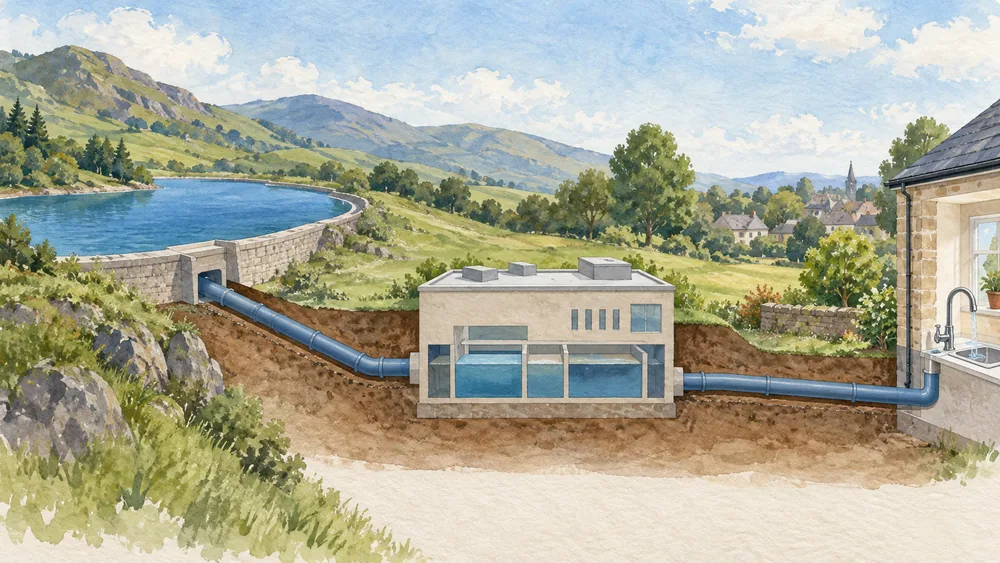
The 2016 account, contributed by Severn Trent Water and MWH staff, follows raw Elan reservoir water to Frankley treatment works. It records replacement of the original slow sand filters and describes River Severn blending available in 2016. That is the account's operating context, not a verified 2026 configuration. Transport through the aqueduct and treatment are separate stages of the journey.
Later supply and storage proposals
Severn Trent's new-supply release describes three boreholes intended to provide 30% of the water for around 35,000 customers in Edgbaston, Hagley, Moseley and Billesley. The water would mix with the existing supply in storage tanks. The announcement concerns that customer group, rather than a measured 2026 blend for all Birmingham.
The Frankley Pure Water Reservoir 3 proposal concerns covered treated-water storage and a pumping station. When read on 14 October 2026, it described land arrangements and planning approval still being pursued, with no confirmed construction start. This proposed storage is separate from the historical raw-water route.
Source notes and present-day questions
Welsh Water's history and the Trust's heritage account are undated. Neither of the two Severn Trent announcement pages displays a publication date; the access date cannot replace one. The archival account draws on photographs from the late 1890s and early 1900s. The complete album, original Act and distribution commissioning records were not inspected. The evidence supports the Act's year, without supplying a verified Royal Assent date.
Current customer-tap results and an address-specific 2026 blend remain separate questions. The historical accounts and scoped announcements do not fill those gaps. Our Birmingham water guide covers broader visitor use.