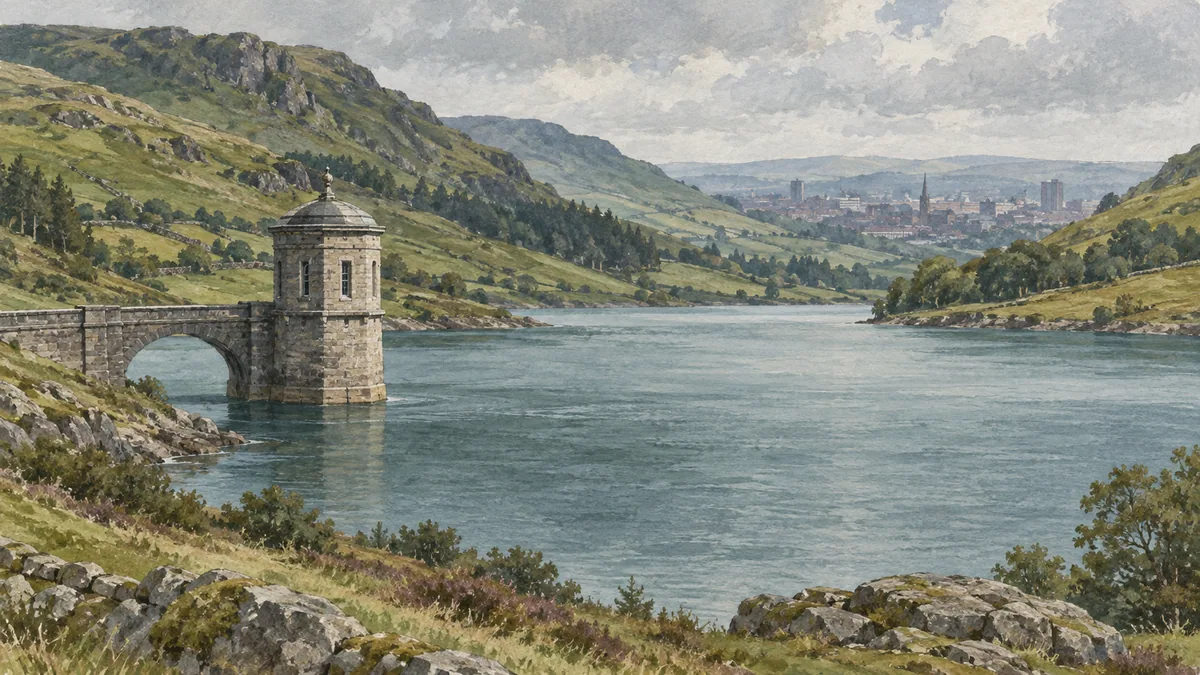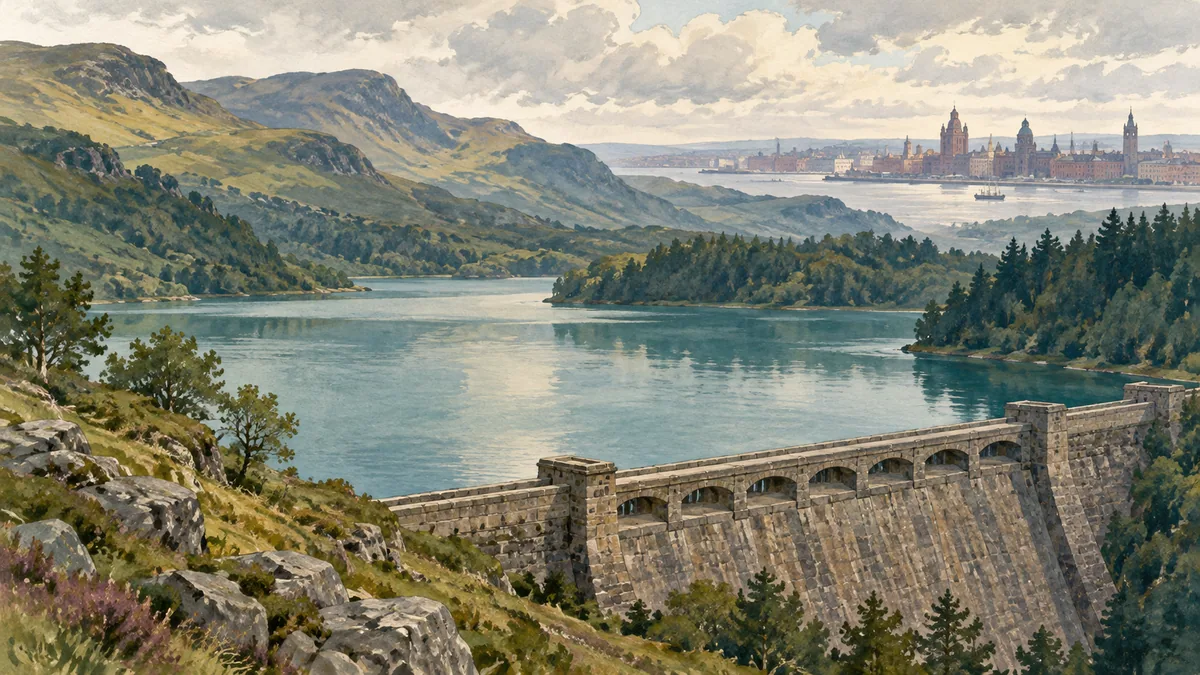
Lake Vyrnwy's connection to Liverpool is recorded in United Utilities' own account of the scheme. Published on 5 September 2018, it says George Deacon and Thomas Hawksley designed the scheme to supply Liverpool's drinking water. It dates the decision to build the dam to 1879. The utility's historical account
That history explains the purpose of the works. It does not, by itself, identify the source flowing to a particular hotel or home now. For that question, retain the supplier's name and ask about the address rather than treating a familiar reservoir name as a complete supply record.
The original purpose and later use
The same 2018 account says Liverpool homes and businesses were still receiving Lake Vyrnwy water at that time. Its date matters: a statement made then should not silently become a claim that every city's connection is unchanged today.
A later utility release, dated 24 March 2025, says the first aqueduct pipe was installed in 1892. It describes three parallel pipes running from Lake Vyrnwy towards Merseyside. The dated modernisation release
The dated accounts trace the connection from the original supply scheme to maintenance of pipes in a larger regional network. They do not establish that every pipe, treatment stage or customer connection remains as it was at the original installation. A historical construction date belongs with the original works; a later description belongs with the period it describes.
A route receiving modern repairs
The 2025 release describes lining cast-iron pipes with polyethylene and working on the lines in stages to maintain supply. Those are the utility's descriptions of its modernisation programme, not a laboratory result from a Liverpool tap.
United Utilities' project page says an earlier programme modernised the Oswestry-to-Malpas section. It describes the remaining work from Malpas through to Merseyside and gives a programme starting in 2020 with completion due in 2028. A target date does not show that the work has finished. Project sections and timing
The page calls the route over 110 km long and separately refers to 139 km of pipework being upgraded. Keep those quantities with their wording and scope. This article has not reconciled route distance, parallel pipes and work sections through an engineering survey, so they should not be presented as two measurements of precisely the same length.

A reservoir within a wider network
The regional planning summary describes the Strategic Resource Zone as river and reservoir sources linked by aqueducts, with groundwater sources as well. Water resources plan summary, page 2
That wider context helps explain why a reservoir's historic purpose and an individual property's source are different questions. The summary is a regional plan, not a returned postcode result. It supplies no current blend percentage for the accommodation where you are staying.
When reading a heritage account, preserve who wrote it and when. When reading an upgrade announcement, distinguish work completed from work proposed. For a present drinking-water concern, find the local supplier's relevant report or notice and keep its sampling period. Our Liverpool tap-water guide offers general visitor context; the historical connection to Vyrnwy is not a substitute for an address-specific result.