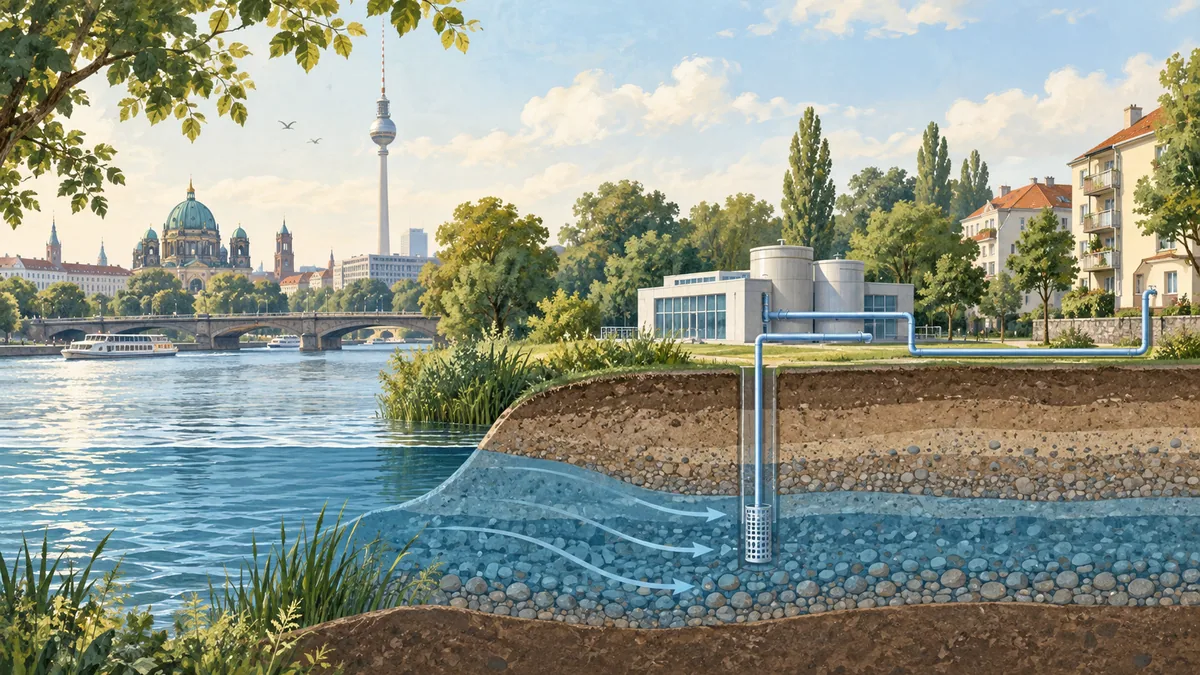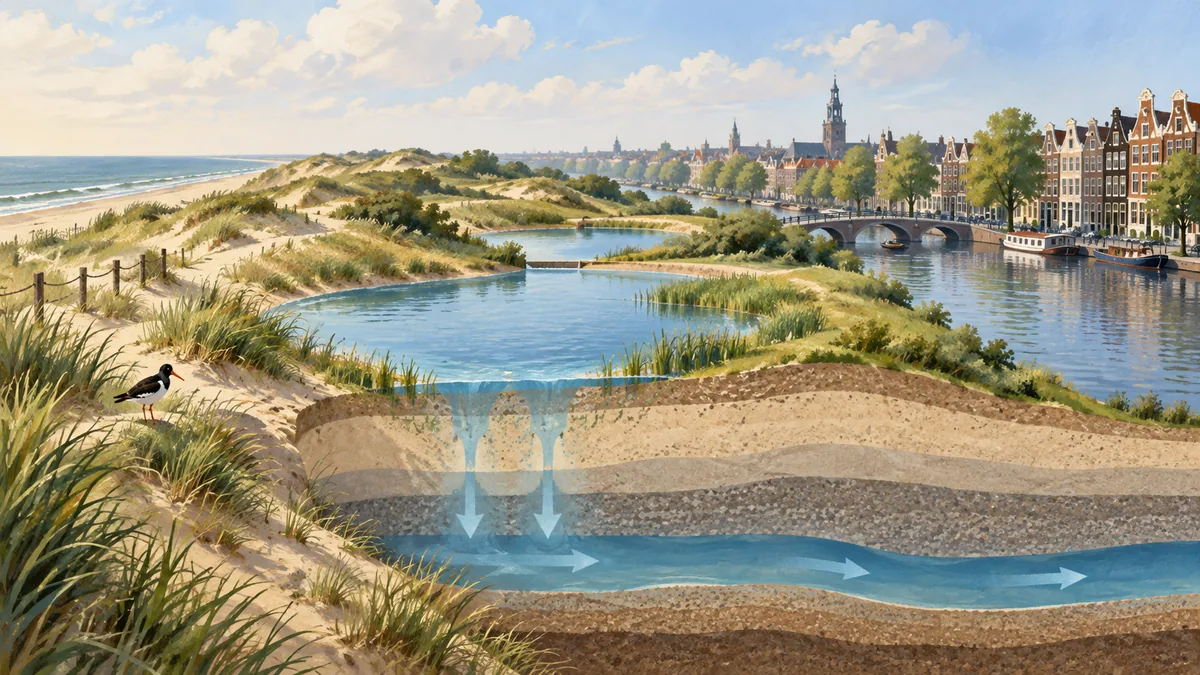
Amsterdam's dune-fed drinking water has treatment on both sides of its journey through the sand. Pretreated water arrives from the Lekkanaal near Nieuwegein, passes through the Amsterdamse Waterleidingduinen and goes on to Leiduin for further processing. Waternet's dune explanation describes a route that handles about two thirds of the city's drinking-water supply.
This is a general system proportion, not a measured blend for a particular address today.
Getting water to the dunes
WRK transports water after an initial treatment. Waternet and PWN jointly maintain the transport pipes: Waternet manages the Lekkanaal water and PWN the IJsselmeer water. The network also serves PWN's dune production and industrial customers. Waternet's WRK account describes these responsibilities.
Follow the branch relevant to Amsterdam's dune-fed supply: from the Lekkanaal intake to the dunes, then Leiduin. The transport network's other destinations are not extra steps in that same household-water journey.
Treatment before and after the sand
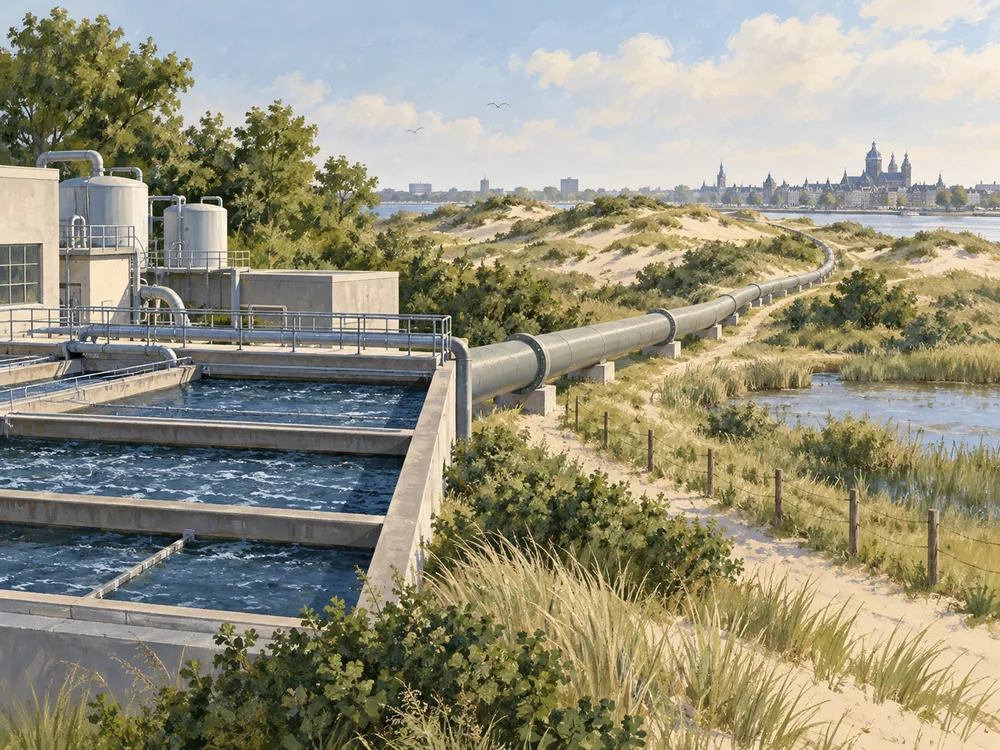
Waternet's treatment guide describes adding a coagulant so small particles form clumps that settle. Sand filtration follows before the natural-treatment stage. After that stage come further filtration, ozone treatment, softening, activated carbon and slow sand filtration.
The dunes therefore form one stage in a longer process. Water has already been prepared before entering the sand, and more treatment follows it. Describing dune filtration as natural does not make the finished supply untreated water.
A process guide helps explain that journey. A question about a particular substance needs a test result and reporting period; the landscape or the word natural cannot supply those measurements.
The other route through Bethunepolder
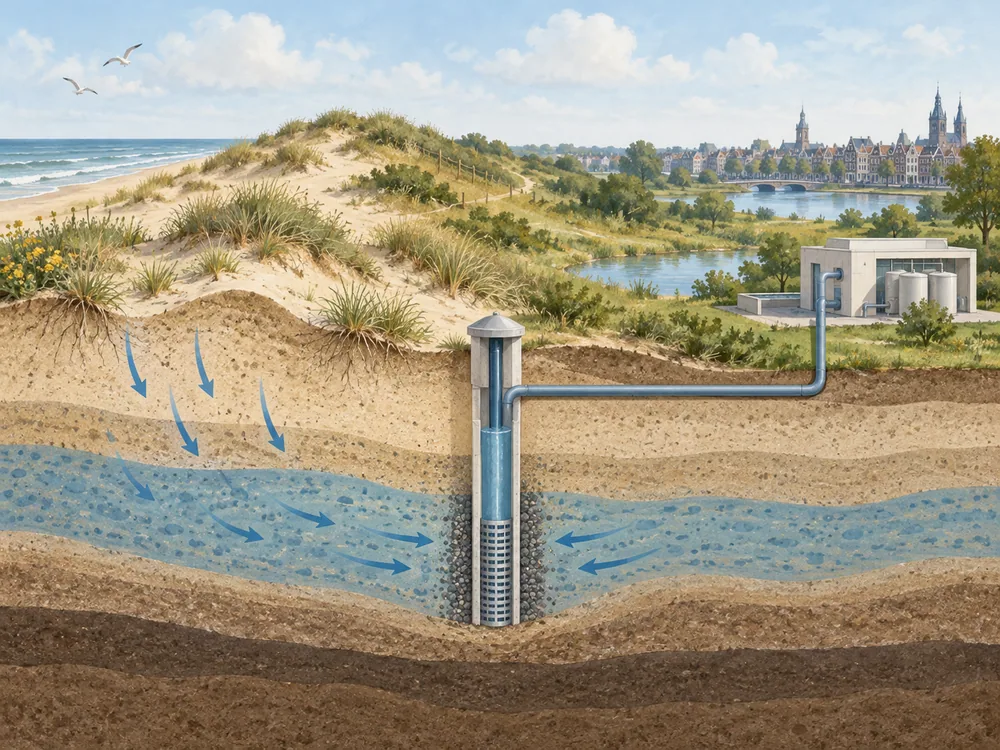
Waternet also uses seepage water rising from the ground in the Bethunepolder. This water passes through the Waterleidingplas at Loenderveen before further treatment at Weesperkarspel. The utility's explanation of this route describes the other part of the supply.
These routes explain production, but local distribution information is needed to identify the route for an accommodation. This article makes no address-level assignment.
From the network into the building
Waternet says Het Waterlaboratorium checks drinking-water quality daily. Its water-quality page also notes that older homes can still have lead pipes, bringing the final part of the journey inside the property.
For a particular tap, consider property information and any relevant local notice alongside the production-system account. Our Amsterdam water guide covers the broader traveller question.