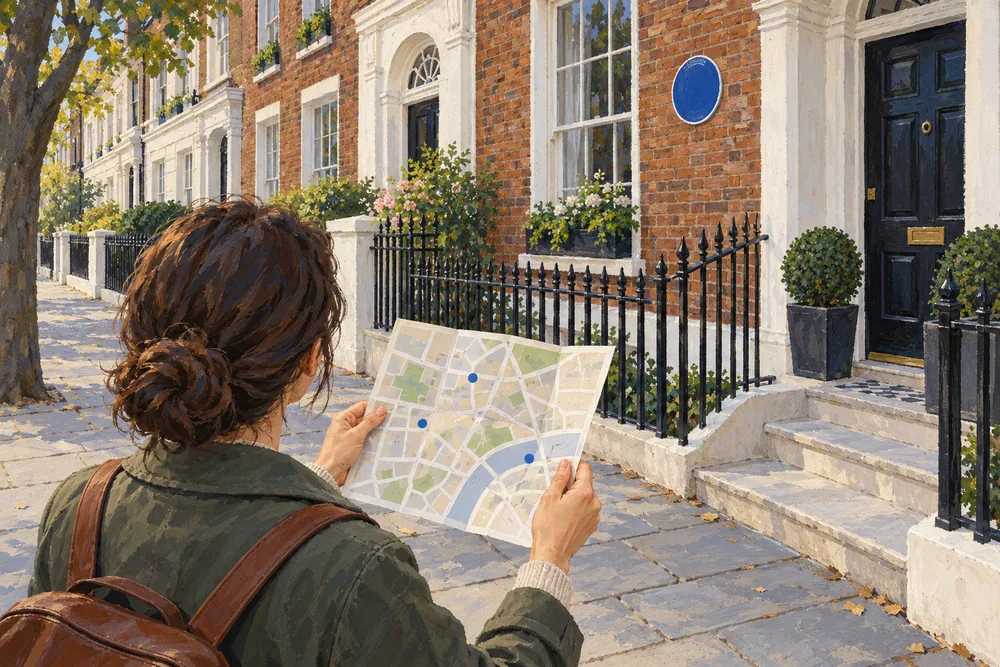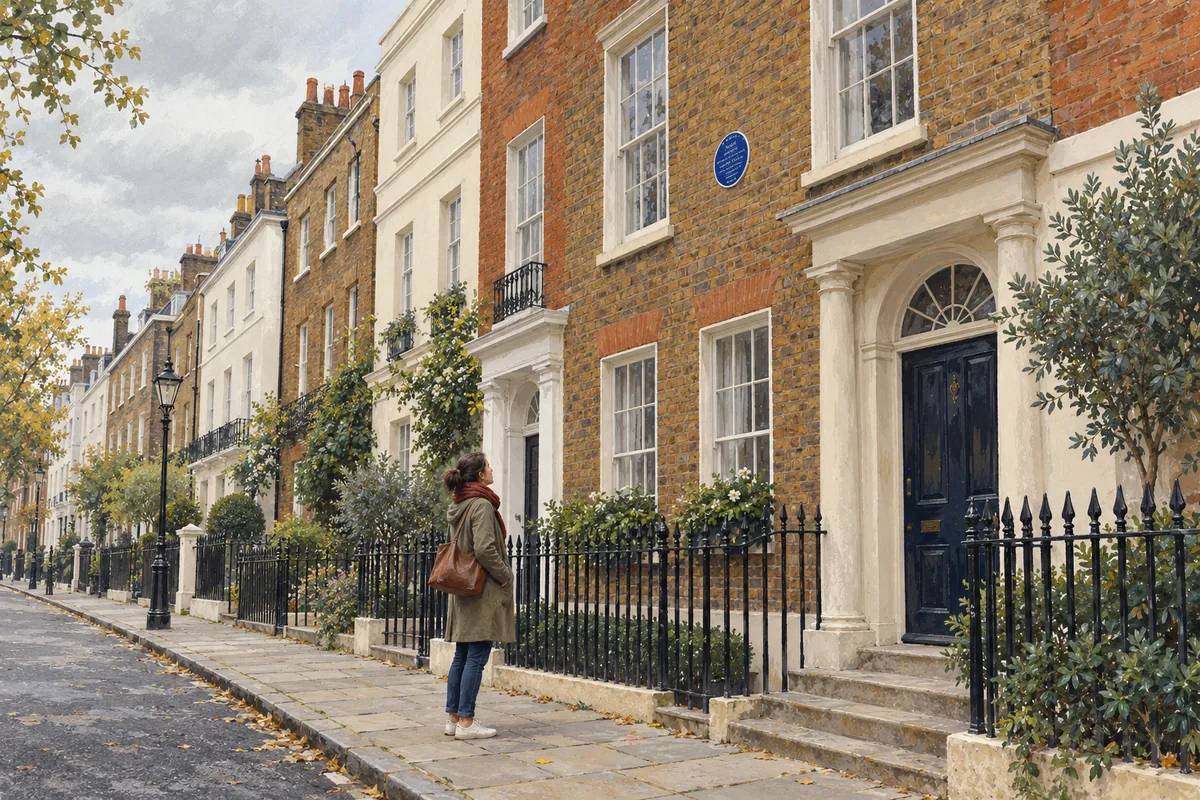
London's blue plaques connect a person from the past with a particular building. They identify who lived or worked at that address. English Heritage now runs the London scheme, which began in 1866. Its history of the scheme explains how different organisations have looked after it over time.
Read the person and the place together
Start with the name, then read the short description and the words connecting the person to the building. Dates need their surrounding words: a person's lifespan and a period of residence mean different things.
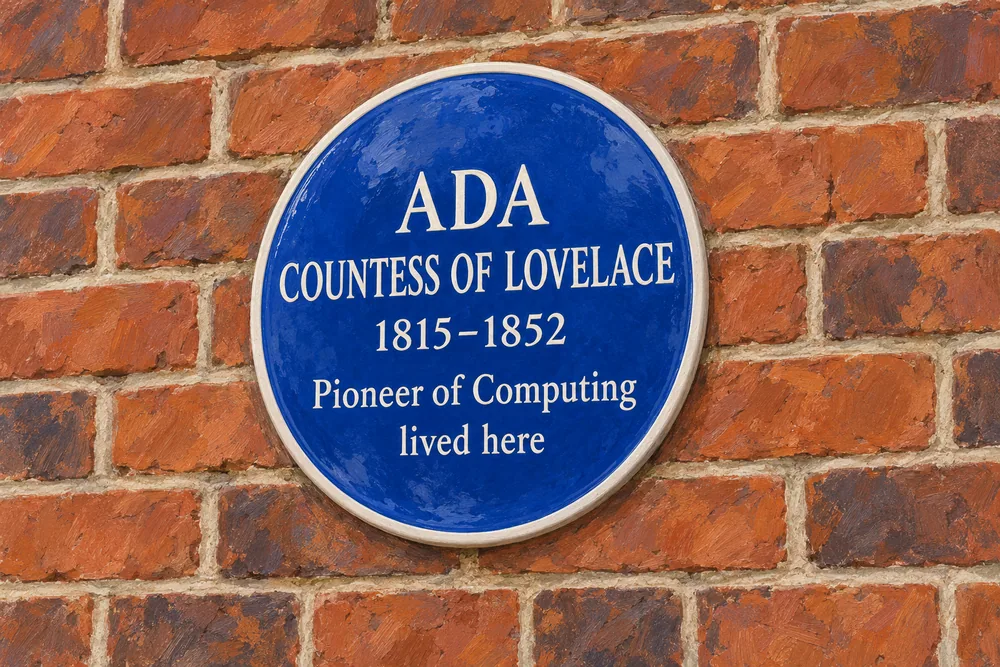
Ada Lovelace's plaque at 12 St James's Square is a useful example. It names Ada, Countess of Lovelace, gives her lifespan as 1815-1852, calls her a computing pioneer and says she lived there. English Heritage's record for the plaque separately dates her residence to 1837-1846 and the plaque's installation to 1992. Her years in the house therefore cover only part of her life.
Check the organisation's name too. English Heritage's scheme includes plaques installed by the Society of Arts, London County Council and Greater London Council. Older examples can have other colours and shapes. Local groups also put up commemorative plaques, so colour alone does not identify the scheme. English Heritage explains these differences in its guide to recognising plaques.
Why some people have plaques
For a new plaque under English Heritage's current rules, at least 20 years must have passed since the person's death. An associated building must survive in Greater London, outside the City of London, which has its own scheme. It must retain a form the person would have recognised and be visible from a public highway. Public nominations undergo historical research and expert discussion; meeting those conditions does not guarantee selection. See the current selection criteria for the full scope.
Older plaques do not always fit today's rules. Napoleon III's surviving plaque went up in 1867 while he was alive, as English Heritage's plaque facts explain. Today's rules apply to new selections. Older plaques reflect the criteria in use when they were installed.
Find a few nearby
Use the official plaque finder to search by name or keyword, borough and category. Pick a small cluster near somewhere you already plan to visit, then check each address. The National Portrait Gallery's St James's walk includes Lovelace's plaque as one stop if you want a route with more historical context.
Plan to look from the pavement. A plaque does not promise entry to the building or give permission to use private steps and gardens. Keep entrances clear and check separately before expecting an interior visit. The historical record is a starting point for a walk; it cannot tell you whether scaffolding or street works will obscure a plaque on your day.
A guidebook for a plaque walk
A blue-plaques guide can add biographies and walking ideas if you prefer a book. Check the edition date and area covered, then compare addresses with the official finder. This category search is not an endorsement of every result.
🛒 Browse London blue-plaque guides on Amazon →Amazon paid link