For an appliance in Frankfurt, start with the water supplied to the address and the instructions for that appliance. A hardness figure describes water. The setting number on a machine belongs to that machine's instructions, so the two numbers should not be treated as interchangeable.
For a longer stay in a furnished apartment, find the appliance's manual and ask the host about any existing water treatment before changing its controls. Having access to the controls does not tell you which input the appliance expects.
Get the local value before choosing a setting
Mainova's water-quality guide gives a total-hardness range of 4 to 20 °dH, depending on source and mixing in the supply area. The same page offers a lookup using a Frankfurt postcode, street and house number.
That broad range does not choose a value for an individual appliance. Use the complete address in the supplier's lookup and keep the returned unit with the result. If the lookup is unclear, ask Mainova which information applies instead of selecting whichever end of the regional range seems convenient.
When you receive a report or reply, retain its date and scope. An annual or area summary can provide context, but you still need to know whether it is the value the supplier recommends for the relevant connection. No address result is established by the general page's regional range alone.
For a property with equipment that changes the incoming water, ask the responsible person what reaches the appliance. Do not assume that the supplier's public description also documents that equipment or its present condition. The question to resolve is the input at the machine, not simply the name of the city.
Match the unit to the appliance's table
A Bosch quick-reference instruction sheet places °dH, °fH, °Clarke and mmol/l in separate columns beside its setting column. The sheet demonstrates why a figure needs its unit; it is not an instruction to copy its settings to an unidentified appliance.
Mainova's guide uses °dH for its address-hardness information. If your manual uses another unit or scale, follow that manual's own matching table or ask the manufacturer to interpret the supplied value. Moving a bare number between columns can change what it means.
A matching physical quantity does not establish which button sequence, setting label or maintenance routine a different model uses. Keep the manual open at the relevant section while checking the supplier information.

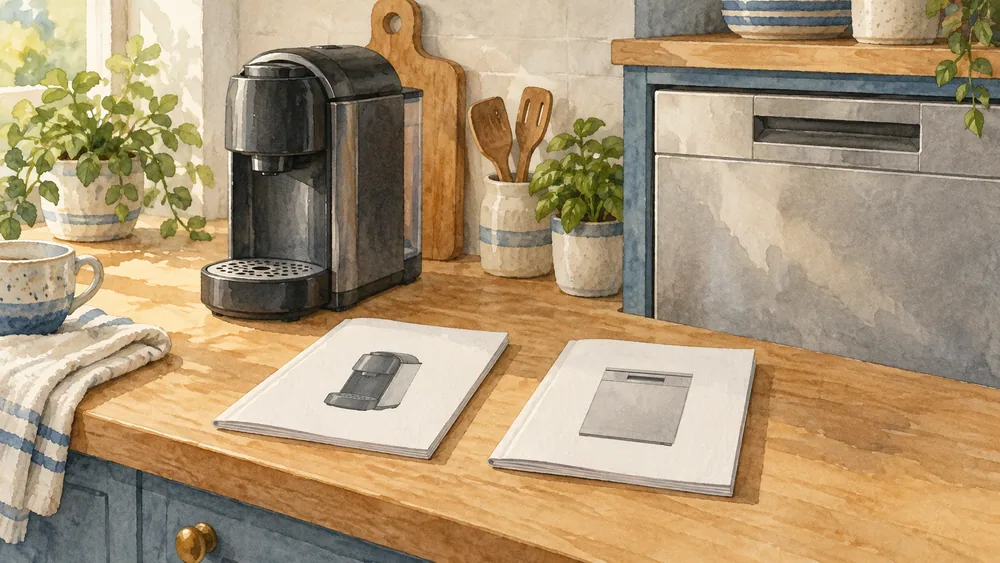
Use the instructions for the exact model
Bosch's current hardness-setting guide directs readers to their water supplier for local hardness and warns that some dishwasher models vary. It links to the instruction-manual finder when the appliance differs from the illustrated guide.
The manufacturer is therefore the place to resolve a mismatch between a table and a control panel. Identify the actual model before asking which instruction applies. A manual for a similar-looking machine may answer a different question, and a generic internet recommendation does not identify your machine at all.
Choosing an appliance setting or salt dose needs the relevant local information and instructions for the actual model; a universal Frankfurt setting would leave out those details. For a borrowed machine, let the owner confirm the setup before changing it. The Frankfurt city guide covers general visitor context; appliance adjustments belong with the supplier information and model-specific instructions.