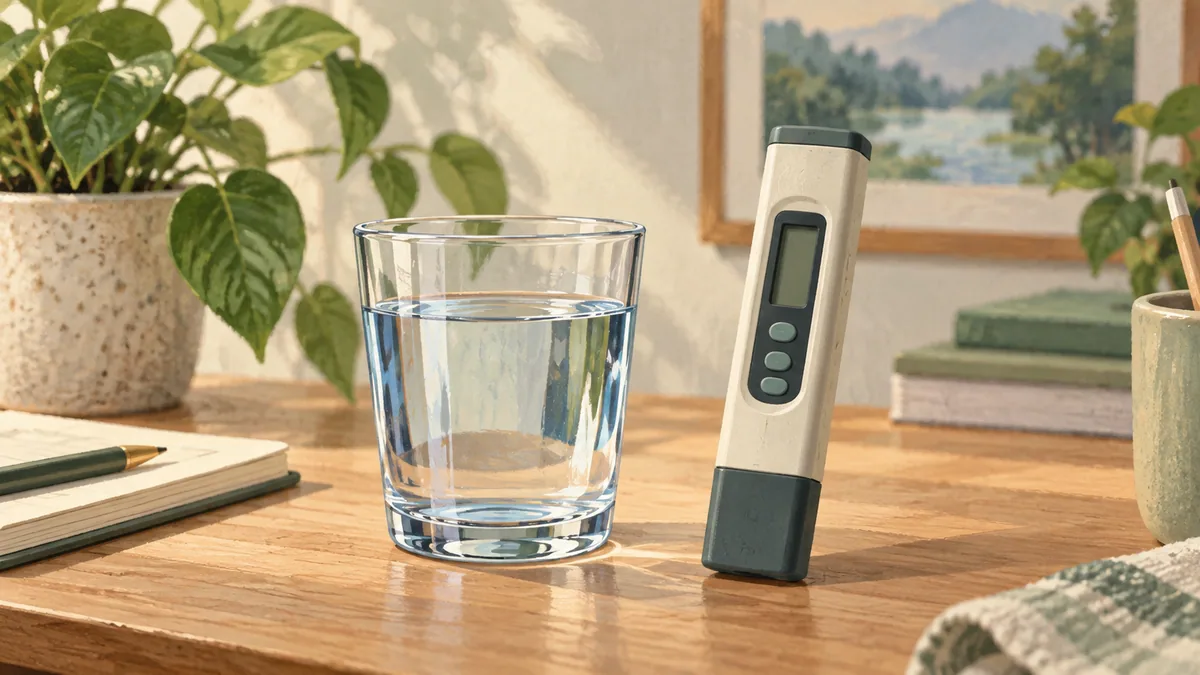
A TDS meter estimates how much dissolved material is in water. A low number does not establish that the water is safe to drink: the reading cannot identify every substance or replace a test for bacteria. Understanding what the number represents makes the meter more useful and its limits easier to recognise.
What TDS measures
TDS stands for total dissolved solids. WHO describes these as dissolved inorganic salts plus small amounts of organic matter. Calcium, magnesium and sodium are among the salts' constituent ions, the charged particles dissolved in the water. The total combines them, rather than listing the amount of each substance. WHO's fact sheet explains the term.
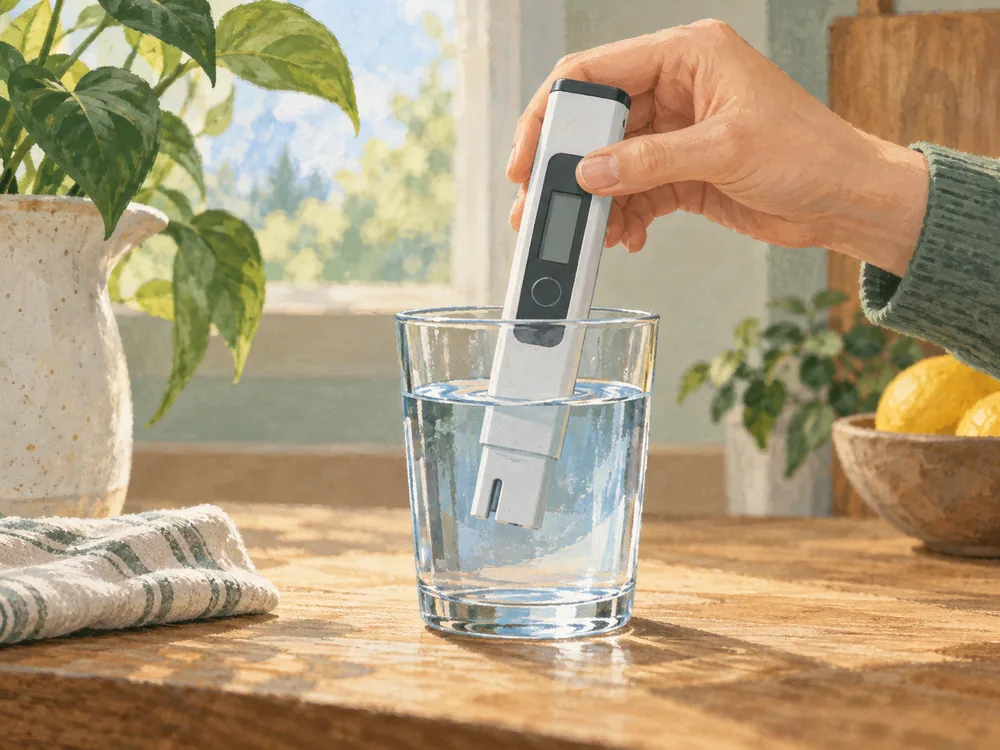
The Australian Drinking Water Guidelines describe electrical conductivity, how easily water carries an electric current, as a way to estimate TDS. If a meter converts conductivity into a TDS figure, read that figure as an estimate of dissolved-solids content. Check the instrument's manual for the measurement and units it displays. The Australian monitoring guidance covers these monitoring tools.
A laboratory can measure TDS differently. A USGS methods study describes the residue left after evaporating and drying a sample. Its conductivity-based predictions also account for water type. Our reading is that a meter estimate and a laboratory residue measurement need to be interpreted with their methods, rather than assumed to be interchangeable.
Why a lower number is not a safety result
The Australian guidelines treat conductivity and tests for faecal indicator bacteria as different monitoring tools. Those bacteria help indicate contamination from faecal material. The guidelines also identify chemical hazards such as arsenic, nitrate and lead. Our conclusion is that a low TDS result cannot answer all those questions. A combined total does not give each chemical's concentration, and an electrical reading does not test for microorganisms.
The US EPA's 500 mg/L (milligrams per litre) TDS figure is a secondary guideline for aesthetic concerns such as taste or appearance. It is not a drinking-safety pass mark. WHO's 2022 fact sheet sets no health-based guideline value for TDS and notes that high levels may be objectionable to consumers. That assessment of the combined parameter does not establish the safety of every substance in an untested sample.
If a seller uses a lower number as proof of safer water, ask which hazard was tested, how it was measured and what the result was. The dissolved-solids estimate and the claimed safety benefit need separate evidence.
Use a test that answers your question
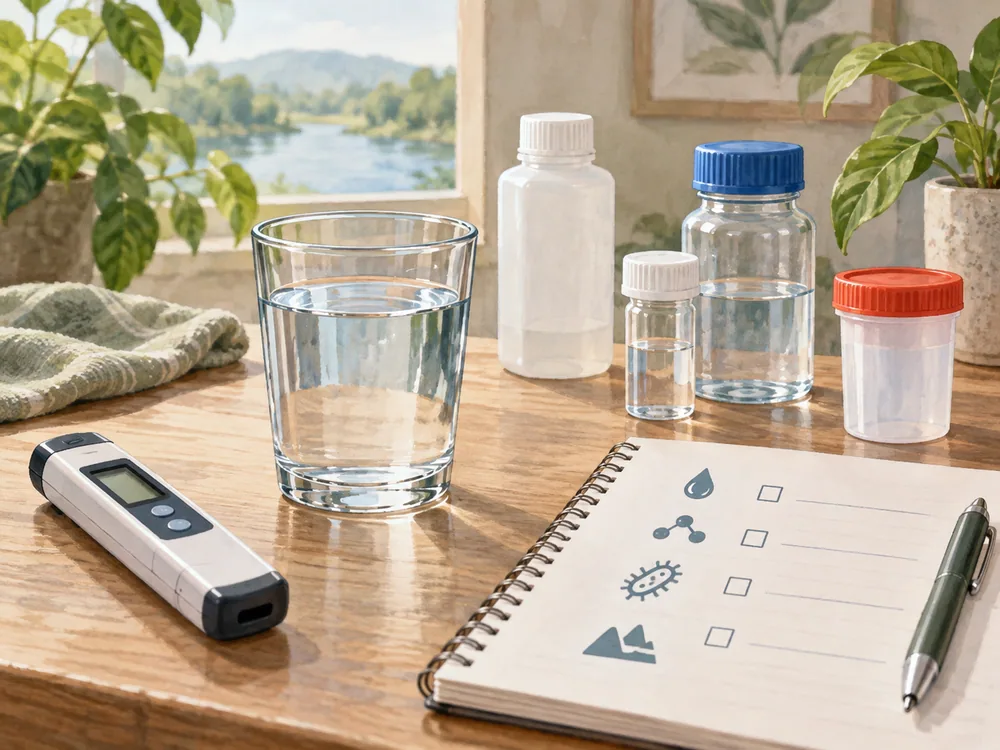
For US private wells, EPA recommends annual testing for total coliform bacteria, nitrate, TDS and pH (how acidic or alkaline the water is), plus additional tests for suspected contaminants. It directs readers to certified drinking-water laboratories and local health departments. That schedule concerns US private wells; use the relevant authority's guidance for other supplies.
When travelling, ask the supplier or responsible authority about current advice for your accommodation. Record any meter reading with its units and method, and follow a property notice independently of that number. Our water-notice guide explains how to identify the issuer's instruction.