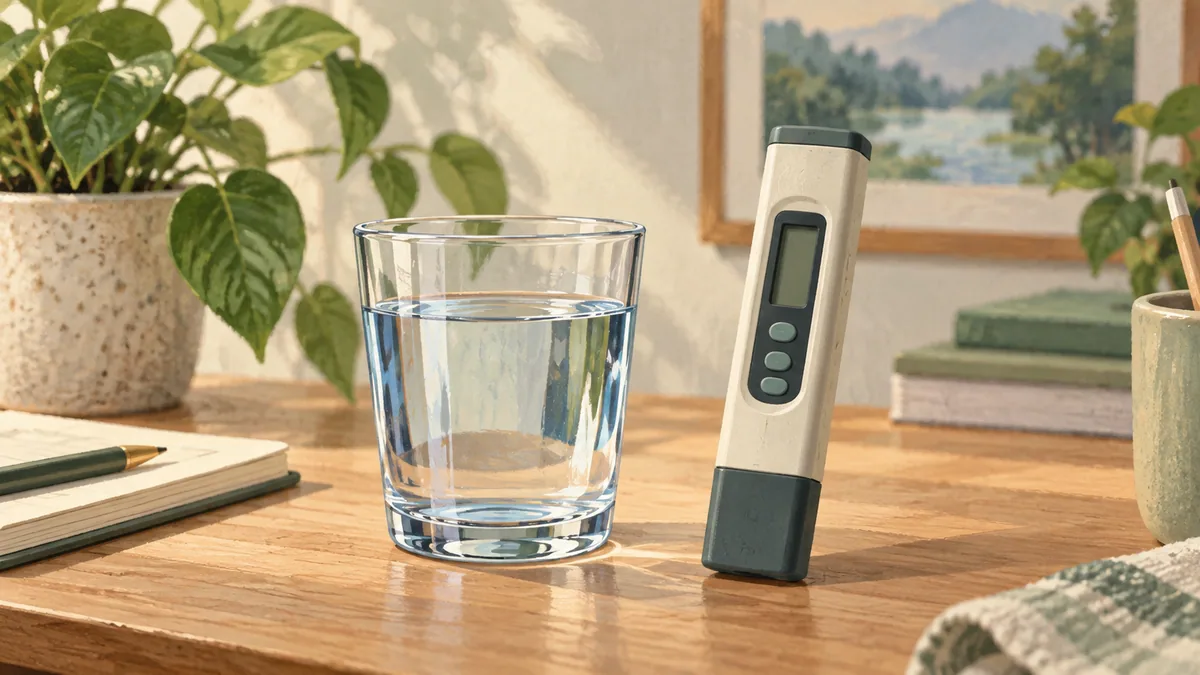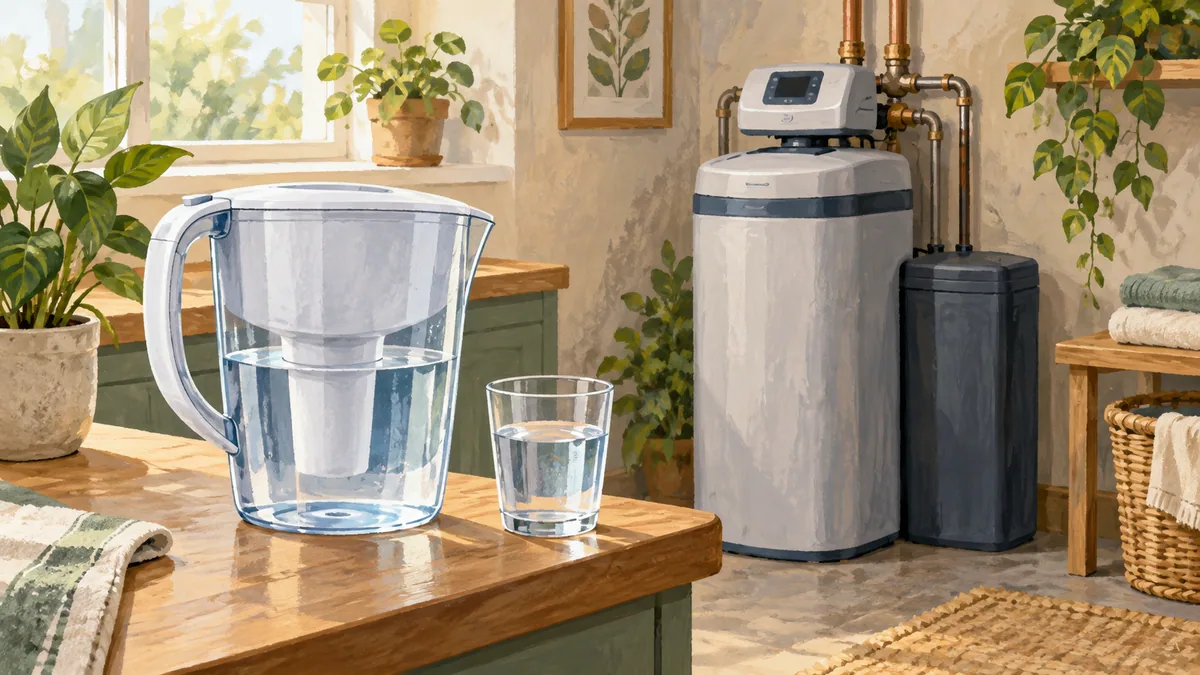
A pitcher filter and an installed water softener can address different problems. You might want a different taste in a drinking glass, less scale around fixtures, or reduction of a named contaminant. Start with that problem and the amount of water you want treated, then look at what the device actually does.
Carbon filtration and softening work differently
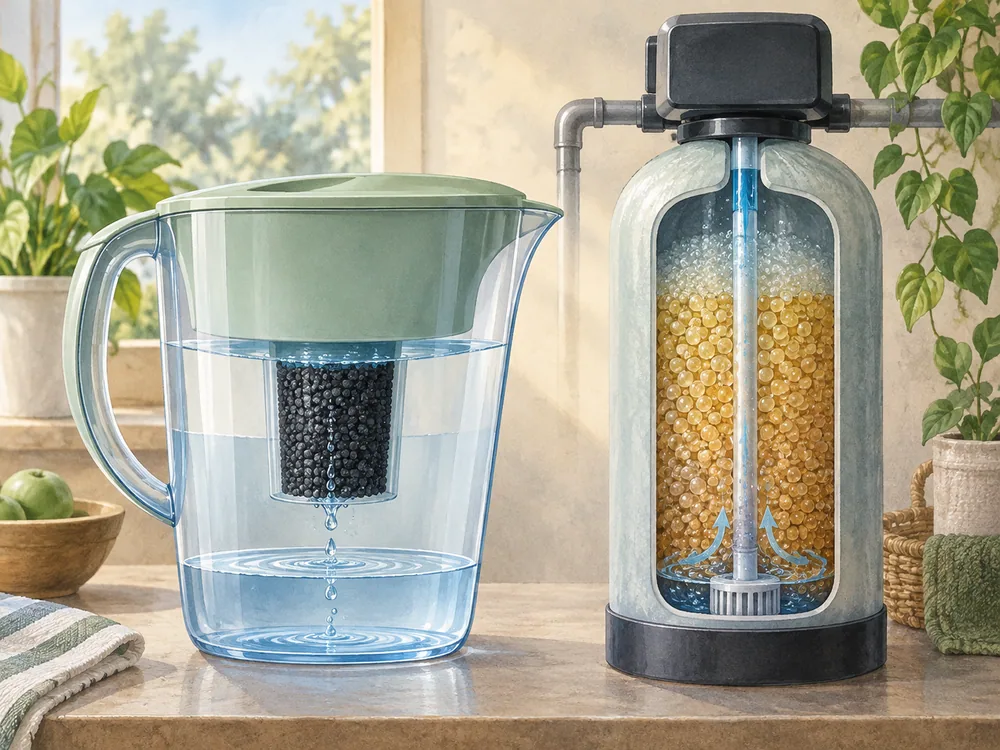
In activated-carbon treatment, certain substances collect on the carbon's surface. This process is called adsorption. Purdue's extension bulletin explains that activated carbon does not remove calcium and magnesium hardness to a significant degree. The older bulletin supports this basic chemistry, rather than a comparison of current products.
A conventional softener uses ion exchange. Resin beads capture calcium and magnesium and exchange them for sodium or potassium. Once the beads' exchange capacity is used up, a concentrated salt or potassium solution regenerates them. Minnesota's health department describes that process in its softening FAQ.
The product's own claims still matter. A carbon-filtration claim alone does not establish hardness reduction. For a pitcher advertised to reduce hardness, check the contents and documented performance of the individual cartridge. Its shape does not identify what it can do. CDC also says that most pitcher filters are not designed to remove germs. Softening changes hardness without providing a complete assessment of water quality.
Decide how much water to treat
Minnesota's health department says softening is optional. It recommends first establishing hardness through a test kit, an independent laboratory or the community supplier's information. That gives you a basis for deciding whether to install equipment.
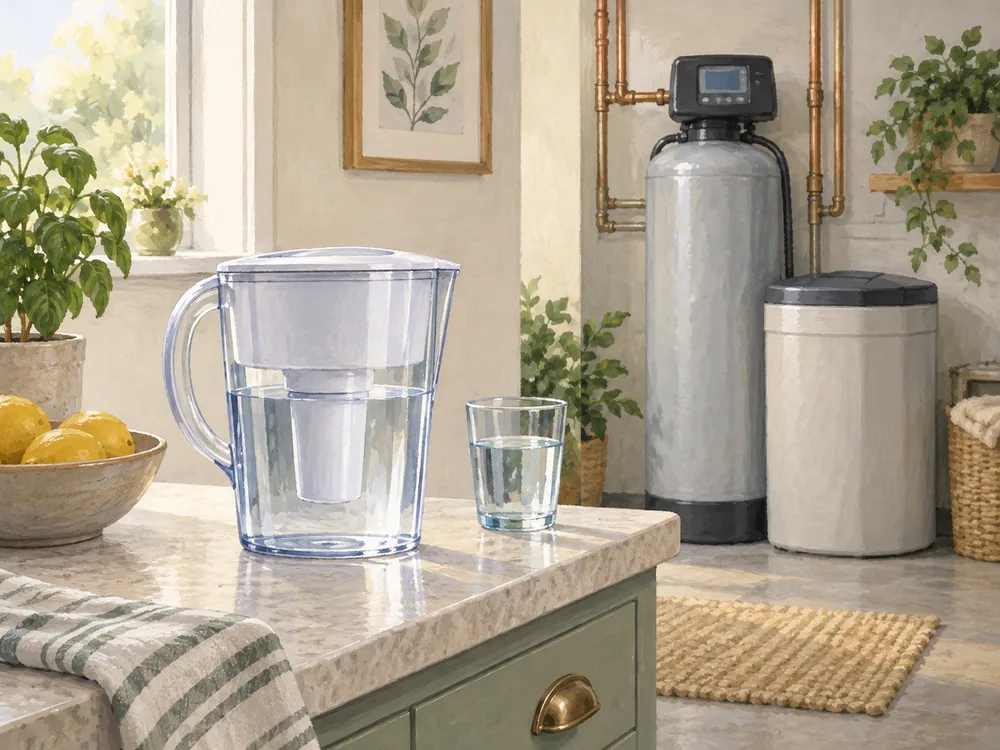
The department's carbon-filter guide lists pitchers as one form of point-of-use treatment. A whole-house system treats water flowing to household fixtures. Compare those different jobs with the quantity of drinking water you want treated.
For a contaminant concern, WQA's consumer checklist recommends asking whether testing covers the main contaminants and whether a third party has certified the proposed product's performance. Ask for the exact claim and supporting documentation if a seller offers only a phrase such as cleaner water.
Include upkeep in the choice
Carbon eventually exhausts its capacity to bind chemicals. Replacement needs depend on contaminant levels and water use, as the health department's carbon guidance explains. Keep the cartridge instructions and record when you start using it. An interval for a different product may not apply.
For a softener, follow the manufacturer's maintenance instructions, set it to the supply's hardness and keep the appropriate regenerant available. WQA's checklist also asks who will maintain a device and how its owner will know it is working correctly.
In a rental, ask the host about existing equipment before relying on it. If a water notice applies, begin with the issuing authority's instructions. Our water-notice guide can help you read them before returning to the equipment choice.
Compare pitcher specifications
An optional category for a small drinking-water setup. Check the exact cartridge's documented claims and replacement instructions; do not assume a pitcher softens water or removes germs.
🛒 Browse water filter pitchers on Amazon →Amazon paid link