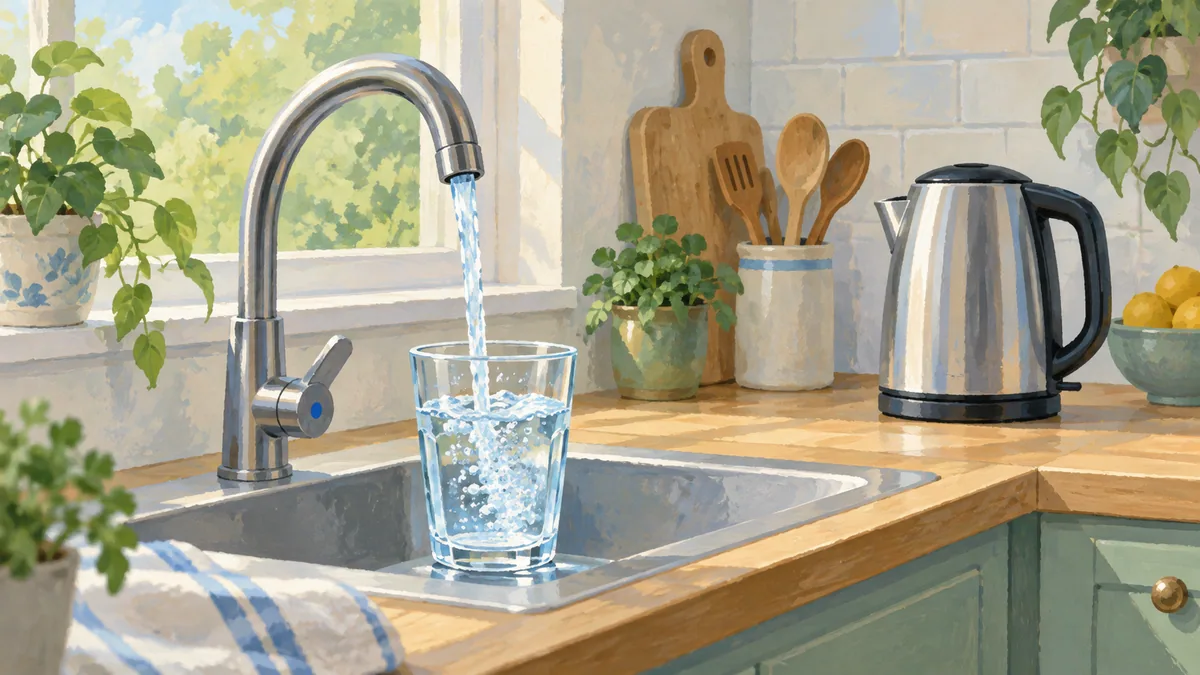
Stockholm Vatten och Avfall tells customers to use cold tap water for drinking and cooking, and heat that water when they need it hot. Its FAQ says hot tap water is not a foodstuff and warns that it can dissolve copper from pipes. This is the utility's general guidance, not a finding that every hot tap has excessive copper. Read Stockholm's tap-water FAQ.
For tea or a pan of food, follow that distinction at the tap: collect cold water and heat it using the kettle or cooker. Starting with hot water from the tap follows a different route through the building's equipment. An annual drinking-water report cannot tell you the condition of that equipment in your apartment.
The utility delivers cold water
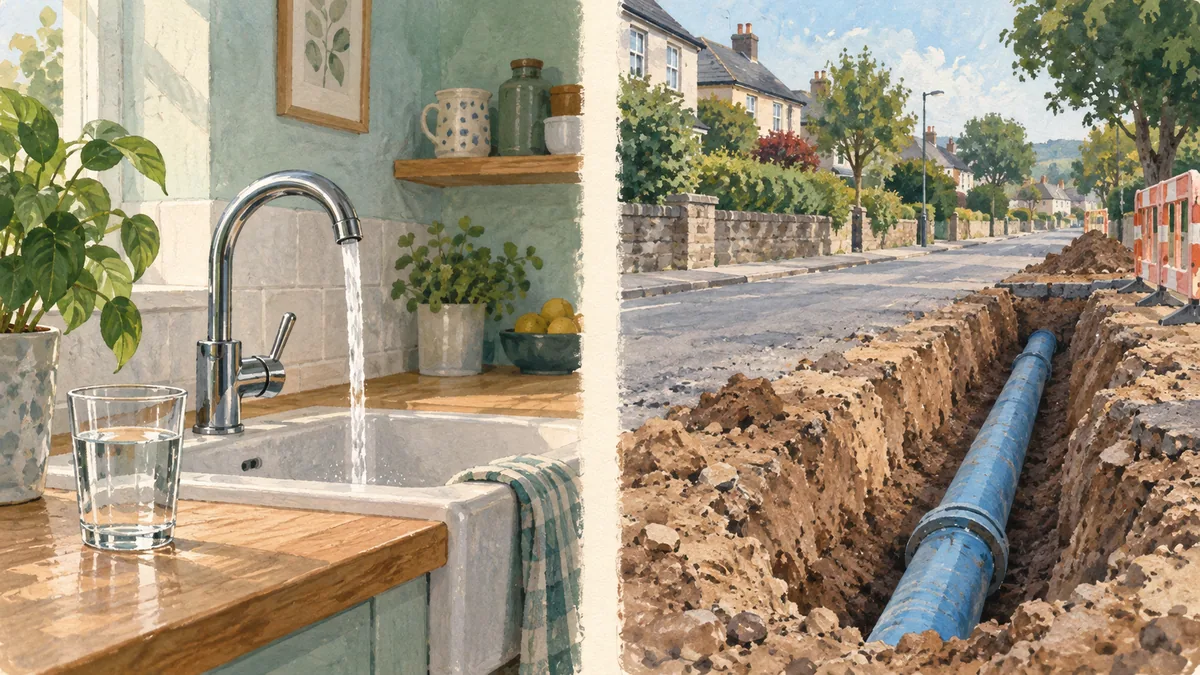
The FAQ says Stockholm Vatten och Avfall supplies cold tap water. In an apartment building, the property owner is responsible for the hot-water service; in a house or townhouse, that responsibility belongs to the owner. The supplier does not take responsibility for hot-water quality. The FAQ's hot-water responsibility section.
The utility's more detailed connection guidance describes the boundary between the public network and a property's installations at the connection point. It assigns repairs and changes within the property to the property owner. Read the connection and responsibility guidance.
For a visitor, this gives a sensible starting point for a hot-water problem: ask the accommodation manager who maintains the building's system. If you need a drinking-water report, ask which supplied area covers the address. A general statement about the supplier and a maintenance answer from the building manager address different parts of the journey.
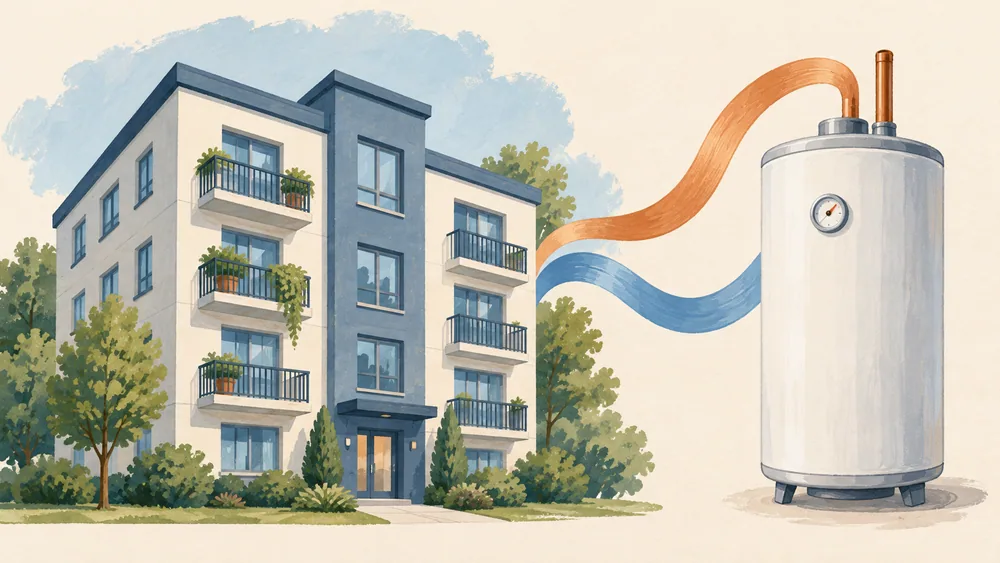
What the national guidance covers
Livsmedelsverket's regulatory guidance says hot water in individual households is primarily intended for uses other than drinking and cooking and is not treated as a foodstuff. The page was last updated on 18 May 2026. That is the page's update date, not a Stockholm sample date. Read the national guidance on hot water.
Keep the household scope attached to that wording. It explains why a statement about regulated drinking water does not automatically answer a question about hot water after a building has heated it. It does not supply a personal medical assessment, a test of your pipes, or a diagnosis of a particular smell or taste.
Match reports to place and period
Stockholm Vatten och Avfall publishes separate results for its waterworks and for samples taken at users' premises. Its quality page lists the English report for southern Stockholm and Huddinge as updated on 9 April 2026. Find the relevant quality report.
That report is dated 30 March 2026 and presents annual average point-of-use results for 2025. Its footnote describes flushed point-of-use samples in the approved programme. It is not a test of every address, a report on every building's hot water, or an October 2026 measurement. Read the 2025 southern Stockholm and Huddinge report.
Our practical interpretation is to keep the collection year, document date and website update date separate. If you send the report to a host, include its geographic title and ask whether it covers the property. A newer link date alone does not move its samples into the current year.
The FAQ and connection page have no established publication dates in this research; all sources were read on 14 October 2026. Use our Stockholm city guide for general travel context and the water-notice guide when an advisory applies.