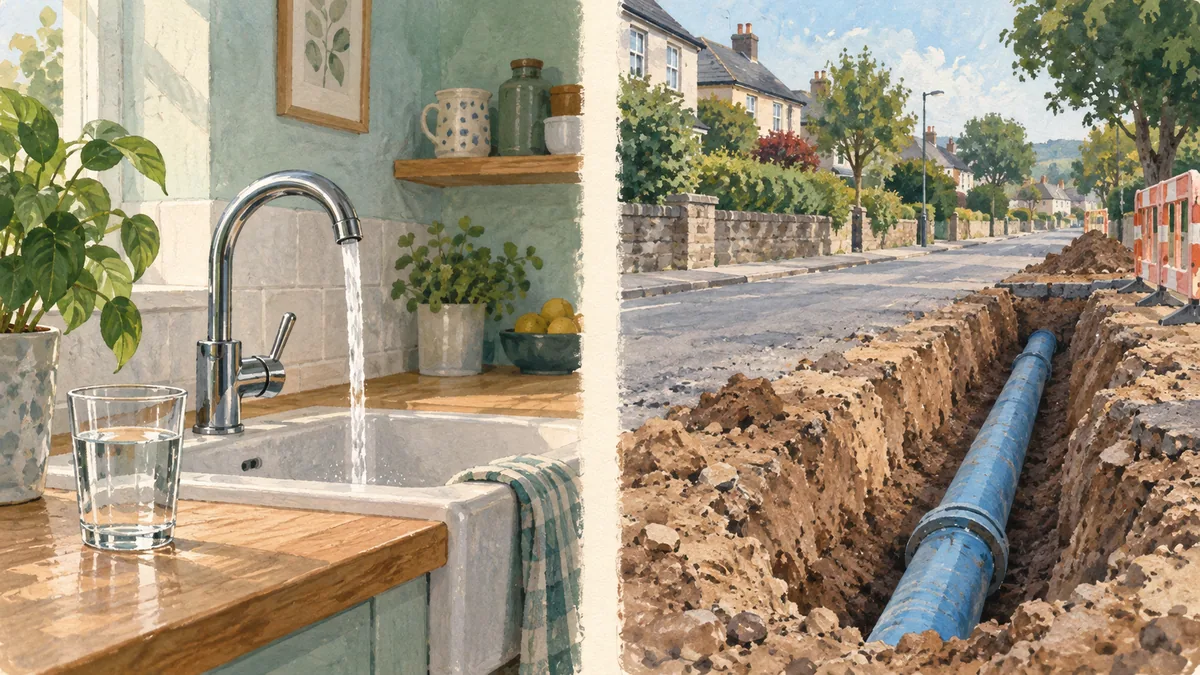
A leak at a Dublin property raises two questions: where is the affected pipe, and who is responsible for it? Uisce Éireann's First Fix Free guidance assigns public-side pipes to the utility and pipes on the property and inside the home to the owner.
For a home connected to the public mains, use that as a starting point for deciding who to call. Confirm the actual arrangement before organising work.
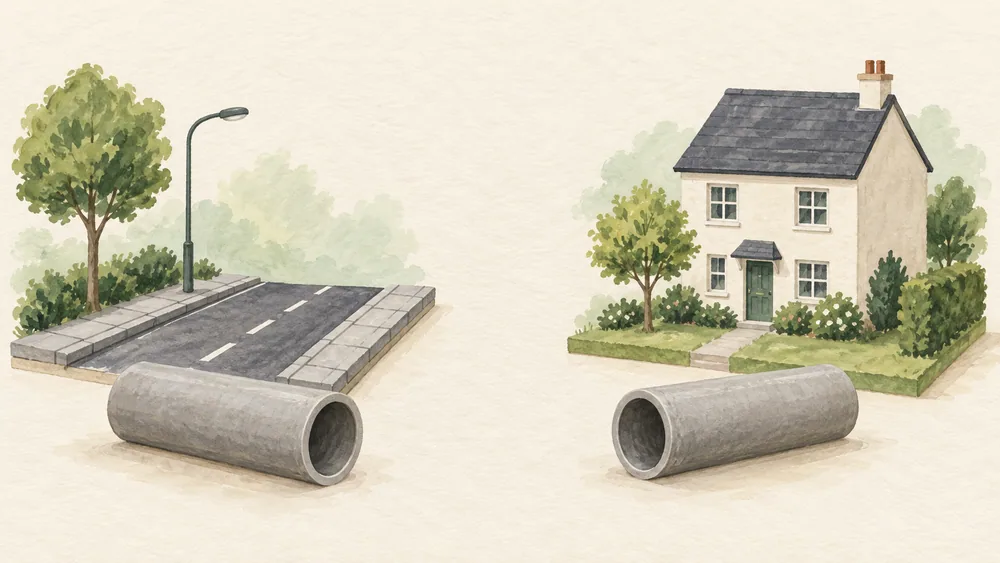
The public and private pipe sections
Its maintenance-responsibility page says each pipe arrangement should be reviewed individually. The utility describes the published graphics as illustrations of its general approach and advises customers to contact it about their situation. A simple diagram cannot settle every older connection, apartment building or shared route. Pipe maintenance responsibility
Uisce Éireann's typical metered-home layout separates the public main, meter and outside stop valve, external supply pipe and internal supply pipe. Typical water-supply layout
Those names help describe where a problem appears to be. For example, say whether you can see water on a public footpath or whether a leak is inside the building. If the buried route is unknown, say so; a guessed pipe location can send the discussion in the wrong direction.
Shared pipes need a closer look
The First Fix Free scheme can offer investigation and repair for a confirmed leak on an eligible external supply pipe. An internal plumbing leak requires the customer to arrange the repair. Shared service connections can be eligible under the scheme's published conditions. First Fix Free eligibility and process
Ask separately who owns the pipe and whether repair assistance is available.
In rented accommodation, ask the host or property manager to identify the supply arrangement and who can authorise a repair. For a shared connection, describe which properties appear to use it and ask Uisce Éireann to confirm how its maintenance policy applies. Keep any written answer with the repair records. Do not assume that a pipe becomes public merely because it serves more than one home.
The utility's lead guidance says lead can dissolve into water as it passes through lead pipes or fittings. Its customer opt-in scheme describes replacing the public-side lead service after the customer replaces the private side. That sequence is a reason to coordinate proposed work with the utility before starting. This article has no plumbing inspection or lead result for your address. Lead Mitigation Plan
Reporting a leak or quality concern
For an urgent water issue, Uisce Éireann lists 1800 278 278, or +353 1 707 2828 from abroad, with lines open 24/7. It also provides a route for reporting leaks on public property. Give the address, the location of the visible problem and when it began. If you are a visitor, tell the accommodation manager too, so the utility and property contacts have the same information. Uisce Éireann contact options
Water-quality records answer a separate question from pipe ownership. Uisce Éireann's detailed results search uses a selected Water Supply Zone and lets readers choose parameters and time periods. Preserve those details when sharing a result; a zone's historical report cannot identify the material of a pipe inside your building. Water-quality result search
For drinking-water concerns, read any current notice for the affected supply and follow its instructions. A do-not-consume notice means boiling cannot make that affected supply safe to drink. Nothing here establishes that such a notice applies in Dublin today. Our Dublin tap-water guide offers broader travel context, while Uisce Éireann's water-quality advice explains the notice types and reporting routes.