Rotterdam-area water information can describe several stages before a glass reaches the table. Preventing pollution in a river, deciding when to take water into storage and treating it at a production location answer different questions. A concern about the source deserves attention without being rewritten as a measured result at every tap.
When following water news, ask whether the account concerns a catchment measure, an intake decision, a treatment process or an actual result from finished drinking water. Keep the date attached to that account.
Protect the source before abstraction
In its 28 April 2026 river-dossiers announcement, Evides describes Maas and Rhine source-protection dossiers for the 2028 to 2033 planning period. It says the remaining tasks and measures were to enter implementation programmes in 2026.
Those are descriptions of planning and coordinated action. The announcement is not evidence that every proposed measure has already been completed or that one accommodation has a particular water result. To follow a measure, look for its own implementation record and date instead of borrowing a conclusion from the programme title.
Source protection also needs its geographic scope. A river-basin account can cover pressures and actions far upstream of a drinking-water production location. The name Rotterdam alone cannot identify which upstream measure, intake or household result is being discussed.

A dated intake stop shows one control
Evides' source explanation describes monitoring river water, stopping intake during contamination and resuming after it has passed the inlet. Reservoir storage and later treatment remain parts of the account.
A notice dated 25 July 2024 records a precautionary Maas intake stop because of elevated pesticides. Its update says intake resumed on 29 July 2024. This is a historical example, not a current interruption notice.
Preserve both the stop and the resumption when sharing that article. Quoting only its opening paragraph would leave readers with an incomplete event. Conversely, the resumption does not create a permanent promise about future river conditions. The record answers what the utility reported about that episode.
Treatment follows its own process
The utility's production-process page places river-water storage before later treatment at production locations. It separately describes monitoring with samples, sensors and biological systems.
A process description explains the stages used to prepare drinking water. It cannot establish a numerical removal result for an unexamined contaminant, nor identify the supply to a particular building by itself. Keep a proposed treatment benefit separate from the actual laboratory evidence needed to assess it.
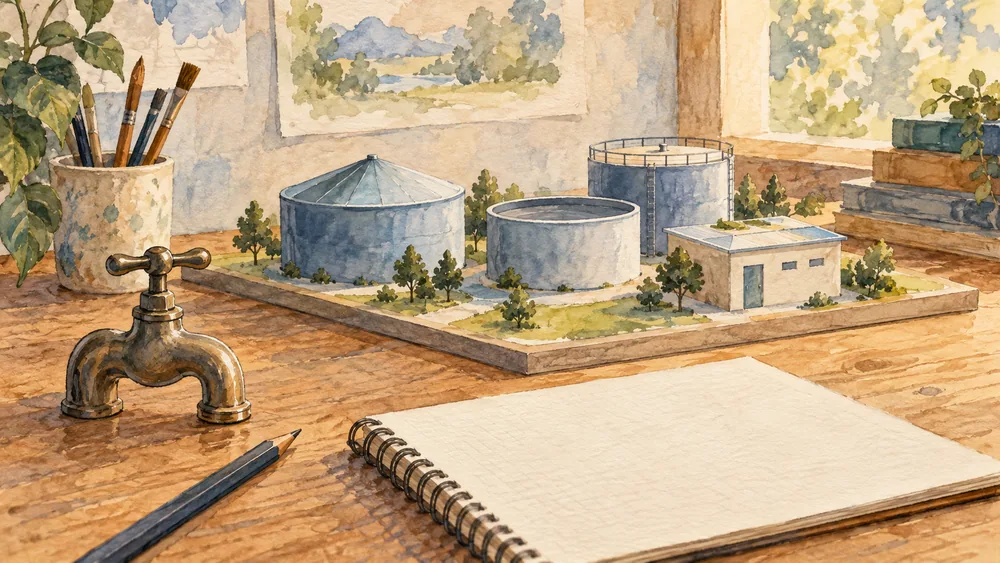
That distinction also helps with illustrations. A generic model can show that source protection and treatment have different roles. It cannot reproduce a site's complete process or certify the water leaving it. For a detailed technical question, use the location-specific process documentation.
Use finished-water evidence for a tap question
Evides' drinking-water page provides a postcode lookup for water-quality information. No individual postcode result is established by the general pages above.
For a report that applies to your accommodation, retain the named location, parameter, unit and reporting period. Ask the utility which record applies when that is unclear. A dated river-policy announcement and a household sample should keep their separate meanings.
The Rotterdam city guide offers general visitor guidance. For a current supply concern, use the relevant current utility information and building contact, rather than treating the 2024 intake event or the future planning period as a result at your tap today.