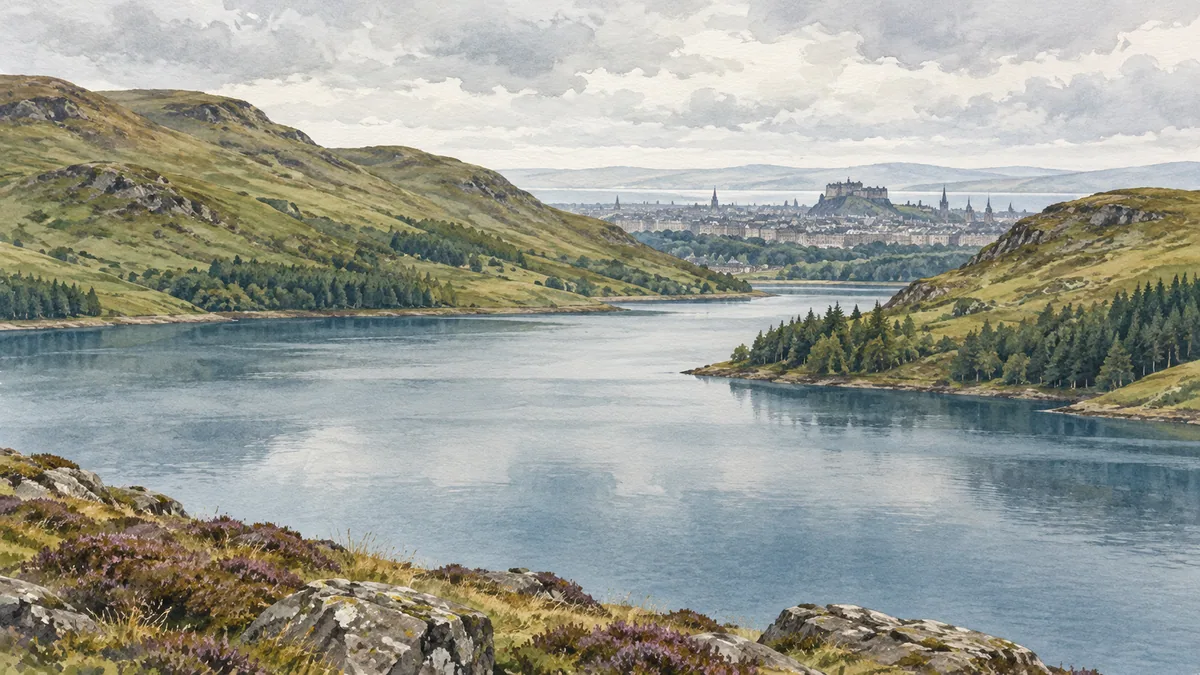
Glencorse was planned to replace two Edinburgh treatment works, Fairmilehead and Alnwickhill. The project was completed in March 2012 and officially opened in June 2012, according to the Scottish Government's April 2018 historical briefing.
The construction accounts explain how the new works would treat incoming water and connect to the distribution network. They also show why a plant's design and a current local water-quality result answer different questions.
Replacing two works in a larger network
Scottish Water project manager Roy Dahl's 2010 construction account listed Alnwickhill, Fairmilehead, Rosebery and Marchbank as Edinburgh's principal treatment works at the time. It set out the plan to replace the first two with Glencorse.
The report forecast a supply start in summer 2011. That was the construction plan, not the final opening date. Its network description also belongs to that period and does not establish present service boundaries.
Bringing source water into the works
The 2012 utility case study names Talla, Fruid and Megget as principal raw-water reservoirs and describes intended use of Glencorse Reservoir. The outlet pipeline divides to connect to the Fairmilehead and Alnwickhill networks.
These accounts describe the historical source and network arrangements, without assigning current reservoir proportions to an individual tap.
How the treatment stages fit together
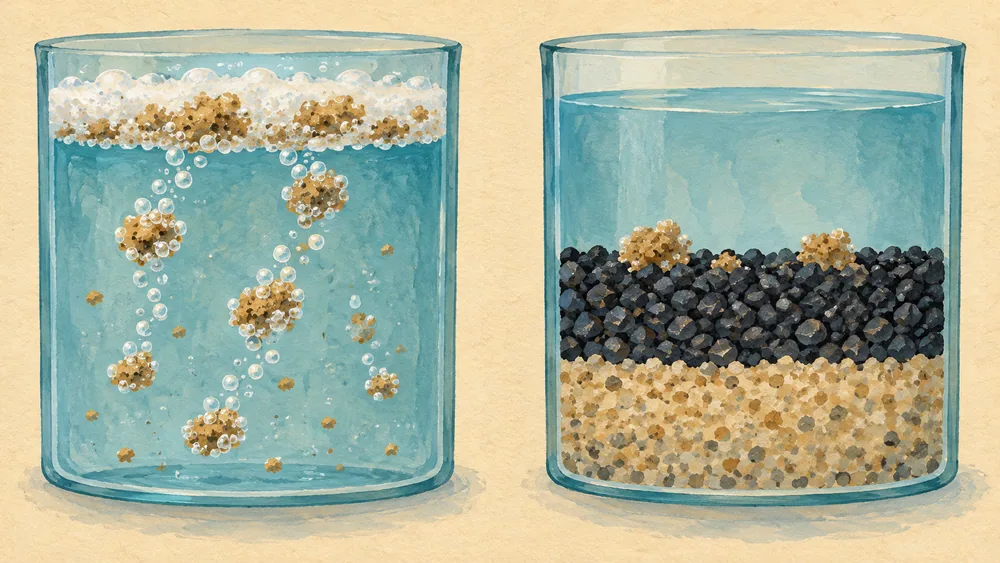
The selected 2010 design put dissolved-air flotation above rapid-gravity filters. Flotation uses bubbles to carry particles to the surface; the filters below remove material as water passes through them. Stacking the stages combined separate functions in a compact arrangement.
The 2012 account describes adding chemicals that bind impurities together and help them form larger clumps, steps called coagulation and flocculation. Bubbles lift particles to the surface, and water passes through filter beds of sand and anthracite, a form of coal. The account also records phosphate addition to limit lead dissolving from pipes. Liquid disinfectant then acts while the water passes through a contact tank. These are the functions described in that historical design, not a verified current treatment recipe.
Those details belong to the dated design. Current equipment, chemical doses and operating arrangements remain unverified here. The Drinking Water Quality Regulator's general treatment guidance explains that methods depend on the source and composition of the water; it supplies no current Glencorse operating recipe or recent result.
Capacity, storage and local results
The April 2018 briefing describes capacity of 175 million litres per day and storage of 90 million litres. Capacity is a rate, while storage is a volume. Neither figure measures a day's actual output, the amount available to a visitor's building or water quality at an address in October 2026. The briefing date is also not a sampling period.
For a current local result, follow DWQR's link to Scottish Water's local information. The regulator explains that findings can vary within a zone and that property plumbing can affect water quality. Keep a result's location and collection period with it when sharing it.
Read that information alongside any current instruction for the property, and ask the accommodation provider or utility about an unresolved supply question. Our Edinburgh guide provides broader visitor context. The historical project accounts explain the works; they do not replace information matching the place and time of your stay.