Follow the process and its dated records when reading Philadelphia's carbon plans. A planned upgrade and a measured result answer different questions. Check what the utility says the equipment is intended to do, then look separately for evidence of its operation and the sampling that followed.
Powdered carbon in the treatment sequence
The department's 2025 Drinking Water Quality Report, published in 2026, says it already uses powdered activated carbon, or PAC, occasionally for taste and odor. It describes adding storage and treatment capacity for continuous PFAS removal. This wording describes work and its purpose; it does not give a commissioning date for every plant.
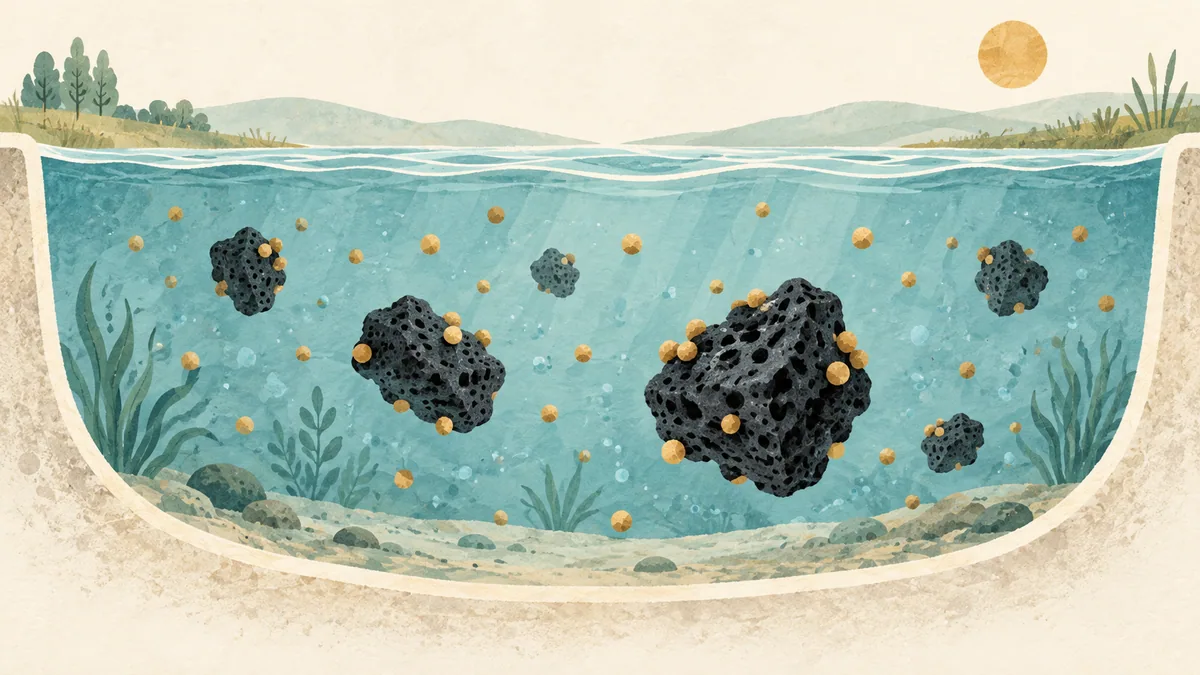
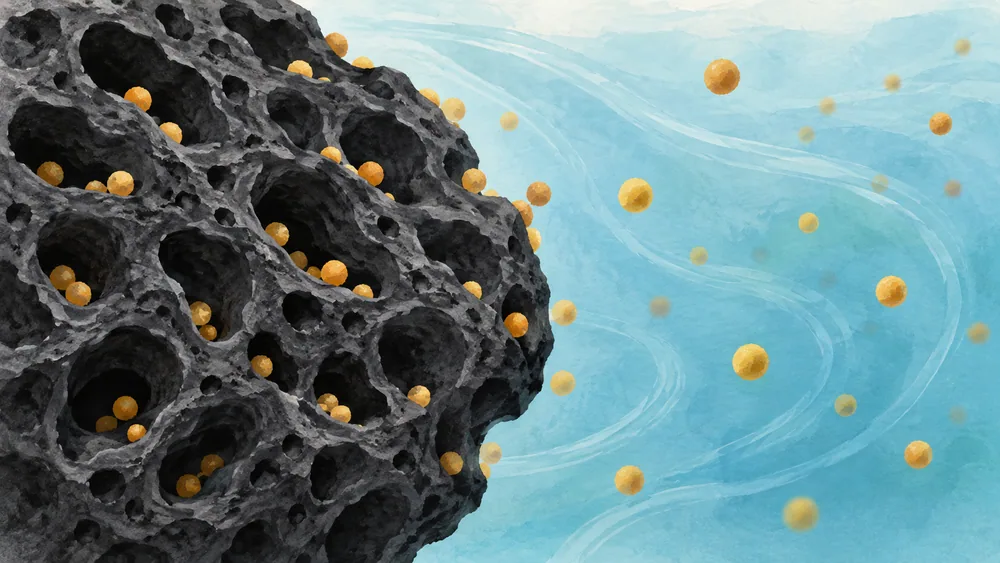
In the report's explanation, PAC enters the water, PFAS attach to the carbon and the carbon settles before treatment continues. EPA's 2018 treatment explanation calls this attachment adsorption. The illustration represents a process concept, not a picture of actual molecules or a statement that every substance is removed.
A clear-looking sample cannot tell you how much of a particular dissolved substance remains. To evaluate a treatment claim, ask which substance was measured, where the sample came from and which period it represents. The name of an ingredient or a treatment step cannot supply those missing details.
Keep an upgrade description separate from performance
The department's PFAS Management page also describes pilot testing of treatment options, including granular activated carbon, ion exchange and reverse osmosis. Powdered and granular carbon are different forms; the list of pilot options does not establish that all are operating throughout Philadelphia.
An equipment plan answers a construction question. A dated result answers a sampling question. To connect them, look for a record that identifies when the relevant equipment entered service and which results followed. Neither a drawing nor a statement of intended removal can stand in for that sequence. The report and management overview do not provide a plant-by-plant commissioning account for the PAC additions.
The management page says compliance samples are taken quarterly and used to calculate running annual averages. Its combined table is marked as last updated with results from 13 April 2026. The individual plant tables below it show different figures without the same explicit update marker beside each table. Keep those displays separate; do not silently combine them into one current result.
If you are saving a number for later, record the exact table and the stated period with it. A running average summarizes a period, while a single sample belongs to its own collection event. Neither gives a removal percentage unless the necessary before-and-after measurements and comparable conditions are established.

Carbon does not replace every other treatment job
PWD's drinking-water FAQ describes chlorine and chloramine in its disinfection approach. That is a separate function from the carbon discussion. A reference to carbon should not be read as a claim that disinfection or the rest of treatment has become unnecessary.
For a question about your supply, give the department the substance or concern you are asking about and request the relevant dated result or project update. Our Philadelphia city guide provides broader travel guidance. If your next question concerns a household product, the filter-label explainer covers how to read its claimed function; a utility's PAC description does not certify a product sold for home use.