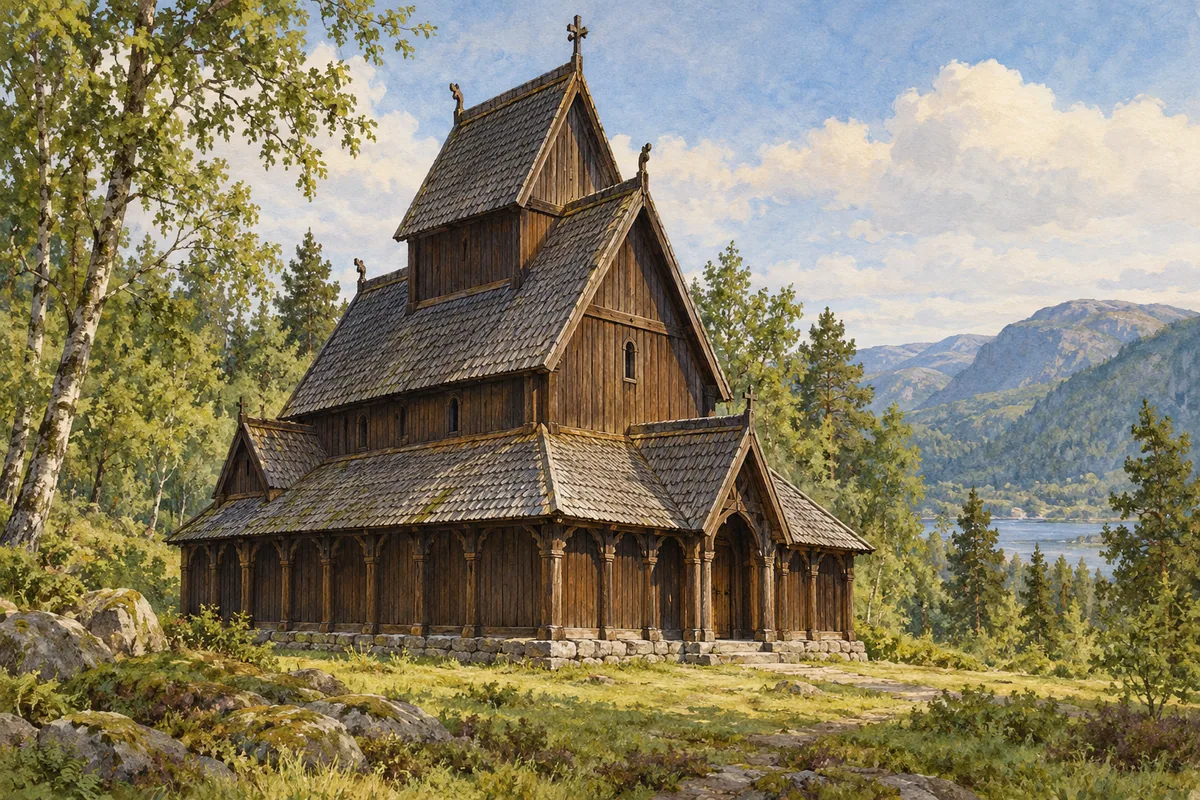
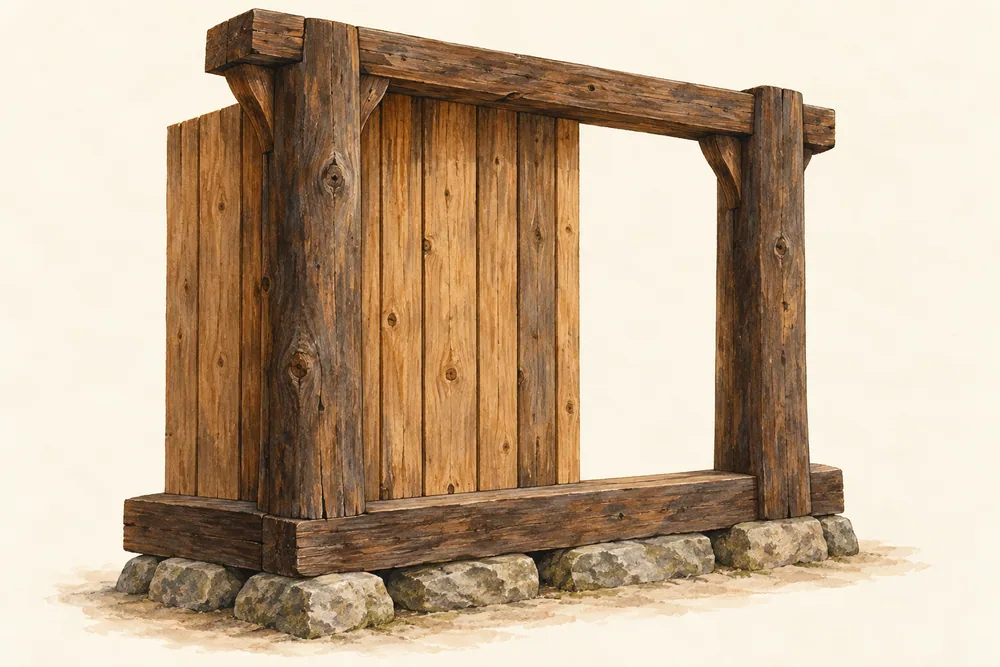
A Norwegian stave church is a wooden church built around a frame of load-bearing upright posts, called staves. Load-bearing means that these posts help support the building’s weight. Its name comes from the Old Norse word stafr, meaning post. Norway’s heritage authority, Riksantikvaren, counts 28 surviving stave churches in the country. Riksantikvaren’s introduction notes that all the surviving churches have been altered or extended over the centuries.
Read the frame first
At Urnes, the timber frame rests on stone foundations. Inside, round columns, block-shaped column tops and semicircular arches give the space its shape. UNESCO connects these features with Romanesque stone architecture, expressed here through wood.
If you can enter, follow one upright with your eyes and look at the pieces it meets above.
Look at Borgund’s exterior
Borgund, near Lærdal, has a tiered roof, dragon heads and richly carved entrances. Its owner, Fortidsminneforeningen, describes a central space with a raised roof, side aisles and scale-like wooden shingles on the roofs and walls. Side aisles are the spaces running beside the central area.
Look at the outline first, then choose a smaller detail such as the scale-like shingles or a carved doorway. Rooflines and decoration can differ between stave churches.
Urnes preserves an older doorway
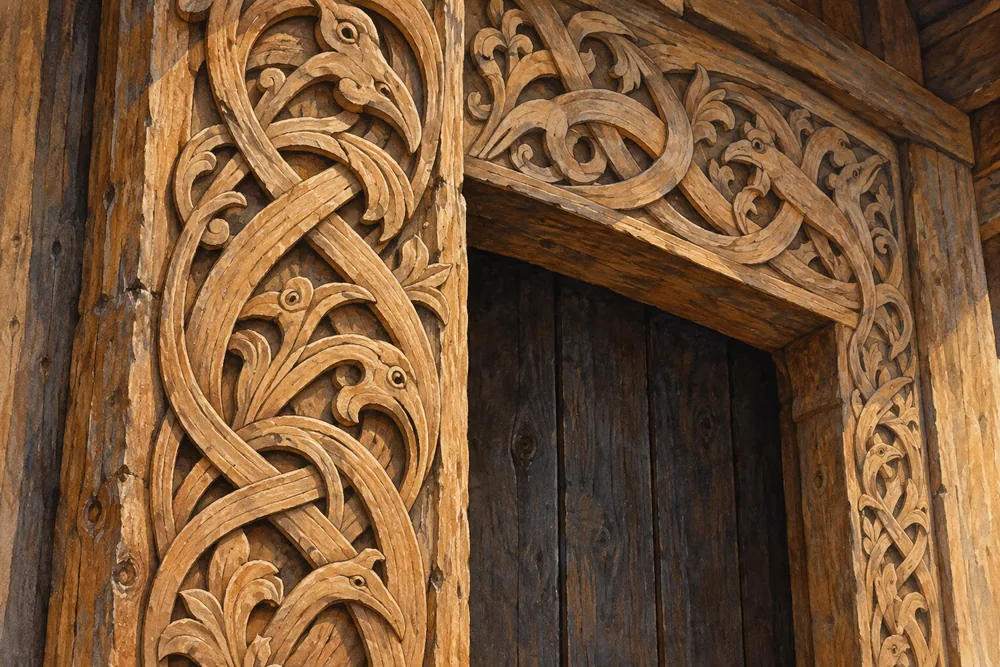
The owner dates the present church to around 1130, while the carved north portal, or doorway surround, comes from an earlier church and dates to about 1070. That older work was reused in the later building.
UNESCO describes the intertwined animals carved on the north wall and records Urnes’s World Heritage inscription in 1979.
Gol makes restoration visible
The church from Gol at Norsk Folkemuseum in Oslo dates from about 1200. It was re-erected at Bygdøy in 1884 and restored to what was then thought to be its medieval appearance. Missing parts took their inspiration from Borgund. The museum notes that the west portal is original, while the south portal is an 1884 copy. Compare the two portals to see an old part beside a later reconstruction.
Ask what changed
Before planning an interior visit, check the church’s own visitor information. If a doorway or roof detail catches your eye, ask a guide or check a site display to find out when it became part of the building.
Read more about stave churches
An illustrated guidebook can help you compare timber frames and carving between visits, or follow a church’s restoration history. Check its language and which churches it covers before choosing.
🛒 Browse stave church guides on Amazon →Amazon paid link