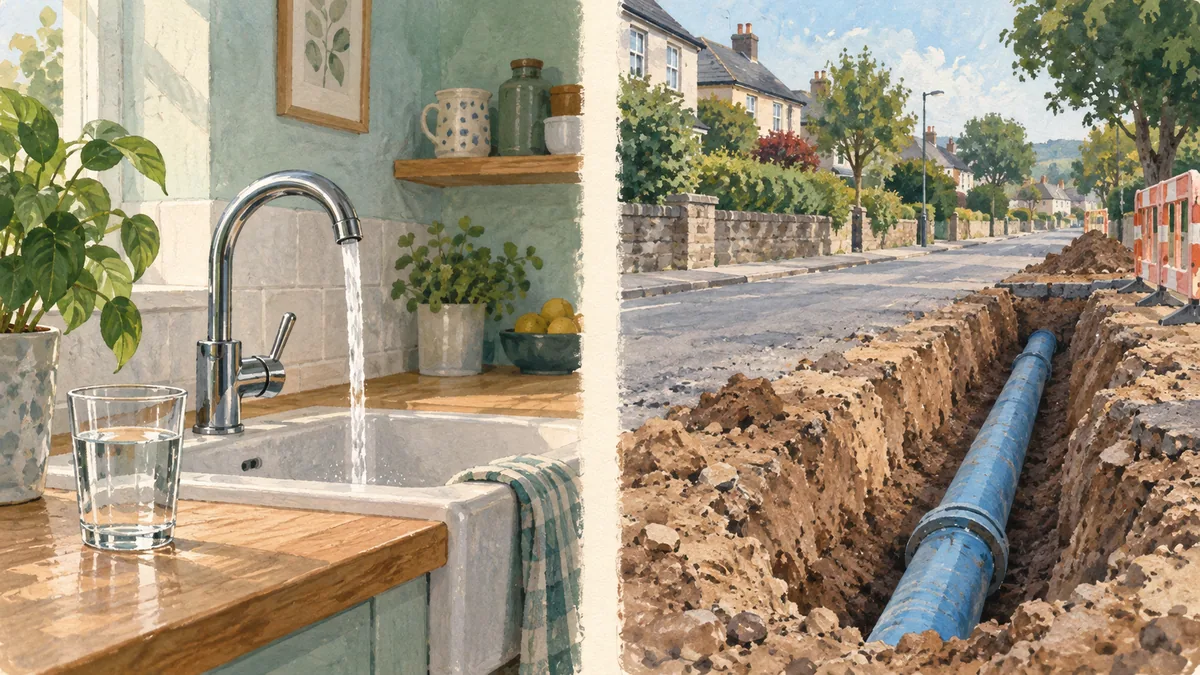
Denver Water's service-line inventory is a starting point for understanding a property's pipe materials. It is not a laboratory result for the water coming out of that property's kitchen tap. The utility's Lead Reduction Program page links to its public address search. Before relying on a map entry, keep the address and any displayed record date with it.
Decide whether you need to know the pipe material, the extent of replacement work or a water sample's result. Each question needs its own evidence.
Read a material category as a record
Denver Water's 2026 semiannual report lists lead, galvanized requiring replacement, non-lead and lead status unknown as inventory categories. It notes that the public map groups galvanized requiring replacement under confirmed lead. This is the report's account of the map, not a new inspection of an individual property. The original report provides the category definitions on printed page 27.
An unknown material record leaves a material question unresolved. It does not supply a concentration of lead in water. If you are renting or considering a property, ask for the actual utility record or letter rather than accepting a cropped map image with the address missing.

Replacement needs the whole line checked
Denver Water uses records, water testing and inspections to investigate service lines. Its investigation guidance says one method can confirm lead's presence, while multiple methods are required to confirm its absence.
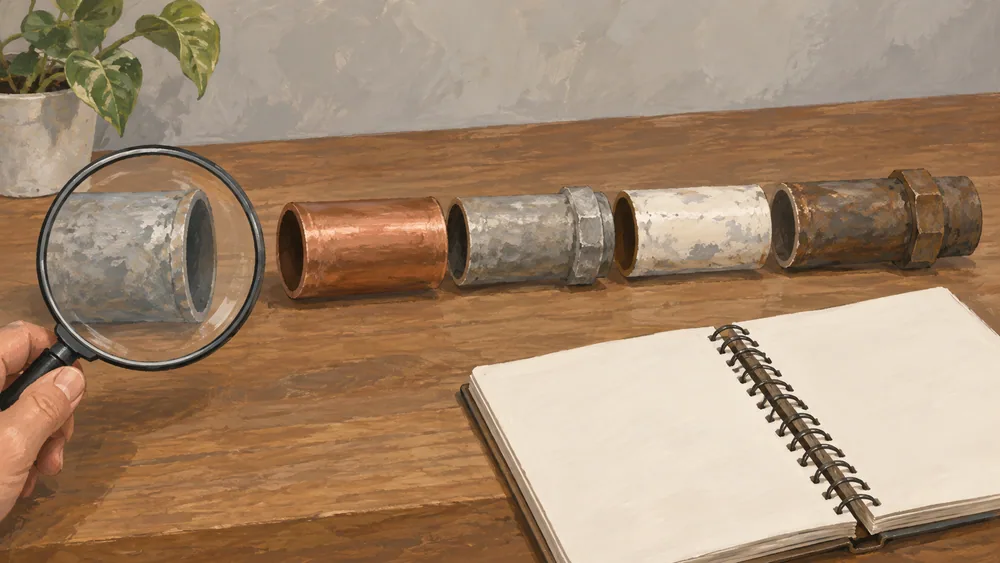
A visible copper section does not establish the material of every buried section. The same guidance describes partially installed copper and says a contractor receipt documenting replacement from main to meter and meter to home can help establish material. Ask which sections a receipt covers, and let the utility confirm whether its investigation is complete.
The semiannual report separately describes partial replacements with no lead remaining and emergency partial replacements where lead may remain. A short description such as "replaced" needs that context. Neither the amount of newly installed pipe nor a photograph of one connection explains what remains elsewhere.
For a disputed record, give Denver Water the documentation and ask what further confirmation it needs. Leave excavation and pipe cutting to professional crews.
Choose the test for the question
Denver Water says a lead service line does not necessarily mean a water sample will have elevated lead. Its test-kit instructions call for a kitchen faucet that is not connected to filtration or home water-treatment equipment. Follow the instructions supplied for the actual kit.
Keep the sample location and collection conditions with the result. A record about pipe material and a result from water sampled at a tap each answer part of the question; neither should be silently substituted for the other. If the concern is water at your accommodation, explain that concern to the utility rather than assuming the map has already tested it.
Keep the report's cutoff date
The report covers January through June 2026. It says the public map was reposted on 14 July 2026 using data through 30 June 2026. That is a dated reporting snapshot, not proof that July was the map's last update.
When checking a property later, use the current lookup and ask about pending verification after recent work. The Denver city guide provides general travel context; a property-specific question still needs the relevant service-line record or water result.