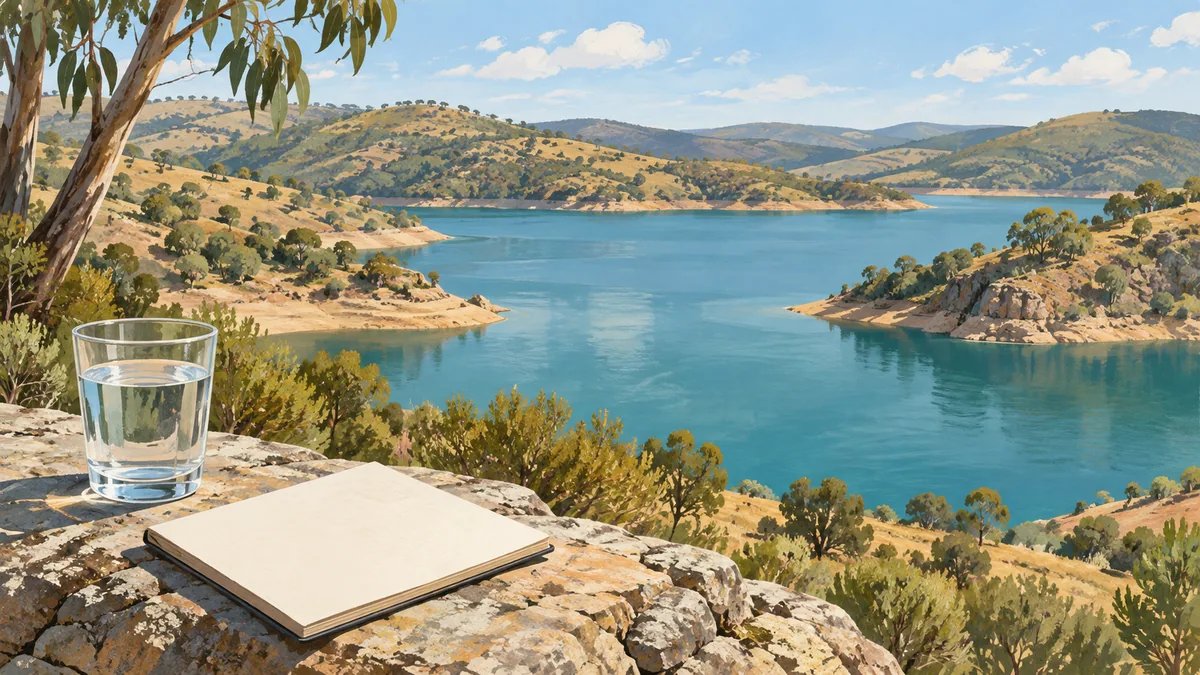
Adelaide's reservoirs can hold water from more than one source. A reservoir is a place to store water, and SA Water says its reservoirs hold rainwater as well as River Murray water during high demand. The origin of the water and the place where it is stored answer different parts of the question. SA Water's reservoir explanation.
That helps when a guide describes Adelaide as using local reservoirs while another mentions the river. The two descriptions need not conflict. To understand an individual claim, look for the route it describes and the period it covers before treating it as the mixture coming from a particular tap.
The River Murray can feed storage
SA Water says the amount drawn from the River Murray varies from year to year, largely with natural inflows to Mount Lofty Ranges reservoirs. Its river-source account names the Murray Bridge to Onkaparinga and Mannum to Adelaide raw-water pipelines as routes supplementing metropolitan reservoirs, with Myponga excluded. Read the River Murray source account.
Our reading of this arrangement is that a reservoir name alone cannot establish an exclusively local rainfall supply. Imported water can enter storage before treatment and distribution. Equally, knowing that a pipeline exists does not tell you how much water it carries on the day you visit. No current river share was obtained for this article.
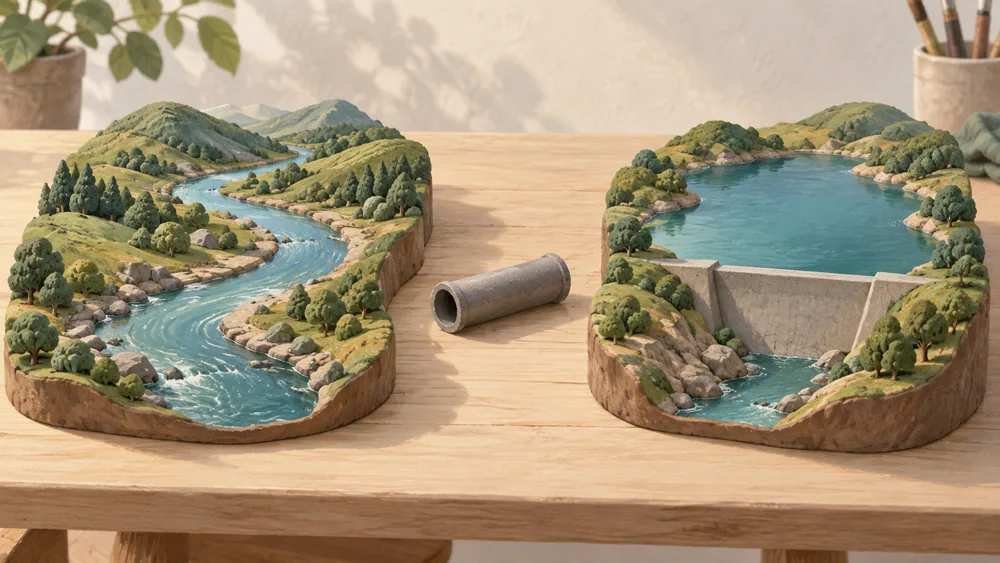
Adelaide has an interconnected network
The utility describes metropolitan Adelaide's pipes, treatment plants and pumping stations as an interconnected network that can move water north to south and east to west. Its Mannum to Adelaide account describes water passing through Anstey Hill treatment. SA Water's drinking-water network description.
These are useful descriptions of the infrastructure. They give you named places to ask about if you need a more local explanation. They do not assign a fixed source blend to every Adelaide address. We have not traced a property's current supply through the network, so a nearby reservoir or treatment-plant name should not be turned into an address result.
Desalination adds another source to the picture. SA Water identifies an Adelaide desalination plant at Lonsdale and describes desalination as reducing pressure on its other water sources. The same page describes desalinated drinking water travelling to storage at Happy Valley Water Treatment Plant, where it blends with treated reservoir water. The page does not establish today's desalinated proportion at a household. See SA Water's seawater explanation.
Read reservoir figures with their timestamp
SA Water says reservoir observations reflect 8 am ACST and are uploaded around noon ACST each weekday. Keep the observation date attached to a downloaded figure. The time you open the page is not the time at which its storage reading was taken. Check the reservoir page's timing notes.
A storage percentage also leaves the origin question unresolved. It describes how full the reservoir is; it does not identify all the water's contributing sources or the blend delivered to your accommodation. This article deliberately gives no current level, daily consumption or source percentage because no consistent current observation was established.
For a local enquiry, give SA Water the accommodation address and say whether you want its supply area, a dated quality report or an explanation of the source route. Keep any report's sampling location and period with the answer. Our Adelaide city guide offers general travel guidance; the water-notice guide helps when instructions concern a particular supply. The explanatory source pages were read on 15 October 2026 and have no established publication dates here.