A country's reputation for good tap water is useful background, but the decision is about the supply where you are staying. Check the local provider, the property's water source and any current notice. A national label cannot clear a private well or a problem in a building's pipes.
The ten examples below link to official information about local supplies and instructions. A supply's usual situation can change, so the same checks apply in every destination.
Official supply information in ten countries
Switzerland
Switzerland's food-safety authority describes drinking water as generally good quality and explains the responsibilities of utilities and building owners. Sources vary: Zurich's utility describes treated lake water, groundwater and spring water.
Norway
Norway's public-health guidance explains how to respond to a notice from the water supplier or authorities. It covers drinking, food preparation, ice and brushing teeth. Follow the notice for the affected supply.
Iceland
Veitur describes untreated groundwater from Heiðmörk for the capital region and explains source protection and monitoring. Ask about the local supply when staying elsewhere in Iceland.
Finland
Helsinki's environmental services describes monitored tap-water quality and advises people to contact their property manager about persistent problems. Check the provider serving your address outside Helsinki.
Austria
Vienna's water-supply brochure explains the two Alpine spring water mains, reservoirs and distribution pipes. It lists about 24 hours of travel for the first main and 36 for the second. Groundwater can supplement supply when needed. Other Austrian destinations need their own provider information.
Five more places to check local guidance
- New Zealand's water regulator explains treatment barriers and local notices, including problems affecting some rural supplies. Check which provider serves the property and whether any instruction applies.
- Canada's First Nations advisory index links to active and lifted notices. Check the authority responsible for the supply where you are staying.
- In Germany, Berlin's utility identifies its supplied water as drinking water, while the city notes possible effects from building installations. Check the local provider elsewhere.
- The Swedish Food Agency explains municipal boil-water advice. Find out whether any instruction applies where you are staying.
- The UK's Drinking Water Inspectorate describes usual tap water as drinkable and explains exceptions requiring notices, including how private-supply notices are issued.
Decide whether treatment is needed
A product should address a stated hazard. CDC's travel treatment guidance distinguishes microfiltration from other disinfection methods. Buying a generic filter does not resolve every germ or chemical problem, and it does not replace the issuer's instructions.
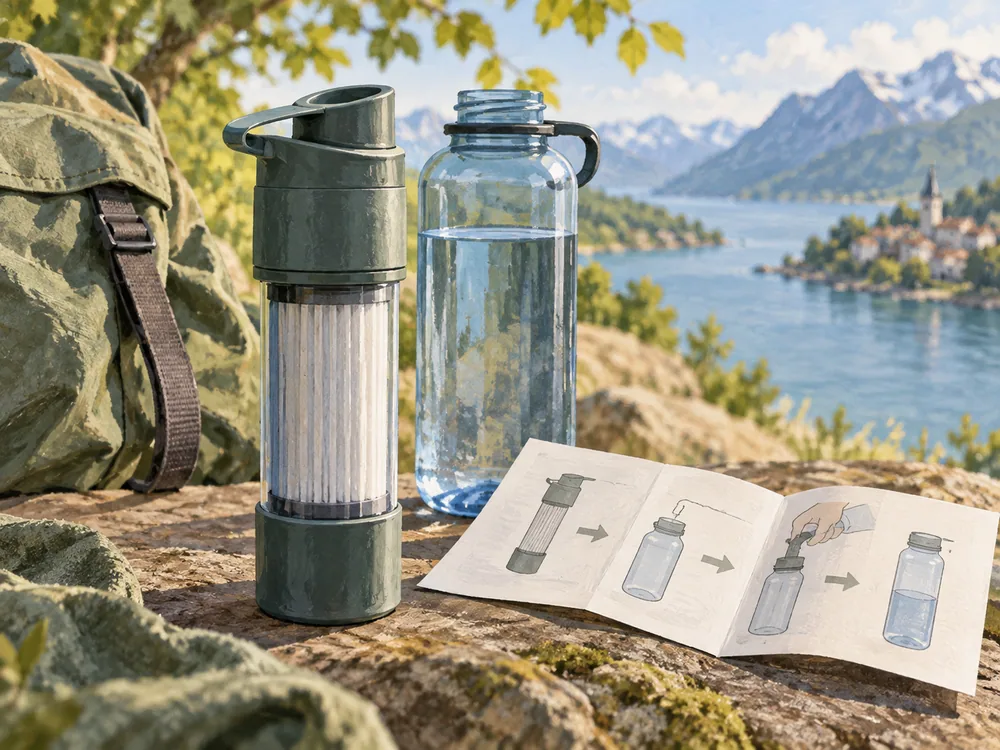
Check a portable microfilter
Confirm the source and treatment scope; a microfilter does not cover every germ or chemical hazard.
🛒 View the linked LifeStraw listing on Amazon →Amazon paid link
When the supply cannot be confirmed
Use CDC's safe-water precautions for uncertain supplies: appropriately disinfected water or unopened commercially bottled water, including for brushing teeth and food preparation. Check destination-specific official advice rather than treating a list of countries as proof that all their taps are unsafe.
Check again when you arrive
Ask which supply serves the accommodation, read any local notice and confirm what restrictions apply. Keep the issuer's link so you can see updates. Use these checks in all ten countries above and in places beyond them; a general guide is a starting point for that decision.