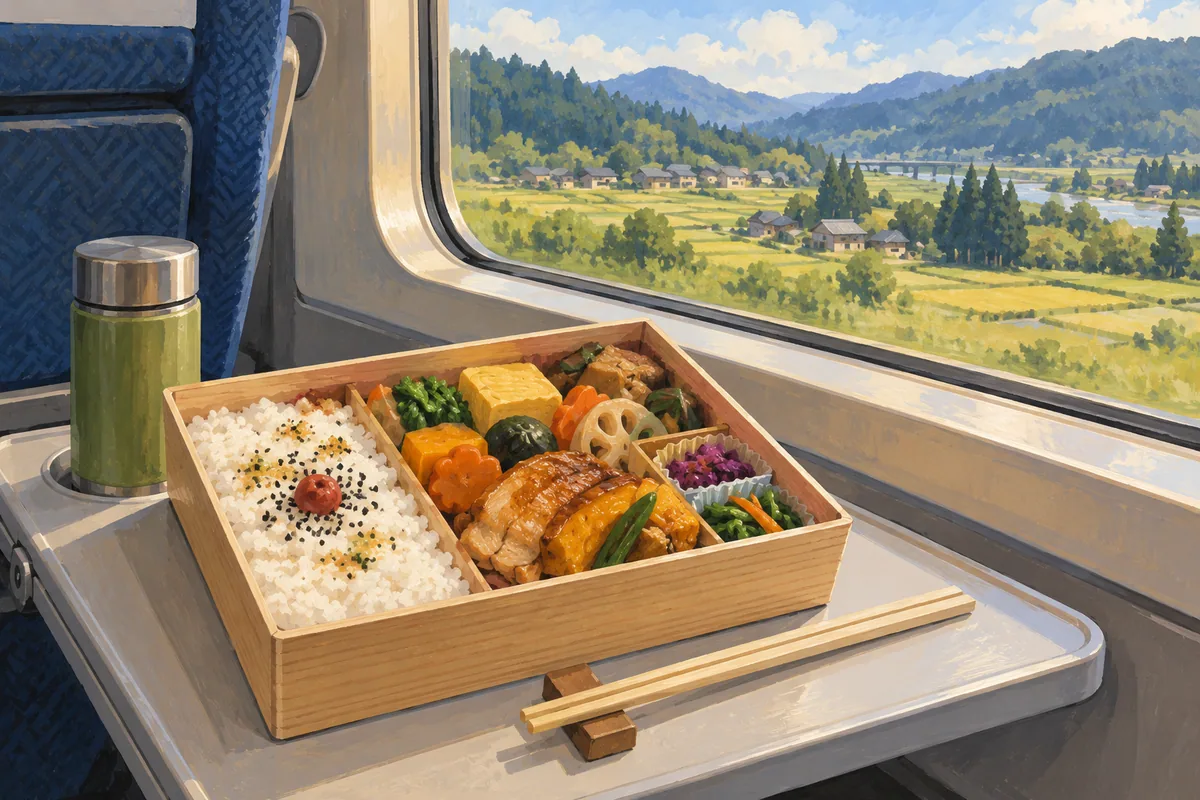
An ekiben is a boxed meal sold for a train journey in Japan, often built around regional ingredients and recipes. You can buy one at station shops and kiosks before boarding. Some trains also have onboard sales, so buying at the station avoids depending on a trolley reaching your seat. JR East's ekiben guide and Japan Rail Pass travel tips.
A regional meal in a box
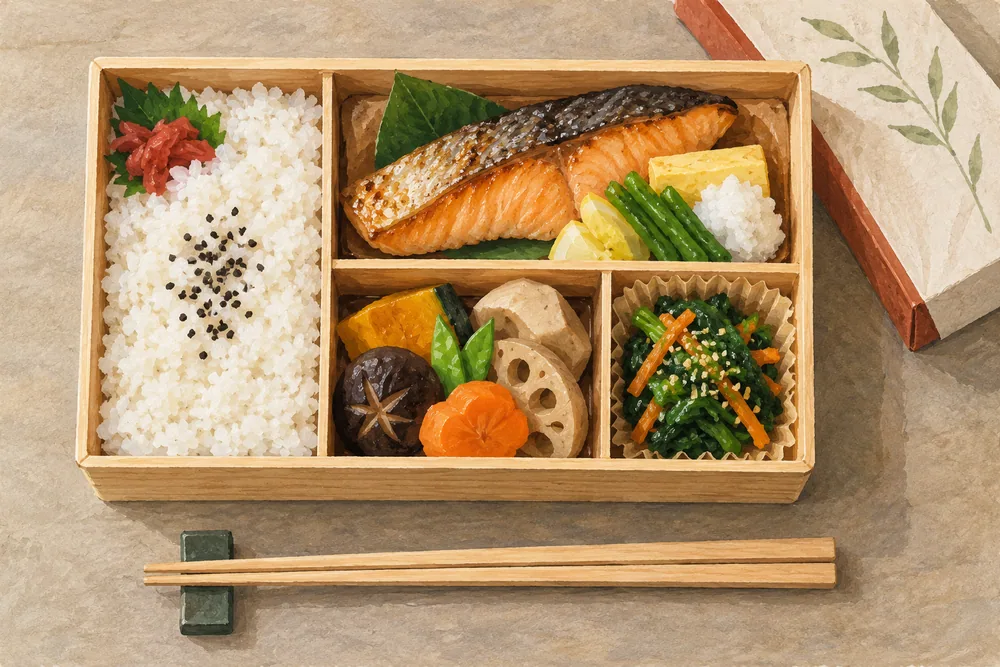
Ekiben vary with the place and the maker. JNTO's guide describes examples such as trout sushi from Toyama and octopus rice from Nishi Akashi. A major station can stock meals from several regions, so a box bought in Tokyo may introduce you to food from elsewhere in Japan. JNTO's ekiben guide.
JR East calls the colorful outer paper kakegami and describes recipes prepared to taste good even when eaten cold. Some ekiben come in a self-heating box. Check the particular box's heating and storage instructions before opening it, since preparation differs from a meal designed to be eaten cold. JR East's ekiben guide and JNTO's ekiben guide.
Buy before boarding
Allow time to choose your meal as well as find your platform and board. Japan Rail Pass travel tips.
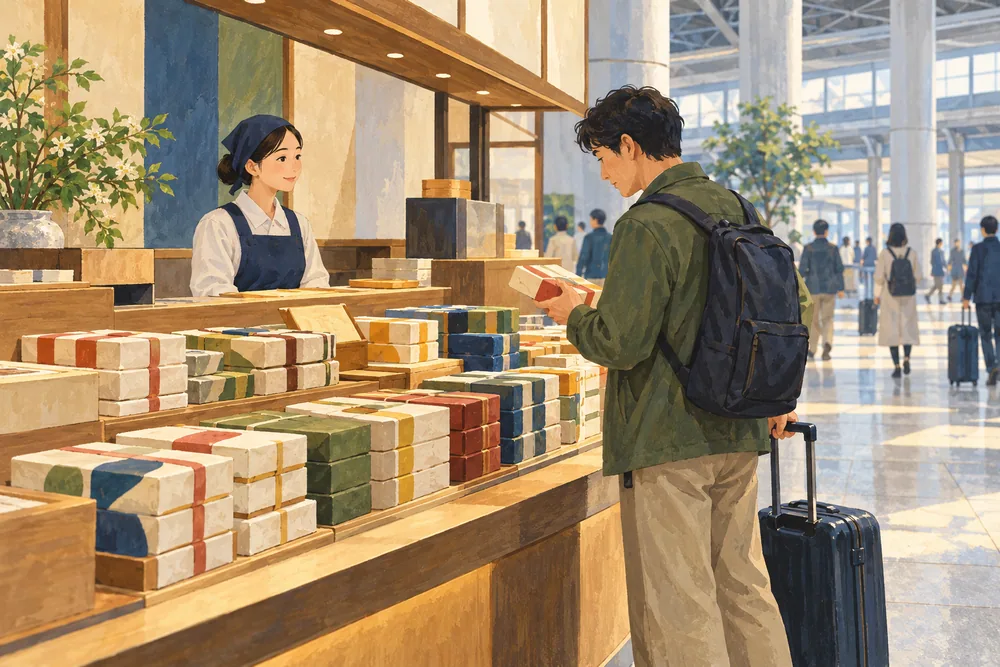
At Tokyo Station, one option is Ekibenya Matsuri in Gransta Tokyo's Central Passage area. The official shop directory places it inside the ticket gates and lists meals from across Japan. Use its current floor map and opening information to check access before heading there. A shop inside the gates may be inconvenient if you are on the wrong side of the station for your connection. Gransta's Ekibenya Matsuri directory.
You may be choosing from sealed packages. JNTO says nearby photographs often show the contents, which helps you compare meals before paying. For dietary requirements, confirm the ingredients with the retailer instead of relying on the picture alone. JNTO notes that vegetarian, vegan and gluten-free ekiben can be difficult to find. JNTO's ekiben guide.
The shop directory can help you find the counter, but it cannot tell you what will be on the shelf when your train leaves. Check the selection when you arrive and keep a second meal choice in mind so your connection does not depend on one product.
Choose a suitable place to eat
JNTO's etiquette guidance distinguishes a shinkansen journey from a commuter train: eating on the bullet train is acceptable, while a meal on a commuter train is considered bad manners. Its practical cue is a seat with a tray table. Save your ekiben for a suitable seated part of the journey, and follow the operator's instructions. JNTO's mindful travel guidance.
JNTO describes ekiben as packaged with what you need to eat them, so check what comes with your chosen box before buying extra utensils. When you finish, take the empty box and wrappers with you as you leave the train, and use the appropriate labeled bins. JNTO's ekiben guide and mindful travel guidance.