
Before settling into an apartment or co-working space, find out where you will get drinking water. A dependable supply makes everyday work easier: you need it at your desk, in the kitchen and when you are away from the accommodation. Ask about the actual property rather than relying on a destination's general reputation.
Make drinking water part of your work setup
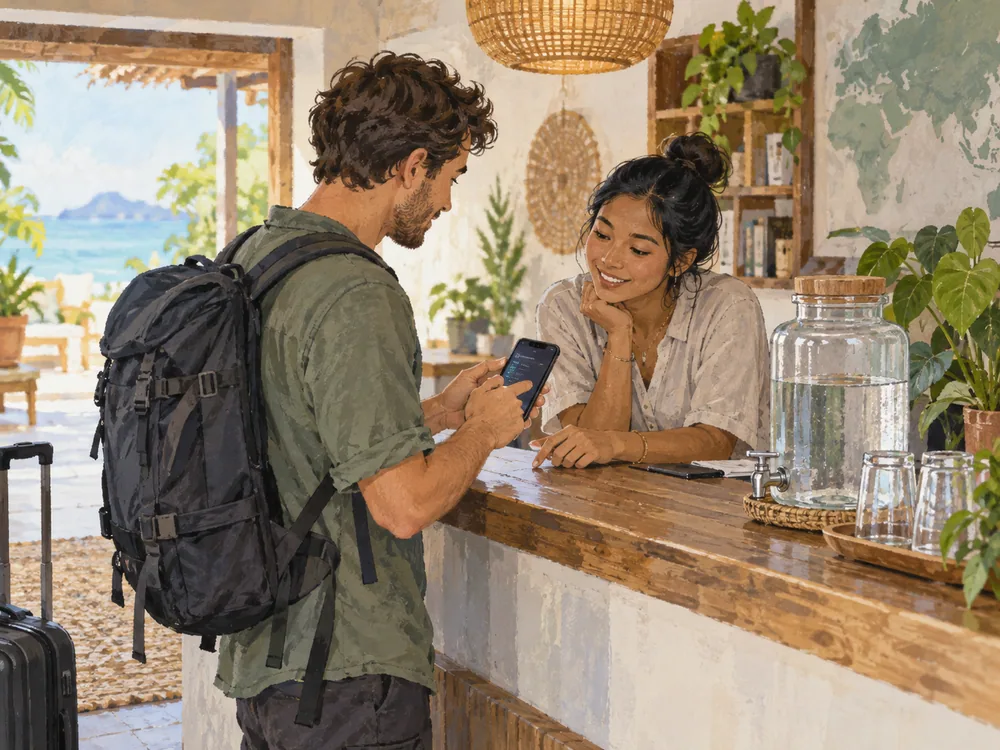
Ask whether the accommodation uses a municipal or private supply and whether any current notice applies. If it has a dispenser, ask what water goes into it and how it is maintained. A bottle marked "filtered" does not identify the treatment or establish that the supply is suitable.
For uncertain sources, use the precautions in CDC's food and water guidance, including safe water for food preparation and brushing teeth. A cafe or office setting does not remove the need to check.
Four destinations and what to check
Chiang Mai, Thailand
CDC's 2026 Thailand guidance advises visitors against drinking tap water and recommends sealed beverages and avoiding ice. Plan an appropriate drinking-water supply for the stay. Check local bottle or delivery prices rather than assuming a fixed jug price or that every cafe provides suitable water.
Bali, Indonesia
Australian travel advice for Indonesia recommends boiled or bottled drinking water. Ask your accommodation about its source and storage. Confirm what a villa or co-working dispenser provides; the presence of a filter does not explain its treatment scope.
Lisbon, Portugal
EPAL encourages drinking its supplied tap water and publishes Lisbon consumer-tap results. Its FAQ explains that chlorine can affect taste and that building pipe condition can affect the water. Check any current supply or property issue. A taste-filter bottle is an optional choice for water already safe to drink.
Berlin, Germany
Berliner Wasserbetriebe identifies its supplied water as drinking water. The city's environment portal notes that building pipes can release contaminants. Ask about the property's installations if there is a concern.
Use the official fountain map for outdoor refills and check the particular outlet; operation is seasonal. Ask cafes whether they offer refills and what they charge.
Hydration during the working day
CDC says not getting enough water can affect thinking, but fluid needs vary with heat, activity and personal circumstances. Other drinks and food contribute fluid too.
A practical routine
Keep safe drinking water within reach and drink regularly. The NHS hydration guide gives general advice, including drinking more after sweating or when unwell. Follow any individual advice you have received.
Budget for the supply you will use
| Question | What to confirm |
|---|---|
| Accommodation supply | Utility/private source and any current notice |
| Refill point | What water is used and how it is treated/stored |
| Water cost | Actual local refill, bottle or delivery charge |
| Equipment | Correct scope, cleaning and replacements |
| Backup | An adequate alternative if the usual source fails |
Use actual local bottle, refill or delivery charges. Include equipment maintenance and any backup supply. A month-long stay can have a different arrangement from a few nights in a hotel, so ask before depending on a service.
Before you settle in
Confirm a suitable source, check current notices and know where to obtain an adequate alternative. If buying gear, match the exact device to the problem: Brita's Premium bottle requires potable water, while CDC's treatment guide explains why many microfilters alone are insufficient for viruses. Avoid treating a product as necessary protection everywhere.
A bottle for water already safe to drink
Check the exact regional model. Brita's Premium bottle is for potable water and chlorine taste reduction, not disinfection of an unsafe supply.
🛒 View the linked Brita listing on Amazon →Amazon paid link