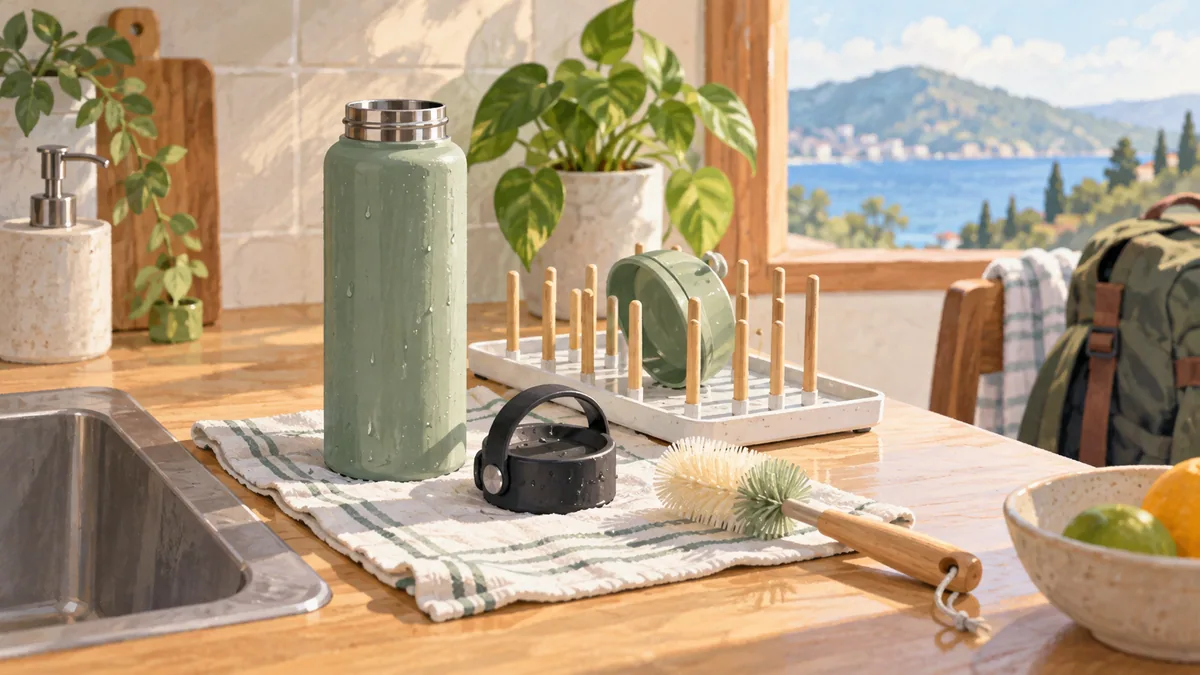
Before traveling, read your bottle's care instructions and try taking apart its removable pieces. Plan where you can wash it at your accommodation and allow time for the parts to dry, alongside your refill plans.
Wash the bottle regularly
UNH Extension says daily cleaning is ideal for a bottle in regular use, with frequency adjusted for use and visible residue. It advises checking dishwasher suitability, or hand washing with soap and hot water if the bottle is not dishwasher-safe. UNH's bottle-care guidance. Follow your model's instructions when choosing a cleaning method and temperature.
Set a reminder that fits your day, such as washing the bottle when you unpack in the evening. Keep the manufacturer's instructions on your phone if the lid has several components to reassemble.
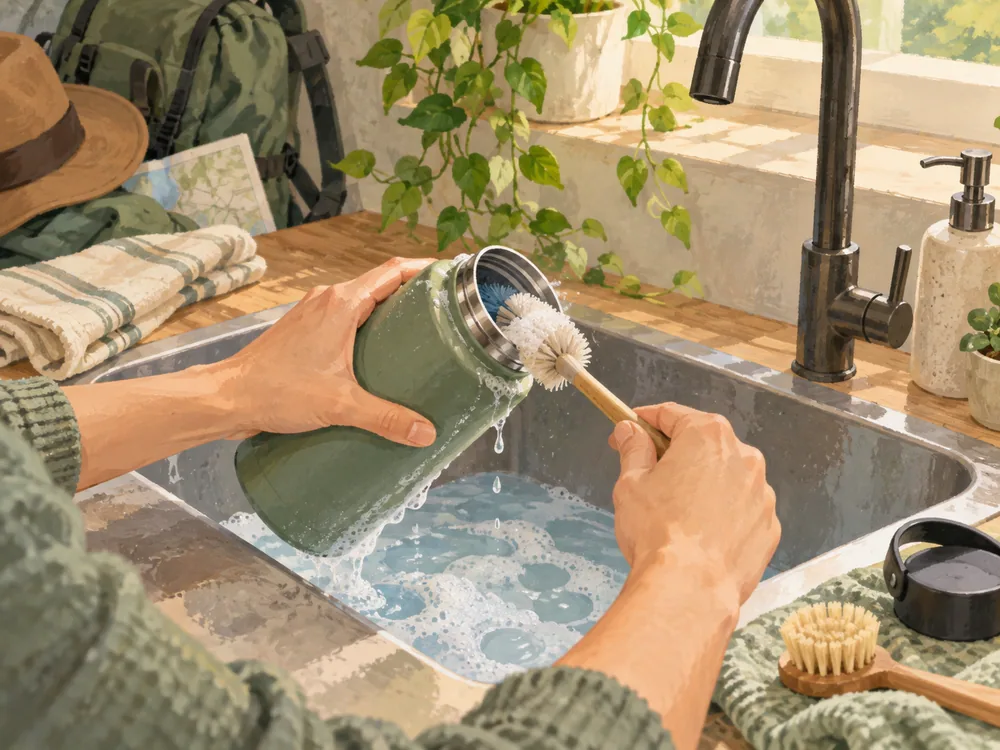
Columbia's Go Ask Alice guidance recommends taking apart removable components, scrubbing all parts, rinsing away soap and letting the bottle air dry completely. Columbia's care advice. Check your own bottle as you work:
- Open it far enough to reach the inside, as the instructions allow.
- Clean the bottle, mouthpiece and removable lid pieces.
- Check your work before rinsing and setting the parts out to dry.
UNH suggests a bottle brush when the opening prevents your hand and sponge from reaching the inside. Its guidance also describes using a small brush inside a reusable straw. UNH's advice on cleaning access. Try a brush's fit before packing it so you know whether it reaches the bottom.
Clean the lid and seals
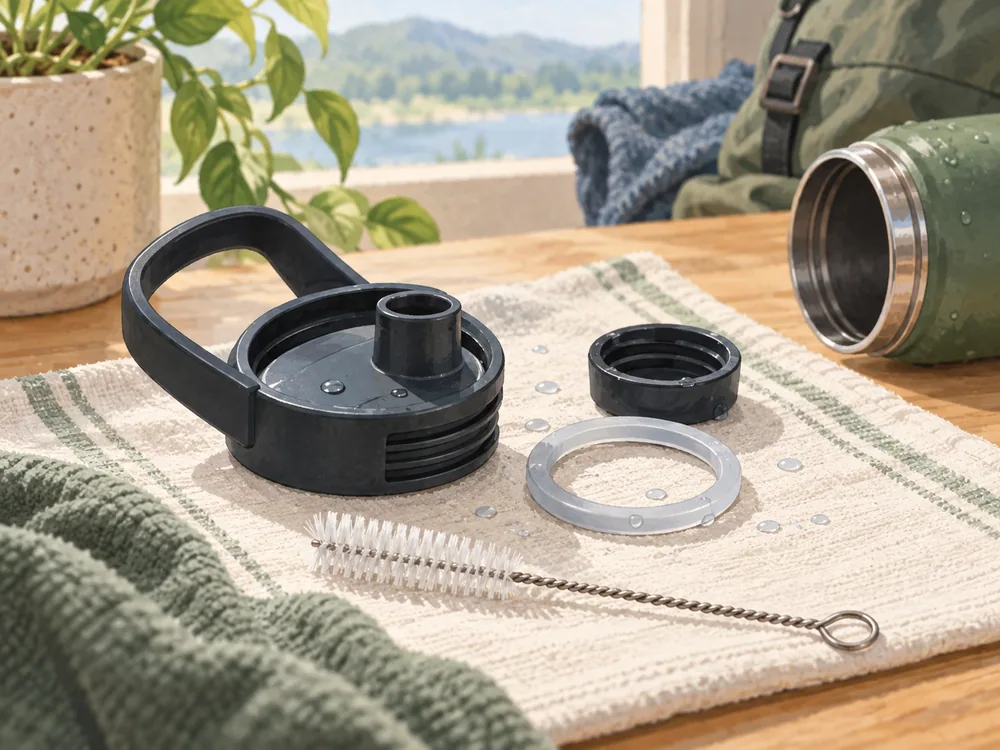
Moisture can collect in the crevices of rubber seals, lids and straws, according to UAB's biology advice. It recommends disassembling these parts for thorough cleaning and drying. UAB's advice about seals and lids.
Take apart the pieces designed to be removed. Lay them out where you can keep track of them and use the product's diagram for reassembly. When choosing a bottle, check whether you can clean its lid with the tools and washing facilities you expect to have.
UAB recommends complete air drying before the next use. UAB's cleaning guidance. Allow time for drying before an early checkout; a last-minute wash will leave little time before packing.
When washing is difficult
Columbia advises washing promptly after use in a warm environment or for sugary beverages. It also says methods can vary with the bottle's brand and materials. Columbia's care qualifications.
If you cannot follow the care instructions where you are staying, arrange another suitable drinking container until you can. Treat a quick rinse as a temporary measure, not a replacement for the full washing routine. Follow local water instructions; our water-notice guide can help you identify the notice for the property.
Do not treat routine washing as proof of sterilization. For additional sanitizing, use instructions appropriate to your bottle and the chosen product. Do not improvise a universal mixture or assume one recipe suits every coating, seal and lid.
Reach the bottle's awkward parts
An optional bottle or straw brush may help with access. Check its fit and material compatibility; a brush alone does not establish sanitization or sterilization.
🛒 Browse bottle cleaning brushes on Amazon →Amazon paid link