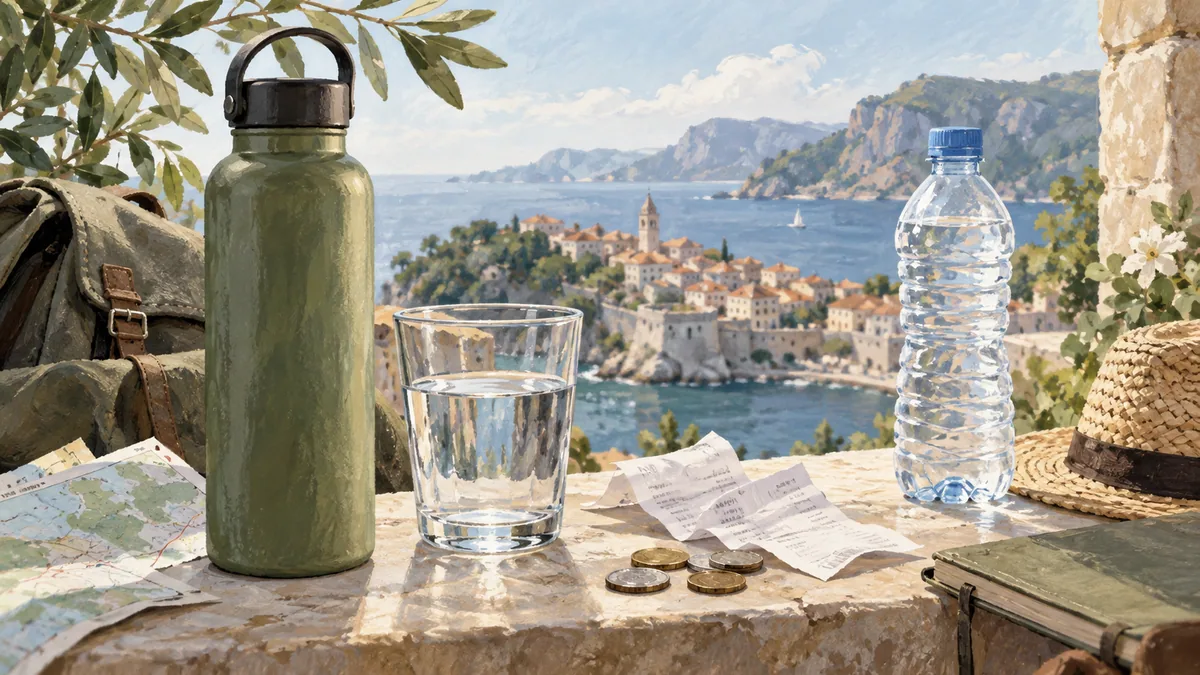
A travel drinking-water budget starts with a safe supply. Refilling may be cheap and convenient where the local water is drinkable. Where it is uncertain, the cost of suitable treatment or purchased water belongs in the budget too. A cheap filter is useful only when its treatment scope fits the source.
Work out the cost of purchased water
Estimate your own needs
There is no fixed daily drinking-water amount for every traveller. CDC says fluid needs vary with activity, climate and personal circumstances; drinks other than water and food also contribute fluid. The NHS gives general hydration guidance and notes that people may need more in heat or during prolonged activity.
Estimate what you expect to purchase for this trip. That is a budget assumption, not a health prescription. Update it if your activities or accommodation change.
Use local prices
Record the price and volume of the bottles you can actually buy, along with delivery or refill charges. Multiply the purchased volume by its price per liter. A region-wide daily price range cannot account for a particular shop, hotel or long-stay delivery service.
| Budget item | What to record |
|---|---|
| Purchased water | Local price, bottle volume and expected trip purchases |
| Refill access | Verified safe source and any refill or delivery fees |
| Equipment | Actual price of a suitable bottle or treatment device |
| Operating costs | Cartridges, cleaning, power or disinfection supplies |
| Backup supply | Water needed if the usual source or treatment is unavailable |
Include the full treatment plan
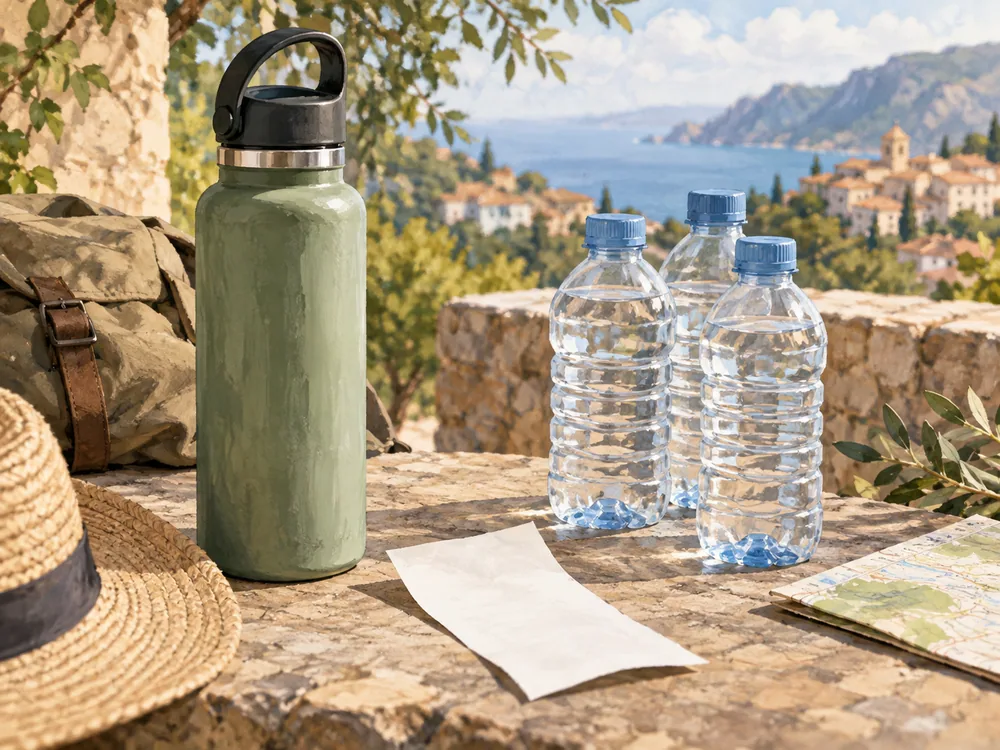
If you need a treatment device, price its maintenance as well as its purchase. For example, GRAYL rates a GeoPress cartridge for 350 presses, or 250 liters, and provides replacement instructions. Sawyer's filter guidance explains cleaning and damage precautions. Those requirements belong in the decision even when a device has a long rated life.
The cheapest equipment may not address the hazards in your source. CDC's travel treatment guide distinguishes filtration from disinfection and notes the limitations of many filters for viruses. Follow local instructions before deciding a filter can replace purchased water.
Check a portable microfilter
Include the exact device and any additional treatment or maintenance costs in your trip budget.
🛒 View the linked Sawyer listing on Amazon →Amazon paid link
Check when the plan pays for itself
Compare two complete totals for the same trip. On one side, count the water purchases you expect to make. On the other, count equipment, replacements, cleaning or disinfection supplies, safe-source charges and any backup water.
The difference is your estimated saving. If the alternative costs more, there is no financial saving for that trip. An existing reusable bottle, a newly purchased device and a system needing replacement cartridges will produce different budgets; use the costs that apply to you.
Reduce packaging where the source is safe
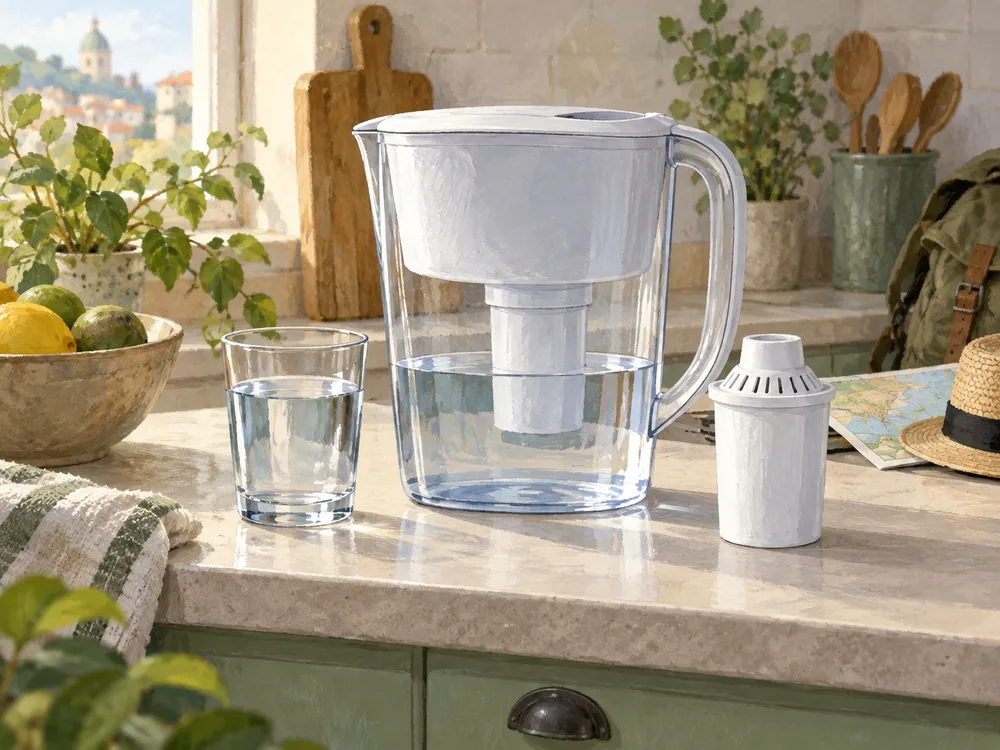
Refilling and reuse can avoid disposable packaging. Germany's Environment Agency recommends tap water and reusable packaging in its German context, with environmental benefits affected by transport and repeated use.
That supports reducing single-use purchases, not a claim of zero plastic waste. Bottles and treatment equipment have materials, cleaning needs and, in some cases, replacement parts.
Check the budget before buying
Confirm the source first. Then compare local prices with the full cost of an adequate refill or treatment plan. Keep the assumptions visible and revise them when prices, refill access or water-supply instructions change. Savings and packaging reductions should follow from that comparison, not from a product's advertised lifetime alone.