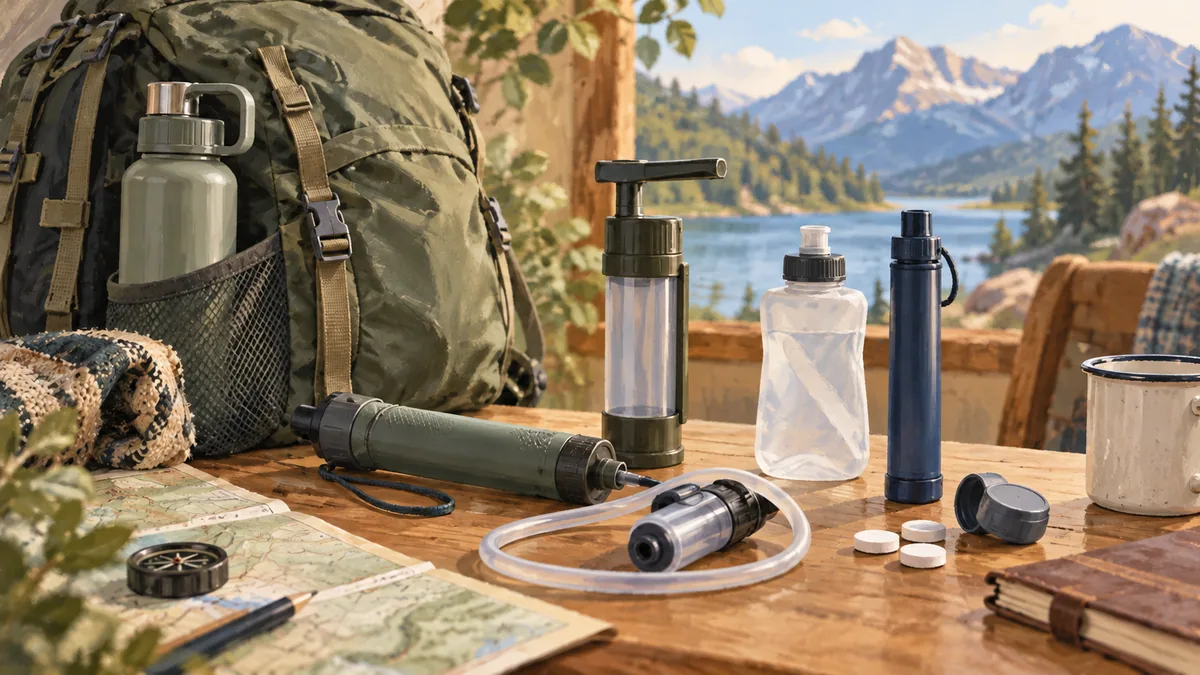
Choose water-treatment gear around the supply you expect to use. A bottle that improves the taste of drinking water has a different job from a device intended to treat germs in an uncertain source. CDC's travel disinfection guide explains the differences between filtration, heat, chemical treatment and UV.
The five options below cover several of those jobs. Their descriptions come from manufacturer specifications. We have not tested these products ourselves or ranked their performance against one another.
Five treatment options and their limits
LifeStraw Personal: a membrane microfilter
LifeStraw's Personal Straw page describes a 0.2-micron membrane that removes bacteria, parasites and microplastics, with a rated life of up to 4,000 liters. Its purpose is limited to those stated contaminants; the Personal Straw is not a general solution for chemicals or heavy metals.
Check virus treatment separately. LifeStraw's product FAQ distinguishes microfilters from its virus-removing purifiers and says the products do not desalinate seawater. A familiar brand name does not tell you what every model treats.
Check the linked travel filter
Match the exact model to the water source and its stated treatment limits before buying.
🛒 View the linked LifeStraw listing on Amazon →Amazon paid link
GRAYL GeoPress: a purifier cartridge
GRAYL's GeoPress specifications claim reductions of viruses, bacteria and protozoan cysts, along with adsorption of selected chemicals. They rate the cartridge for 350 presses, or 250 liters, and give replacement instructions based on use and age.
Check the specific reduction claims and instructions. A claim that a product was tested against a protocol is not the same as verifying a current certification listing, and it does not mean complete protection from every contaminant. NSF explains how standard scopes work.
Sawyer MINI: several ways to use a microfilter
The MINI product page describes 0.1-micron filtration and use with a pouch, bottle, straw or hydration tube. Sawyer's care guidance calls for backwashing and warns about damage if a wetted filter freezes. It also says the standard filters do not remove chemicals, metals or salt.
Those limits matter when choosing a source. CDC notes that many portable filters do not reliably remove viruses, so microfiltration alone should not be assumed to cover every germ.
Brita Premium Bottle: taste filtering of potable water
Brita's US bottle FAQ requires water that is already safe to drink. It describes chlorine taste and odor reduction and gives filter-replacement instructions. This is a taste option, not a disinfecting device for an unsafe supply. Check the exact regional model; products sold under the BRITA name can have different filters.
Steripen Ultra: UV treatment of clear water
Katadyn describes the Steripen Ultra as a rechargeable UV device for germs in clear water. Its listed treatment cycles are 48 seconds for half a liter and 90 seconds for one liter. Cloudy, sediment-laden water can hinder treatment, and the device needs power. Follow the instructions for the water volume and full treatment cycle.
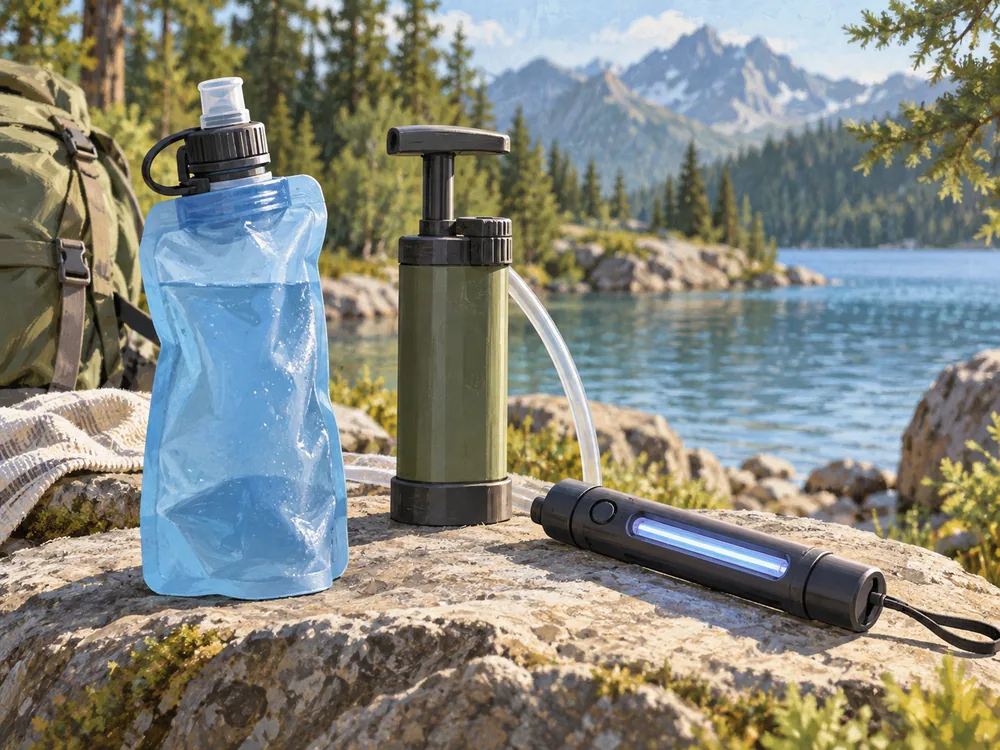
Compare scope and operating costs
| Device | Stated role | What to check |
|---|---|---|
| LifeStraw Personal | Membrane microfilter | Bacteria/parasite scope; separate virus/chemical assessment |
| GRAYL GeoPress | Purifier cartridge | Specific reduction claims and cartridge replacement |
| Sawyer MINI | 0.1-micron microfilter | Backwashing, freeze damage and virus/chemical limits |
| Brita Premium Bottle | Taste filtering of potable water | Use only with water already safe to drink |
| Steripen Ultra | UV disinfection of clear water | Clear water, charged battery and treatment cycle |
Use current seller prices when budgeting. Include cartridges and other treatment supplies rather than dividing a purchase price by a rated lifetime and treating the result as a guaranteed cost per safe liter.
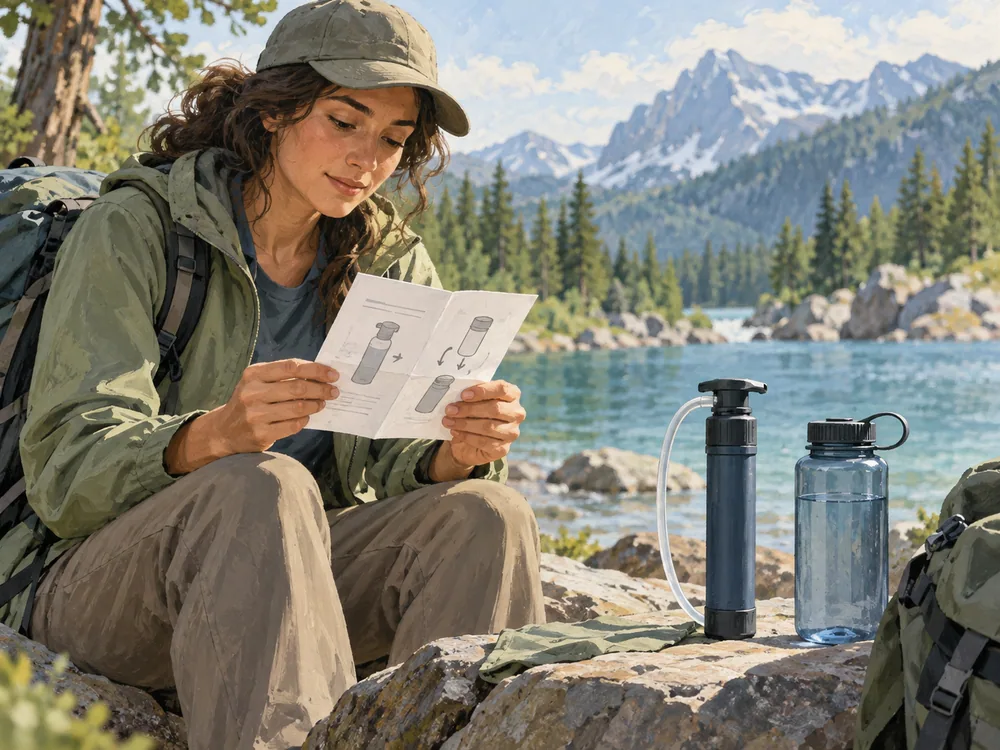
Choosing equipment for your trip
Start with local drinking-water guidance, then match a device to the hazards you need to address. Maintain it as instructed and have an adequate alternative if it is unavailable or damaged. During a notice, follow the issuer: CDC's advisory guidance says to boil water even if it has passed through a home filter.